
In This Article
What is a handheld back massager? A handheld back massager is a portable, motorized tool with a grip or extended handle. It lets you apply percussion, vibration, or oscillation to your own back without help. Most are cordless and USB-rechargeable. The best ones turn targeted spot treatment from a two-person job into a solo one.

Anyone who has contorted an arm behind a shoulder blade and still missed the sore bit knows why this category exists. Your back is the one body part designed to be out of reach. A good handheld back massager fixes that with clever geometry and a motor.
There’s a second reason people buy them. The tight, tender patches we call “knots” are formally known as myofascial trigger points. They are hyperirritable spots within taut bands of muscle. A handheld massager for muscle knots gives you repeatable, controllable pressure on exactly those spots, on your schedule.
Here’s the catch. Amazon.ca is crowded with near-identical devices, and the spec sheets are written to dazzle, not to help. This guide takes a different route. Everything below is analysis built on published specs and aggregated review themes, with no invented testing stories. You’ll get seven real options across budget, mid-range and premium. You’ll also get a clear explanation of percussion vs vibration massage, a hard look at grip and reach design, and a Canadian regulatory reality check.
Quick Comparison: 7 Handheld Back Massagers at a Glance
| Product | Style | Reach | Price range (CAD, at time of research) | Best For |
|---|---|---|---|---|
| RENPHO Cordless Handheld Massager | Percussion, cordless | Long handle | C$40-C$80 | Everyday value |
| Conair Myo-Therapy HM21 | Oscillating percussion | 25-38 cm (10-15″) extendable | C$70-C$110 | Reaching mid-back solo |
| Wahl Deep Tissue Corded Long Handle (4290-300) | Corded percussion | Long handle | C$60-C$110 | Home use, no battery worries |
| HoMedics Percussion Action Back Massager with Heat | Percussion + heat | Pivoting heads | C$60-C$100 | Warmth-seekers |
| TOLOCO Massage Gun | Percussion gun | Short, gun grip | C$50-C$100 | Budget attachments |
| Theragun mini (2nd Gen) | Percussion, triangle grip | Compact | C$250-C$330 | Travel and self-reach |
| Hypervolt Go 2 | Percussion gun | Compact | C$250-C$330 | Pocketable premium |
The table shows a clear split. The RENPHO Cordless Handheld Massager, Wahl Deep Tissue Corded Long Handle and Conair Myo-Therapy HM21 put reach first, which is what a back needs most. The Theragun mini (2nd Gen) and Hypervolt Go 2 charge a premium for compactness and brand polish rather than extra back-reaching ability.
If your budget sits under C$120, the first five are the sensible shortlist. Spend more only if portability or brand support matters to you. Prices shift constantly, so treat every range as a snapshot and check current price before buying.
💬 Just one click — help others make better buying decisions too!😊
Top 7 Handheld Back Massagers: Expert Analysis
1. RENPHO Cordless Handheld Massager — best everyday value
The standout here is the combination of a long, anti-slip handle and a cordless body. That pairing is what makes a handheld back massager usable on your own spine.
It offers five speeds and multiple modes. In practice, the low settings suit a stiff upper back after a desk day, while higher speeds are better for thick lower-back muscle. Reach is the real win. The extended handle lets most adults get to the shoulder blades and lumbar area without gymnastics.
Based on the spec comparison, this is the model to beat under C$100. It won’t rival a premium percussion gun for punch, but most people don’t need that to work on a tender patch. Think of it as the reliable hatchback of the category.
One roundup reports well over 63,000 Amazon reviews averaging around 4.4 stars. Treat those figures as a snapshot, since they change. Reviewers generally praise ease of use and portability, while sceptics point to the lower power ceiling compared with pricier guns.
Pros:
- ✅ Long handle reaches shoulder blades and lumbar
- ✅ Cordless, so no cable fights your elbow
- ✅ Multiple speeds suit sensitive and stubborn areas
Cons:
- ❌ Less deep-tissue punch than premium guns
- ❌ Battery life drops at higher speeds
Price range: around C$40-C$80 at the time of research. It earns its value verdict as the best all-round starting point.
2. Conair Myo-Therapy HM21 Oscillating Massager — longest reach on the list
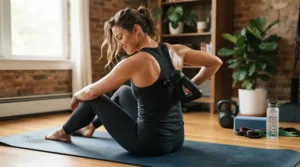
This model’s headline trick is an extendable handle that runs from 25 cm to 38 cm (10 to 15 inches). That extra length is the whole point for a mid-back that never seems to get reached.
Its oscillating action blends percussion with a shiatsu-style kneading feel. Conair lists four speeds, five interchangeable therapy disks, USB-C charging and up to 150 minutes of use per charge. The pointed-cone disk is the one aimed at isolating knots, and the wider disks suit larger muscle groups. These are manufacturer claims, so weigh them accordingly.
Here’s what the spec sheet won’t say plainly. Oscillation feels different from a plain jackhammer-style gun. It’s usually described as broader and more kneading, which many people find gentler on a tender back. If a conventional massage gun feels aggressive, this style is worth considering.
I couldn’t verify a large pool of independent reviews, so I won’t characterize reviewer sentiment. Check current review counts yourself before buying.
Pros:
- ✅ Extendable handle reaches most of the back
- ✅ Oscillation adds a kneading sensation
- ✅ USB-C charging and a two-year warranty
Cons:
- ❌ Longer handle makes it bulkier to pack
- ❌ Fewer verifiable independent reviews
Price range: roughly C$70-C$110. Good value if reach is your main problem.
3. Wahl Deep Tissue Corded Long Handle Percussion Massager (4290-300) — corded power, no battery fade
Plug-in power is this model’s quiet advantage. A corded motor delivers the same output from the first minute to the last, with no sagging battery.
The long handle and variable intensity are the specs that matter. A corded design means you accept a leash, which is fine if you massage at home in the same chair every evening. Variable intensity lets you start gentle on inflamed areas and climb as tolerance builds.
On paper, the cord suits home use, not travel. It also gets in your way if you need to twist around your own torso. Seated, with the outlet behind you, it’s far less annoying.
I couldn’t find enough verified review data to summarize sentiment fairly, so I’d rather say so than invent any. Check recent buyer reports for comments on motor noise and long-session heat.
Pros:
- ✅ Consistent power without battery decline
- ✅ Long handle suits self-use on the back
- ✅ Variable intensity for sensitive areas
Cons:
- ❌ Cord limits movement and portability
- ❌ Less verifiable independent review data
Price range: around C$60-C$110. A solid pick for a permanent home spot.
4. HoMedics Percussion Action Back Massager with Heat — heat plus pivoting heads
Heat is the standout. Warmth relaxes tight muscle before the percussion starts, and that combination is genuinely appealing on cold Canadian mornings.
The dual pivoting heads let the massager sit flatter against curves around the shoulders and neck. Interchangeable nodes let you tune the contact feel. One buyer guide praises how well it conforms to the back, neck and shoulders.
From a buying angle, this is the “comfort first” option. Heated models rarely match a gun’s raw intensity, and they’re not built for athletic recovery. They’re built for ordinary people with ordinary desk-day aches.
Because multiple HoMedics variants exist, double-check the exact model, since specs differ between versions. I couldn’t verify a consistent review tally across variants.
Pros:
- ✅ Heat softens muscle before percussion
- ✅ Pivoting heads follow body contours
- ✅ Interchangeable nodes change the feel
Cons:
- ❌ Weaker than a dedicated percussion gun
- ❌ Variants make model-checking essential
Price range: roughly C$60-C$100. Strong value for comfort-focused users.
5. TOLOCO Massage Gun — budget gun with many heads
This is the “more attachments than you’ll ever use” option. One roundup describes it as a value pick with around ten attachments.
Attachment variety matters more than it sounds. A flat head suits big muscle, a bullet head isolates a spot, and a fork head works either side of the spine. The gun grip, however, is short. It’s built for shoulders, glutes and legs, not for reaching your own mid-back.
My take: buy this if you’ll use it across your whole body and have a partner for the back. For solo back work, a long-handled model fits better. The spec sheet won’t tell you that, but the shape does.
I couldn’t verify a robust review sample here, so I’ll avoid summarizing sentiment.
Pros:
- ✅ Many attachments for varied muscle groups
- ✅ Gun shape delivers strong percussion
- ✅ Budget-friendly entry into percussion
Cons:
- ❌ Short handle struggles with solo mid-back reach
- ❌ Build quality varies at this price tier
Price range: around C$50-C$100. Good value if your back isn’t the only target.
6. Theragun mini (2nd Gen) — triangle grip for self-reach
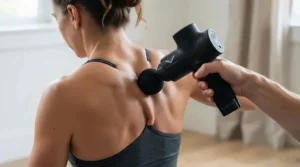
The triangular grip is the feature that sets it apart. It lets you brace and angle your wrist to hit your own back in ways a plain gun handle can’t.
It weighs about 450 g (1 lb) and offers three speeds, reported at 1,750, 2,100 and 2,400 percussions per minute. Reviewers describe the battery life at about 150 minutes. One comparison also reports a 20 lb stall force, meaning it slows when you press hard. For targeted spot treatment on a shoulder or lower back, that’s usually fine. You don’t need to lean on it.
A common complaint is the charger’s reliability. Some users also say the grip is awkward with small hands. Others note it’s less powerful than full-size models and pricey next to alternatives. In head-to-head reviews with the Hypervolt Go 2, a Bustle comparison picked the Theragun mini on more categories.
Pros:
- ✅ Triangle grip aids self-reach on the back
- ✅ Light and compact for travel
- ✅ Established brand with strong reputation
Cons:
- ❌ Premium price for a mini gun
- ❌ Reported charger reliability concerns
Price range: roughly C$250-C$330. Worth it only if brand polish and portability matter.
7. Hypervolt Go 2 — premium pocket-size punch
This is the compact percussion option with a bit more bite. It weighs about 680 g (1.5 lb), has three speeds and is carry-on friendly.
The traditional gun shape is easier to hold than a triangle for some hands, but harder for self-reach on the upper back. An earlier-generation review lists an 11 mm amplitude, a 40-watt motor and two attachments. Noise is a mixed bag. One review measured 45-50 decibels at the lowest setting and said it wasn’t quite “almost mute” as marketed.
Reviewers have flagged a few concerns. Some users report the motor stalling under 10-15 lb of pressure, and a few report failures after short use. Others find it effective for tension relief.
Choose it if you want a gun feel in a small body and don’t mind paying extra. Skip it if solo back reach is your priority.
Pros:
- ✅ Compact and carry-on friendly
- ✅ Gun shape feels familiar and stable
- ✅ Good battery life for its size
Cons:
- ❌ Costly for a mini gun with few attachments
- ❌ Reported stalling under firm pressure
Price range: roughly C$250-C$330. A premium pick with trade-offs.
How to Choose a Handheld Back Massager
Choosing well takes about five minutes of honest self-assessment. Work through these steps in order.
- Decide where you’ll use it. If it’s always at home, corded power is fine. If it travels, go cordless and compact.
- Prioritize reach. Your own back is the hardest area to hit. Long or angled handles beat raw power every time for solo use.
- Match intensity to your tolerance. Look for several speeds, with a gentle low setting. Starting too hard is the most common beginner error.
- Check head options. A broad head handles big muscle, and a small, rounded head isolates a spot. Hard, pointed heads belong away from the spine and bone.
- Weigh battery against cord. Cordless freedom costs you charge time. Look for roughly 120-150 minutes of reported runtime.
- Consider noise. A louder motor can make you tense up, which defeats the point. Quieter models make longer sessions pleasant.
- Set a realistic budget. A good handheld back massager costs far less than a single professional session series. Premium brands add polish, not necessarily better back reach.
Percussion vs Vibration Massage: What Actually Differs
The percussion vs vibration massage debate boils down to one word: amplitude. That’s how far the head travels. Sources define the boundary differently. One retailer guide puts vibration around 3-5 mm, while a UK brand classes a 10 mm device as vibration and a 14 mm device as percussion. So brand labels aren’t standardized, and you should read the actual millimetres.
In plain terms, percussion physically pushes deeper into the muscle with each stroke. Vibration is faster and shallower, closer to a buzz than a thump. Vibration often feels gentler and more relaxing, while percussion feels more intense and “working.”
Research on the effect is promising but unfinished. A UK physiotherapy source notes that vibration appears to reduce delayed onset muscle soreness compared with none, but questions about speeds and doses remain open. Translation: neither type is magic, and nobody can prescribe a perfect setting.
My practical read on the percussion vs vibration massage choice: if your back is chronically tight but tender, begin with vibration or a gentle oscillating device. If you want a deeper, firmer feel on thick muscle, percussion makes sense. When in doubt, buy a model with variable intensity so you can experiment safely.
Grip and Reach Design: Why the Handle Beats the Motor
Here’s the unglamorous truth. For back use, grip and reach design matters more than motor wattage. A powerful gun you can’t aim at your own shoulder blade is just an expensive paperweight.
Look at what each design offers. Long handles, like those on the RENPHO Cordless Handheld Massager, the Wahl Deep Tissue Corded Long Handle and the Conair Myo-Therapy HM21, extend your hand’s reach so you don’t twist your shoulder. Triangle grips, like the Theragun mini (2nd Gen), let you brace against your own body at awkward angles. Classic gun grips, like the Hypervolt Go 2 and TOLOCO Massage Gun, are comfortable but better for limbs and larger muscles.
Material matters too. A curved, silicone-wrapped handle absorbs vibration and cuts wrist fatigue. A rigid plastic grip transmits every buzz to your hand. Weight balance matters just as much, because a heavy, front-loaded device tires your arm before it relieves your back.
Rule of thumb: for grip and reach design, test the extremes. If you can’t imagine reaching the far side of your own lower back, move on.
What to Expect: Using a Handheld Massager for Muscle Knots
Let’s be honest about “knots.” The term is informal, and there are no literal tangles in your muscle. One pain-science source calls them sore spots that can feel like a knot, and notes the true nature of trigger points is still debated. Another source says trigger points aren’t permanent structural lumps.
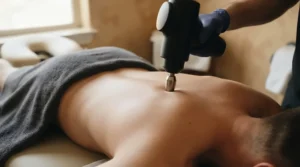
So what can a handheld massager for muscle knots realistically do? It can provide pressure, warmth (with some models) and a short-term change in how tight the area feels. Many people report temporary relief. It won’t “untie” anything, and it won’t cure an underlying posture or movement issue.
Session length matters. Many guides suggest keeping sessions short, often under 10 minutes per area, and avoiding bone and the spine itself. Pressure should be firm but tolerable, never sharp.
If the pain is severe, spreading, or tied to numbness or tingling, stop and see a health professional. A massager is a self-care tool, not a diagnosis.
Safety, Regulations and Health Canada: What Canadian Buyers Should Know
Canada regulates medical devices, and some massagers fall under that umbrella depending on how they’re marketed. Health Canada’s overview of medical devices explains that Class II, III and IV devices can’t be sold or imported without a valid medical device licence. It also encourages consumers to report problems, including the sale of unauthorized devices.
This isn’t theoretical. Health Canada has posted a recall notice for two massage guns distributed without a valid class II medical device licence. The notice states no safety defect was identified, and sales ceased. The lesson isn’t panic. It’s that legitimate sellers matter, and licensing status can change what’s on shelves.
Health Canada also publishes a guidance document on medical device establishment licensing. It’s technical, but it shows how seriously the system treats licensing.
Practical tips: buy from reputable sellers, read the product’s stated claims, and report problems. Avoid use over broken skin, bone, or injured tissue. If you have a medical condition, pacemaker, or are pregnant, ask your doctor first.
Handheld Back Massager vs Traditional Alternatives
| Option | Reach on your own back | Cost over time | Portability | Best For |
|---|---|---|---|---|
| RENPHO Cordless Handheld Massager (long-handle type) | Good | Low | High | Daily maintenance |
| Theragun mini (2nd Gen) (triangle grip type) | Very good | High upfront | Very high | Travel and targeted spots |
| Massage cushion or chair | Fixed zones | Medium | Low | Passive relaxation |
| Foam roller or ball | Limited | Very low | Medium | Stretching and rolling |
| Professional therapist | Complete | Highest ongoing | N/A | Assessment and complex pain |
The takeaway: a handheld back massager wins on control and convenience, and it pays off quickly versus repeated appointments. It loses to a therapist on assessment and to a cushion on hands-free passivity.
If you want one tool for pinpoint work, handheld wins. For total relaxation, a cushion is easier. Many people sensibly use both.
✨ Don’t Miss These Exclusive Deals!
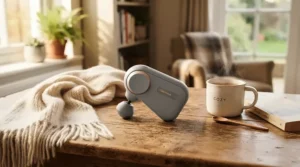
🔍 Take your recovery routine to the next level with these carefully selected handheld back massagers. Click on any highlighted item to check current pricing and availability. These tools will help you find real, lasting relief your whole back will thank you for!
Practical Usage Guide: Your First 30 Days
New owners tend to overdo it. Here’s a simple ramp.
Week 1: Learn the machine. Use the lowest speed for 2-3 minutes per area. Keep the head moving slowly, roughly a few centimetres per second. Skip the spine and bony points.
Week 2: Find your spots. Add a minute or two to tender areas. Press just enough that you feel pressure, not pain. If you wince, back off.
Weeks 3-4: Build a routine. Session once daily is plenty for most people. After activity or a long desk stretch is a natural time.
Maintenance is short. Wipe the head with a damp cloth, let it dry, and store it away from heat. Charge before the battery hits empty when possible, and avoid leaving a cordless model on the charger for weeks.
Common mistakes in the first month: using too much pressure, staying on one spot too long, and working directly on the spine. If a spot is still sore the next day, you probably used too much. Ease off and give it a rest day.
Real-World Scenarios: Matching a Handheld Back Massager to Your Life
These are illustrative profiles, not real customers. They show how to reason through a decision.
The desk worker with a tight upper back. Eight hours of typing leaves the shoulder blades locked. Reach and gentleness matter most. The Conair Myo-Therapy HM21‘s extendable handle and kneading action suit this well, with the RENPHO Cordless Handheld Massager as the cheaper alternative.
The home-based user on a budget. Same chair, same spot, every evening. The Wahl Deep Tissue Corded Long Handle makes sense, since the cord is no hardship and power stays steady.
The traveller who wants something compact. Frequent flights call for something that fits a carry-on. The Theragun mini (2nd Gen) or Hypervolt Go 2 fit the bill, with the Theragun’s triangle grip being easier for self-reach.
The comfort seeker. Cold winters and creaky mornings point toward heat. The HoMedics Percussion Action Back Massager with Heat is the natural fit.
Notice the pattern. Reach and use-case drive the choice, not the loudest spec.
Problem and Solution: Fixing Common Back Massager Frustrations
“I can’t reach the sore spot.” Choose a longer handle or a triangle grip. Brace the device against a wall or chair back if needed.
“It feels too intense.” Drop to the lowest speed, switch to a softer, larger head, and shorten the session. A vibration or oscillating model may feel gentler than percussion.
“The battery dies fast.” Higher speeds drain batteries quicker. Use lower speeds, or consider a corded model such as the Wahl Deep Tissue Corded Long Handle for home use.
“It’s too loud.” Noise varies widely. One review measured around 45-50 decibels on the lowest setting of the Hypervolt Go 2, so even premium models aren’t silent. Use the lowest speed and check reviews for noise comments.
“The knot comes back.” Often that’s a sign of a posture, workload or movement habit feeding it. Pair massage with regular movement breaks and gentle stretching. If it persists, see a professional.
Long-Term Cost and Maintenance
Think total cost, not sticker price. A C$60 massager used daily for two years costs pennies per session. A C$300 premium gun costs more upfront, but it’s only better value if you use it for features you actually need, like travel portability.
Battery health is the hidden variable. Lithium-ion packs lose capacity over time, so cordless devices have a finite life. Corded models sidestep that, though cords can fray. Warranty length matters here. Conair lists a two-year limited warranty on the Conair Myo-Therapy HM21, which is a point in its favour.
Replacement attachments are another factor. Models with many heads, like the TOLOCO Massage Gun, give you options if one wears out. Premium brands may charge more for replacement parts.
Run a simple test: divide the price by the number of sessions you’ll realistically do in two years. Most people find mid-range models win that math, with premium guns justified only by specific needs.
FAQ
❓ How long should I use a handheld back massager each session?
❓ Is a handheld back massager safe for lower back pain?
❓ Can a handheld back massager reach my own shoulder blades?
❓ Are massage guns regulated in Canada?
❓ Do I need a corded or cordless handheld back massager?
Conclusion
The best handheld back massager isn’t the one with the biggest motor. It’s the one you can actually aim at your own back, comfortably, without a contortionist’s flexibility. Reach, grip and a sensible intensity range beat raw specs every time.
For most Canadians, the RENPHO Cordless Handheld Massager is the smart starting point, with the Conair Myo-Therapy HM21 as the choice if maximum reach is the priority. The Wahl Deep Tissue Corded Long Handle suits permanent home setups, and the HoMedics Percussion Action Back Massager with Heat brings comfort. The TOLOCO Massage Gun is the budget all-rounder. If you want portability and brand polish, the Theragun mini (2nd Gen) and Hypervolt Go 2 are the premium picks, with the Theragun’s triangle grip better suited to your own back.
Whatever you choose, treat a handheld massager for muscle knots as a helpful tool, not a cure. Keep sessions short, listen to your body, and see a professional if pain is severe or persistent.
✨ Ready to give your back some overdue attention?
🙌 Check current prices on the models above and pick the one that fits your life. Your shoulder blades will thank you!
Recommended for You
- Back Massager For Truck Drivers: 7 Proven Picks For 2026
- Car Seat Back Massager: 7 Top Picks & Costly Mistakes (2026)
- Full Back Massage Cushion For Office Chair: 7 Best Picks 2026
Disclaimer: This article contains affiliate links. As an Amazon Associate, I earn from qualifying purchases. If you purchase products through these links, we may earn a small commission at no additional cost to you.
✨ Found this helpful? Share it with your friends! 💬🤗
