
In This Article
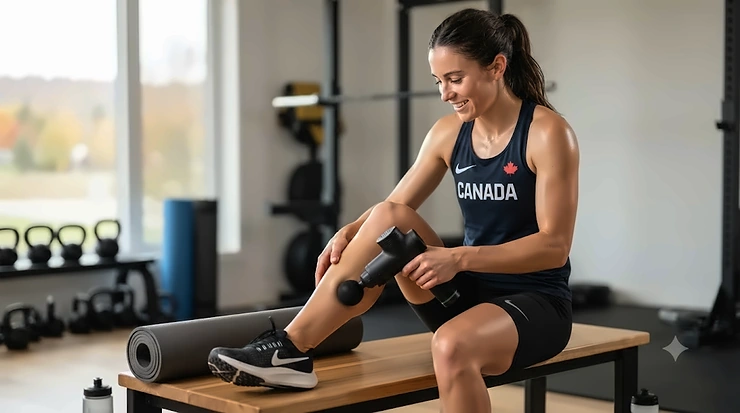
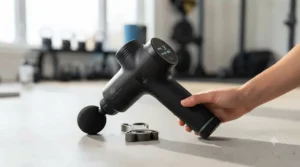
A sports recovery gun for athletes is a handheld percussive massage device that fires rapid, deep pulses into muscle tissue to boost circulation, ease tightness, and speed up recovery between training sessions. That’s the textbook definition, anyway. Ask anyone who’s used one after a brutal leg day and they’ll tell you it’s closer to a small, angry woodpecker that somehow makes your quads feel human again.
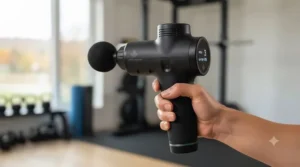
Here’s the thing nobody tells you before you buy your first one: the gun itself is only half the equation. The other half is knowing which device actually matches your body, your sport, and your budget — because a 20-year-old CFL lineman recovering from two-a-days needs something categorically different from a weekend jogger nursing tight calves. This guide breaks down seven real, currently available devices across every price tier, explains what the spec sheets actually mean once the gun is in your hand, and walks through exactly how to use one without accidentally making things worse (yes, that’s possible). Every claim below is grounded in real product data, aggregated review sentiment, and the current research on percussive therapy — no invented testimonials, no fabricated “we tested this in our lab” theatre.
By the end, you’ll know which of these devices deserves a spot in your gym bag, how to use it on deep tissue without bruising yourself, and where the science on lactic acid and recovery actually stands (spoiler: it’s more nuanced than most product pages let on).
Quick Comparison Table
| Product | Best For | Price Range (CAD) | Stand-Out Spec |
|---|---|---|---|
| Theragun Prime Plus | Best overall for serious athletes | C$430–480 | Heat attachment + app-guided routines |
| Hypervolt 3 | Quietest premium pick | C$350–420 | Whisper-quiet motor for shared spaces |
| Ekrin B37 | Best value, lifetime warranty | C$320–370 | 56 lb stall force at a mid-range price |
| Theragun Mini | Most powerful compact gun | C$270–310 | Full-size amplitude in a travel body |
| Hypervolt Go 2 | Best TSA-compliant travel gun | C$190–250 | Under 100Wh battery, carry-on legal |
| Renpho R4 | Smart budget pick | C$140–190 | App tracking on a budget device |
| Toloco EM26 | Best ultra-budget option | C$90–130 | 10 attachment heads, LED display |
None of these devices are identical tools wearing different logos, and that’s the first thing worth understanding. The Theragun Prime Plus and Hypervolt 3 sit at the top because they combine deep amplitude with genuine engineering polish — you’re paying for consistency under load, not just marketing gloss. Meanwhile, the Ekrin B37 punches well above its price bracket on stall force, which matters enormously more than most buyers realize (more on that below). If your budget tops out under C$150, the Toloco EM26 and Renpho R4 aren’t consolation prizes; they’re genuinely competent tools with real trade-offs, not garbage dressed up in a nice box.
💬 Just one click — help others make better buying decisions too!😊
Top 7 Sports Recovery Guns: Expert Analysis
1. Theragun Prime Plus — best overall for serious in-season training
The standout here is the 16mm amplitude paired with an included heat attachment, which is a combination almost nothing else in this price bracket offers. In practice, that amplitude means the massage head actually reaches past superficial fascia into the muscle belly, rather than just vibrating against the skin — the difference is obvious the moment you use it on a genuinely knotted hamstring. It runs five speeds, ships with five attachment heads, and its battery holds roughly 150 minutes of use per charge, which for most athletes means a full week of daily sessions before you’re hunting for the charger.
Based on the spec comparison against Therabody’s own lineup, the Prime Plus effectively replaces the older Elite model while adding the heated head and better battery life — a genuine upgrade, not a repackaging. It’s built for someone training five or six days a week who wants one device that does everything: warm-up, cooldown, and deep-tissue work on stubborn spots. Reviewers consistently note that the app-guided routines, developed with input from licensed physical therapists, take a lot of the guesswork out of where and how long to work a muscle group, which matters if you don’t have a physio on speed dial.
Pros:
- ✅ Deep 16mm amplitude reaches genuine muscle tissue, not just skin
- ✅ Heat attachment adds real therapeutic value pre-workout
- ✅ App-guided routines built with licensed physical therapists
Cons:
- ❌ Premium price puts it out of reach for casual users
- ❌ Heavier than compact rivals, less ideal for daily travel
At around C$430–480, the Theragun Prime Plus isn’t cheap, but for an athlete training year-round, the cost-per-session drops fast — this is a buy-once tool, not a replace-every-season one.
2. Hyperice Hypervolt 3 — quietest premium option for shared locker rooms
What immediately stands out is the Quiet Glide motor, which runs noticeably below the decibel level of most rivals — a genuinely underrated feature if you’re using this in a shared training room rather than an empty basement. The device delivers five speeds through a 12mm amplitude with a claimed 480-minute battery life, meaning multi-day team trips don’t require packing a charger at all.
Here’s what most buyers overlook about this model: the noise reduction isn’t just a comfort feature, it’s a compliance one. Physical therapists working in clinical environments where device noise disrupts other patients or practitioners have gravitated toward the Hypervolt line specifically because of this, according to testing from Forbes Vetted. For an athlete sharing a training facility, that translates into being able to use it during a team stretch session without every head in the room turning toward you. Aggregated reviewer sentiment consistently flags the ergonomic grip and the Bluetooth app integration, which offers guided massage programs developed in partnership with professional sports organizations — a detail that speaks to its intended audience.
Pros:
- ✅ Noticeably quieter operation than most premium rivals
- ✅ Exceptional 480-minute battery life for multi-day trips
- ✅ Bluetooth app with pro-sport-developed massage programs
Cons:
- ❌ 12mm amplitude is shallower than the Theragun Prime Plus
- ❌ Ergonomics feel less balanced on longer sessions, per some reviewers
Priced around C$350–420, the Hypervolt 3 undercuts Therabody’s flagship while keeping most of the performance that day-to-day recovery actually demands.
3. Ekrin Athletics B37 — best value with a lifetime warranty
The standout feature is a 56-pound stall force at highest speed — a figure that actually outperforms several devices costing far more. Stall force measures how much resistance the motor can push against before it bogs down, which in plain terms means this gun keeps working on dense muscle (think glutes or upper traps) instead of stuttering the moment you apply real pressure. Its 12mm amplitude and eight-hour battery life round out a spec sheet that reads like it belongs a full price tier higher.
What most buyers overlook about Ekrin as a brand is that it was founded by two former collegiate athletes who clearly built this thing for people who actually train hard, not for a coffee-table accessory. Ekrin backs the B37 with a lifetime warranty, versus the 1–2 year coverage typical of Theragun and Hyperice — a meaningful signal of confidence in long-term durability. Reviewers who directly compared it against the Theragun Prime consistently note you’re trading a small amount of stroke length for significantly more raw stall power, at a noticeably lower price.
Pros:
- ✅ Class-leading 56 lb stall force for dense muscle groups
- ✅ Lifetime warranty far outpaces industry-standard coverage
- ✅ Angled handle design reduces wrist fatigue on long sessions
Cons:
- ❌ Less brand recognition means fewer third-party accessories
- ❌ No heat attachment option currently available
At roughly C$320–370, the Ekrin B37 is the device we’d point a budget-conscious but serious athlete toward first — it just doesn’t cut the corners that matter.
4. Theragun Mini — most powerful compact gun for a gym bag
The short pitch is 30% smaller and quieter than the original Theragun, yet it holds onto genuinely usable amplitude for a device this size — nearly double what some rival “travel” guns manage. That matters because most compact massagers sacrifice depth for portability; the Mini is one of the few that doesn’t force that trade-off completely.
Based on the spec comparison, the Mini’s amplitude sits close enough to its full-size siblings that it works as either a dedicated travel companion or, for lighter users, a primary device. It’s built for the athlete who needs something that survives being tossed in a hockey bag between a rink and a car without babying it. Aggregated reviewer sentiment repeatedly highlights the surprisingly low noise level for its size, alongside a straightforward single-button interface that trades customization for genuine simplicity — no menus to fumble through mid-warm-up.
Pros:
- ✅ Compact frame with amplitude that punches above its size
- ✅ Simple one-button control, no fumbling mid-session
- ✅ Quiet enough to use around teammates or in shared spaces
Cons:
- ❌ Fewer attachment heads than full-size Theragun models
- ❌ Shorter battery runtime compared to larger siblings
Landing around C$270–310, the Theragun Mini is the compact pick for someone who refuses to compromise on power just because the device fits in a jacket pocket.
5. Hyperice Hypervolt Go 2 — best TSA-compliant travel pick
The headline feature is a battery that stays comfortably under the TSA’s 100Wh lithium-ion carry-on limit, while several rival “compact” devices sit in borderline or non-compliant territory that risks confiscation at airport screening. For an athlete flying to away games, tournaments, or training camps, that single spec can be the difference between having a recovery tool on hand and losing it at security.
What the spec sheet won’t tell you outright, but frequent flyers in the review pool consistently note, is how much peace of mind this buys compared to gambling on a bigger device’s battery rating. The Go 2 trades some raw power for genuine portability, which is exactly the right trade for someone who travels constantly for competition rather than training exclusively at home. Research on percussion massage timing backs up its use case directly: even short five-minute sessions meaningfully reduce pre-exercise muscle stiffness, which is precisely the kind of quick, on-the-road session this device is built for.
Pros:
- ✅ Battery safely clears TSA carry-on lithium limits
- ✅ Genuinely pocketable for team travel bags
- ✅ Enough power for real pre- and post-competition use
Cons:
- ❌ Lower amplitude than full-size premium options
- ❌ Smaller attachment head selection
At around C$190–250, the Hypervolt Go 2 earns its keep purely on travel logistics — a category most buyers don’t think about until they’re stuck at a gate explaining a confiscated battery to a security agent.
6. Renpho R4 — smart budget pick with app tracking
The standout is app connectivity at a genuine budget price point — a feature usually reserved for premium devices. The R4 pairs via Bluetooth to log session length and intensity, letting more data-driven athletes track recovery habits the same way they’d track training load, without paying premium-tier prices for the privilege.
Here’s what most buyers overlook about budget-tier massage guns generally: amplitude and stall force scale down faster than the marketing copy suggests, and the R4 is no exception — it’s a genuinely useful tool for general soreness and warm-up, but it isn’t built to compete with the B37 or Prime Plus on dense, stubborn muscle knots. Consumer Reports included the Renpho R4 in its evaluation of percussive massagers spanning $50 to $500, a range that puts the R4’s positioning in useful context: it’s a mid-pack performer at a low-pack price. Aggregated reviews describe it as a solid entry point for someone new to percussive therapy who isn’t ready to commit premium dollars to a habit they haven’t tested yet.
Pros:
- ✅ Bluetooth app tracking rare at this price point
- ✅ Lightweight design suits beginners and smaller frames
- ✅ Genuinely quiet for casual, at-home use
Cons:
- ❌ Amplitude noticeably shallower than mid-range competitors
- ❌ Less durable build quality reported over long-term use
Priced around C$140–190, the Renpho R4 makes sense as a low-risk way to find out whether percussive therapy actually fits your routine before spending three times as much.
7. Toloco EM26 — best ultra-budget bestseller
The pitch is ten attachment heads and a detailed LED display for a price that undercuts nearly everything else on this list. For under C$130, that’s an unusually generous feature set, and it’s a big reason the EM26 has remained a consistent bestseller rather than a flash-in-the-pan budget option.
Based on direct testing comparisons against pricier rivals, the EM26 delivers “competitive power” and relatively quiet operation — genuinely surprising given the price gap. It’s a reasonable pick for someone who wants to try percussive therapy for general post-workout soreness without committing to premium pricing, though the trade-offs show up in build longevity and battery consistency over extended use. Reviewers who directly compared it note it holds its own on features even as it concedes ground on refinement and long-term durability compared to Ekrin or Therabody products.
Pros:
- ✅ Ten attachment heads is unmatched at this price tier
- ✅ Detailed LED display for speed and battery tracking
- ✅ Genuinely competitive power for casual recovery needs
Cons:
- ❌ Build quality and battery longevity lag premium rivals
- ❌ Less suited to daily use by high-training-load athletes
At roughly C$90–130, the Toloco EM26 is the easiest entry point on this list — the device we’d suggest to someone who wants to test the waters before upgrading later.
Massage Gun for CFL/NHL Athletes Recovery: What Elite-Level Demands Change
Recovery needs shift dramatically once you’re training and competing at a CFL or NHL level, and the gear has to keep up. A weekend athlete can get away with a shallow-amplitude, low-stall-force device because the muscle damage they’re managing is comparatively modest. A CFL lineman coming off two-a-days in August heat, or an NHL forward playing four games in six nights, is dealing with a completely different order of muscular fatigue and micro-trauma — and a budget device simply won’t have the stall force to work through it.
This is where amplitude and stall force stop being spec-sheet trivia and start mattering practically. Devices like the Theragun Prime Plus and Ekrin B37 — both offering deep amplitude or high stall force — are built to keep delivering consistent pressure on dense glute, quad, and upper-back muscle without the motor bogging down, which is exactly the profile elite-level training staff look for. Team therapists working with hockey and football rosters also lean toward quieter devices like the Hypervolt 3 specifically because locker rooms are shared, high-traffic spaces where a screaming motor mid-session isn’t practical. And for road trips — which NHL and CFL schedules are built around — a TSA-compliant option like the Hypervolt Go 2 solves a real logistical headache that recreational athletes never have to think about.
None of this means a recreational athlete needs to spend premium dollars to get real benefit. It means the ceiling on “good enough” rises with training load, competition frequency, and body mass — a 260-pound lineman’s hamstring simply needs more stall force than a 150-pound recreational runner’s does.
How to Use a Percussion Massager for Deep Tissue
Using a percussion massager on deep tissue isn’t complicated, but doing it wrong is how people end up with bruising instead of relief. Start with the device on its lowest speed and let the head make first contact without pressing — you’re introducing the muscle to the sensation before ramping up. Glide slowly, roughly one to two inches per second, rather than holding the gun stationary on one spot; stationary pressure at high amplitude is the single most common cause of bruising among first-time users.
Work each major muscle group for one to two minutes maximum per session, moving with — not against — the direction of the muscle fibre. Increase speed gradually as the tissue warms up, and only move to higher-intensity attachment heads (the bullet or fork heads) once you’re confident on the flatter, gentler ones. Crucially, never apply direct pressure to bone, joints, the spine, or any area that’s actively inflamed or injured — the goal is muscle belly, not bony landmarks. For deep tissue work specifically, focus on trigger points (that stubborn, rope-like knot you can actually feel under your fingers) and hold the device there for 10–15 seconds at a slightly elevated speed before moving on, rather than staying fixed in place for the full session.
A common first-30-days mistake is treating the massage gun like a cure-all and using it daily on the same overworked area, which can actually worsen soreness rather than resolve it. Give a heavily worked muscle group at least a day of rest from percussive treatment, and always finish a session on the lowest speed setting to let the muscle “cool down” gradually rather than stopping abruptly at full intensity.
Post-Workout Recovery Tools: Where the Massage Gun Fits In Your Routine
A massage gun is one tool among several post-workout recovery tools, and understanding where it fits — rather than treating it as a stand-alone fix — is what separates athletes who actually recover faster from those who just own an expensive gadget. Consider three realistic profiles.
The competitive club-level runner training five days a week benefits most from a device like the Ekrin B37 used specifically on calves and IT bands post-run, paired with static stretching and adequate hydration; the massage gun handles localized tightness that foam rolling can’t quite reach around the ankle and shin. The recreational weightlifter training three or four days a week, meanwhile, gets solid value from something like the Renpho R4 or Toloco EM26 on major muscle groups the evening after a session — their training load simply doesn’t demand premium stall force, and the cost savings are real money back in their pocket. The competitive team-sport athlete — think junior hockey or university football — is the profile that benefits most from a premium device like the Theragun Prime Plus, precisely because game-day frequency and contact-sport muscle trauma outpace what lighter tools can meaningfully address.
In every one of these cases, the massage gun works best as a targeted, localized tool used alongside — never instead of — sleep, hydration, and proper nutrition. It’s excellent for muscle-specific tightness; it’s not a substitute for the recovery basics your body actually needs to repair itself.
✨ Don’t Miss These Exclusive Deals!
🔍 Take your recovery routine to the next level with these carefully selected products. Click on any highlighted item to check current pricing and availability on amazon.ca. These tools will help you build a genuine, sustainable recovery habit your body will thank you for.
Lactic Acid Buildup Relief: Separating Science From Marketing
Lactic acid buildup relief is one of the most commonly cited benefits on massage gun packaging, and it’s worth unpacking honestly rather than repeating the marketing verbatim. Lactic acid does accumulate during intense exercise and contributes to that immediate post-set burning sensation — and percussive therapy genuinely does help clear it faster by boosting local blood flow, which supports nutrient delivery and metabolic waste removal in the treated muscle.
Where the marketing oversimplifies things is delayed onset muscle soreness, or DOMS — the deep ache that shows up 24 to 72 hours after a hard session. Current research increasingly attributes DOMS primarily to microscopic muscle-fibre tears and the resulting inflammatory response, not lingering lactic acid, which typically clears from the bloodstream within an hour or two of finishing exercise. So what’s actually happening when your massage gun seems to help the next day? A systematic literature review of percussive therapy research found that multiple treatment sessions can meaningfully reduce experiences of musculoskeletal pain, likely through improved circulation, mechanoreceptor stimulation, and reduced muscle tone — not through flushing out lactic acid that’s already long gone.
Practically, this means the marketing claim isn’t false so much as outdated: the immediate burning sensation during and right after exercise does relate to lactic acid, and percussive therapy can help there. The soreness you feel the next day is a different mechanism entirely, and treating your massage gun as a DOMS solution rather than strictly a lactic-acid solution will set more realistic expectations for what it can actually deliver.
Sports Physiotherapy Equipment: How Massage Guns Compare
Massage guns are one piece of a much broader sports physiotherapy equipment category, and understanding how they stack up against traditional alternatives helps clarify what you’re actually buying.
| Tool | Depth of Effect | Cost Over Time | Best For |
|---|---|---|---|
| Massage gun (e.g., Ekrin B37) | Deep, targeted, adjustable | One-time cost, no ongoing fees | Self-administered, on-demand localized relief |
| Foam roller | Shallow to moderate, broad | Very low, one-time cost | Full-body warm-up and general mobility |
| Manual sports massage therapy | Deep, therapist-guided | Recurring per-session cost | Complex injuries, hands-on diagnosis |
| Compression boots (e.g., NormaTec-style) | Moderate, systemic (limbs) | Higher one-time cost | Full-leg recovery, passive sessions |
A foam roller is cheaper and genuinely effective for general mobility work, but it can’t isolate a specific trigger point in a deep glute muscle the way a device like the Theragun Prime Plus can — the tool trades precision for accessibility. Manual sports massage therapy from a registered practitioner remains the gold standard for diagnosing and treating complex soft-tissue injuries, and no massage gun replaces a trained clinician’s hands and judgment; the Canadian Massage Therapy Council for Accreditation oversees the education standards behind that professional expertise. Compression boots address full-limb circulation passively while you sit still, which is a different mechanism entirely from the targeted, active pressure a percussion device applies.
The realistic takeaway: a massage gun is the tool for daily, self-administered, localized maintenance between appointments — not a replacement for a registered physiotherapist when something is actually injured, not just tight.
How to Choose a Sports Recovery Gun for Athletes
Choosing the right device comes down to matching a handful of specs to your actual training reality rather than chasing the highest number on the box.
- Start with amplitude. Anything above roughly 10mm delivers genuine deep-tissue penetration; anything shallower is closer to vibration therapy than true percussion.
- Check stall force next. Higher stall force (40+ lbs) matters most for dense muscle groups like glutes and quads, especially for larger-bodied or contact-sport athletes.
- Weigh noise level realistically. If you’ll use it in a shared locker room or apartment with thin walls, a quieter motor like the Hypervolt 3‘s is worth the trade-off even if raw power is slightly lower.
- Match battery life to your schedule. Daily users training six days a week want 150+ minutes per charge; occasional users can get away with less.
- Consider portability honestly. If you travel for competition, a TSA-compliant compact device like the Hypervolt Go 2 avoids a genuinely stressful airport situation.
- Factor in warranty length. Ekrin’s lifetime coverage on the B37 signals durability confidence that shorter 1–2 year warranties simply don’t.
- Set a real budget ceiling first. A well-reviewed budget device like the Toloco EM26 genuinely outperforms a poorly-reviewed premium one — price alone isn’t a proxy for quality.
Common Mistakes When Buying a Massage Gun
The most common mistake is buying based purely on amplitude without checking stall force, which leaves buyers disappointed when the device bogs down on genuinely tight muscle instead of delivering the deep pressure the spec sheet implied. A second frequent error is prioritizing brand name over actual use case — someone who trains at home alone doesn’t need the noise-dampening engineering that justifies the Hypervolt 3‘s premium over a quieter-but-still-capable alternative.
Buyers also regularly underestimate battery life needs, assuming any device will “obviously” last through a week of daily sessions, then discovering their specific model needs nightly charging. Another overlooked factor is attachment head compatibility — cheaper devices sometimes use proprietary, hard-to-replace heads, while more established brands maintain broader accessory ecosystems. Finally, plenty of buyers skip checking the warranty entirely, missing that a device like the Ekrin B37 offers lifetime coverage while comparable competitors cap out at one or two years — a meaningful difference if the motor fails 18 months in.
Long-Term Cost & Maintenance
| Product | Upfront Price (CAD) | Warranty | Est. Motor Lifespan |
|---|---|---|---|
| Theragun Prime Plus | C$430–480 | 1-year limited | 3–5 years typical use |
| Ekrin B37 | C$320–370 | Lifetime | 4–6 years typical use |
| Toloco EM26 | C$90–130 | 1-year limited | 1–2 years typical use |
Looking at the table above, the Ekrin B37‘s lifetime warranty fundamentally changes its cost-per-year math compared to rivals — even at a mid-range upfront price, a covered motor replacement years down the line makes it the strongest long-term value on this list. The Theragun Prime Plus costs more upfront and carries a shorter warranty window, but its replaceable battery (a rarity in this category) means the whole unit doesn’t become e-waste the moment the battery degrades, extending realistic usable life well past the warranty period.
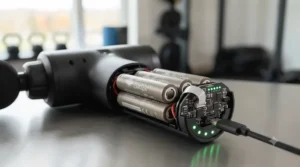
Maintenance itself is minimal across all seven devices: wipe attachment heads after each use, avoid submerging the motor housing in water, store the battery partially charged rather than fully depleted during long off-seasons, and replace foam-covered heads once they show visible wear, since degraded foam transmits less controlled pressure. None of these devices require professional servicing under normal use — the “maintenance” is really just basic care that most owners skip in year one and regret by year two.
Buyer’s Decision Framework
If you’re training six or more days a week at a competitive or elite level, choose a premium device like the Theragun Prime Plus or Hypervolt 3, because your muscle recovery demands consistent deep amplitude that budget motors can’t sustain session after session. If you’re a serious recreational athlete on a tighter budget who still wants real performance, choose the Ekrin B37, because its stall force rivals premium devices without the premium price tag. If travel for competition is a regular part of your season, prioritize a TSA-compliant compact option like the Hypervolt Go 2 or Theragun Mini over raw power, because a confiscated device helps nobody. And if you’re simply testing whether percussive therapy fits your routine at all, start with the Renpho R4 or Toloco EM26 — there’s no reason to spend premium dollars on a habit you haven’t confirmed you’ll stick with.
Safety, Regulations, and Compliance for Canadian Buyers
Any massage gun sold in Canada that plugs into an outlet or charges via a wall adapter should carry a recognized certification mark — CSA, cUL, or cETL — confirming it meets Canadian national electrical safety standards; Health Canada advises buyers to always check for these marks before purchasing any electrical product, and to be wary of counterfeit units that skip certification entirely. This matters more with massage guns than most small appliances because the devices use lithium-ion batteries and run motors under sustained mechanical load, both of which carry real fire and injury risk if built to substandard specifications.
Beyond electrical safety, there are genuine physiological cautions worth taking seriously. Percussive devices should never be used directly over the spine, throat, varicose veins, recent surgical sites, or areas with active injury or inflammation. Athletes managing a diagnosed condition — a healing fracture, a recent soft-tissue tear, or a cardiovascular concern — should consult a physiotherapist or physician before incorporating percussive therapy into a recovery routine, since a device this powerful can aggravate an injury that isn’t yet ready for mechanical pressure. For most healthy adult athletes, though, staying within the 1–2 minute per muscle group guideline and avoiding bony landmarks keeps the risk profile low.
Frequently Asked Questions
❓ Is a massage gun worth it for athletes?
❓ How long should you use a percussion massager per muscle group?
❓ Can a massage gun really help with lactic acid?
❓ What's the difference between a Theragun and a cheaper massage gun?
❓ Do I need a professional-grade massage gun or a budget one?
Conclusion
A sports recovery gun for athletes isn’t a magic fix, but used correctly, it’s one of the more genuinely useful additions you can make to a recovery routine — provided you match the device to your actual training demands instead of just buying the biggest name on the shelf. The Theragun Prime Plus and Hypervolt 3 earn their premium pricing through real engineering advantages that serious, high-frequency athletes will feel session after session. The Ekrin B37 remains the value pick that punches well above its price bracket, backed by a warranty that says the company believes in its own build quality. And for anyone still deciding whether percussive therapy fits their routine at all, the Renpho R4 and Toloco EM26 offer a low-risk way to find out.
Whichever device you land on, remember that the gun is a tool for localized muscle maintenance — not a substitute for sleep, hydration, proper nutrition, or a registered physiotherapist when something is genuinely injured rather than just tight. Match the device to your training reality, use it correctly, and it’ll earn its spot in your gym bag for years.
Recommended for You
- High-Impact Massage Gun 2026: 7 Top Picks, Ranked & Tested
- Professional Percussion Massager: 7 Top Picks for 2026
- How to Choose a Foot Massager: 7 Top Picks for Tired Feet (2026)
Disclaimer: This article contains affiliate links. As an Amazon Associate, I earn from qualifying purchases. If you purchase products through these links, we may earn a small commission at no additional cost to you.
✨ Found this helpful? Share it with your friends! 💬🤗
