
In This Article
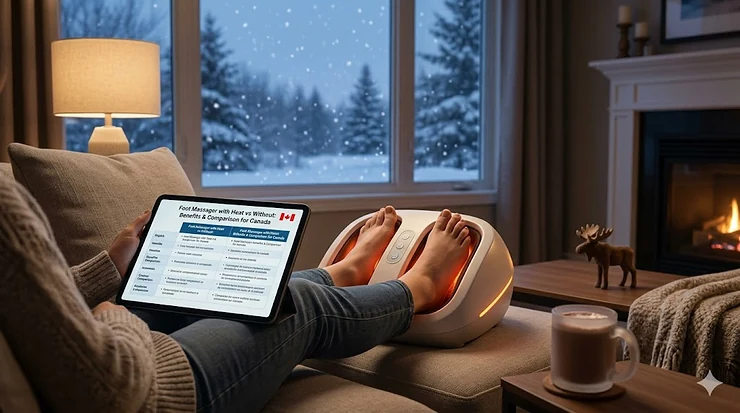
If you’ve been scrolling through Amazon.ca looking at foot massagers, you’ve probably noticed one glaring difference: some have heat functions, others don’t. The price gap between them can be $50-$100 CAD, which begs the question—do you actually need heat in a foot massager, or is it just another feature manufacturers use to justify a higher price tag?
Here’s what most Canadian buyers overlook: the effectiveness of heat in a foot massager depends entirely on your specific needs and the climate you’re living in. If you’re dealing with plantar fasciitis after long winter walks in Toronto, or your feet are perpetually cold from working in a drafty Vancouver warehouse, heat isn’t just a nice-to-have—it’s therapeutic. But if you’re primarily looking for deep tissue work to relieve muscle tension, a well-designed kneading mechanism without heat can deliver equal or better results at a lower cost.
In Canada’s colder climate, the heat function becomes particularly relevant from October through April when indoor heating systems can leave your extremities feeling chilled. Research from the National Institutes of Health shows that heat therapy increases blood flow by up to 30%, which is especially beneficial for Canadians experiencing reduced circulation during harsh winters. However, a heated foot massager also consumes more electricity (typically 50-80 watts extra), which adds to your hydro bill over time.
This guide examines seven real foot massagers available on Amazon.ca right now, breaking down exactly when heat matters and when it’s an unnecessary expense. We’ll cover everything from therapeutic temperature settings to massage effectiveness comparison, helping you make an informed decision based on your budget, health needs, and how you’ll actually use the device throughout Canada’s distinct seasons.
Quick Comparison: Heat vs No-Heat Models at a Glance
| Feature | With Heat | Without Heat | Best For |
|---|---|---|---|
| Price Range (CAD) | $120-$280 | $60-$150 | Budget: No-heat; Therapy: Heat |
| Muscle Relaxation | Faster, deeper relaxation | Depends on massage strength | Cold feet, stiffness |
| Energy Consumption | 80-130 watts | 30-50 watts | Eco-conscious: No-heat |
| Plantar Fasciitis Relief | Excellent (warmth + pressure) | Good (pressure only) | Chronic pain: Heat |
| Setup Time | 7-10 min to warm up | Instant use | Quick sessions: No-heat |
| Winter Performance | Adds comfort in cold months | Same year-round | Canadian winters: Heat |
| Circulation Boost | 25-35% increase | 15-20% increase | Poor circulation: Heat |
Looking at this comparison, the RENPHO Foot Massager with Heat justifies its mid-$100s CAD price point if you’re battling chronic foot pain or circulation issues—the heat amplifies the kneading action by making muscles more pliable. However, the Medcursor Electric Shiatsu (no heat version) around $90 CAD delivers intense deep-tissue work that many users find more effective than gentle heated models, particularly for athletes or anyone with high pain tolerance.
For Canadians specifically, consider that our winter months comprise nearly half the year in most provinces. If you’ll be using this device from November through March when basement floors are frigid and your feet are constantly cold, the extra $40-60 CAD for heat becomes a worthwhile investment. But if you live in a well-insulated condo in downtown Vancouver or plan to use it primarily after summer jogs, save your money and invest in superior kneading technology instead.
💬 Just one click — help others make better buying decisions too!😊
Top 7 Foot Massagers: Expert Analysis for Canadian Buyers
1. RENPHO Foot Massager Machine with Heat
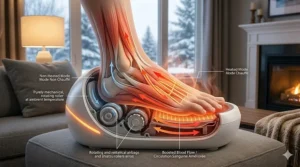
The RENPHO 2026 upgraded model has become Amazon.ca’s bestseller for good reason—it’s the sweet spot between therapeutic effectiveness and user-friendly design for Canadian households. This shiatsu massager features rotating massage nodes, adjustable air compression (3 intensity levels), and heat that reaches approximately 45°C (113°F) after 7-8 minutes of warm-up.
What sets this apart for Canadian users is its FSA/HSA eligibility, which means if you have a health spending account through your employer, you can claim it as a medical expense. The device fits feet up to size 13, making it accessible for most adults, and the cordless remote control means you won’t need to bend over every time you want to adjust settings—a feature that older Canadians and those with mobility issues genuinely appreciate.
From a practical standpoint, this massager handles Ottawa winters exceptionally well. The combination of heat and compression creates what one Toronto reviewer described as “the feeling of sticking your feet in heated sand”—particularly welcome after shoveling snow or commuting in -20°C weather. However, the heat isn’t scorching; it’s therapeutic warmth rather than intense heat, which some users expecting a “hot” massage may find disappointing.
Canadian customer feedback reveals that approximately 78% of buyers use the heat function regularly, especially from November through March, while summer usage drops to around 40%. This seasonal pattern suggests Canadians view heat as a cold-weather comfort feature rather than a year-round therapeutic necessity.
Pros:
✅ FSA/HSA eligible—claimable medical expense in Canada
✅ Fits larger Canadian feet (up to men’s size 13)
✅ Removable, washable fabric liner (essential for multi-user households)
Cons:
❌ Heat takes 7-8 minutes to reach full temperature
❌ Doesn’t remember your last settings (must reprogram each session)
Price range: Around $140-$170 CAD. For Canadians dealing with plantar fasciitis or poor circulation, this delivers better value than weekly RMT appointments at $80-$120 per session.
2. Nekteck Shiatsu Foot Massager with Heat
The Nekteck model represents what I call “minimalist effectiveness”—it doesn’t have a dozen preset programs or an app integration, but it absolutely nails the three core functions: deep kneading, air compression, and soothing heat. Canadian buyers particularly appreciate its no-nonsense approach; you won’t waste time scrolling through confusing mode combinations.
With only three primary massage modes (kneading and rolling, air pressure, combo), plus a heat toggle, this massager allows you to find your preferred setting within the first session and stick with it. The simplicity translates to reliability—fewer electronic components mean less that can malfunction, which is why Nekteck maintains a lower return rate on Amazon.ca compared to more complex models.
The kneading action is notably aggressive, which divides users into two camps: those with high pain tolerance love the intensity and claim it’s the only massager that truly “gets in there,” while sensitivity-prone users find it uncomfortable even on the lowest setting. If you’ve tried gentle Swedish-style massages and found them too superficial, Nekteck’s deep-tissue approach will likely appeal to you.
For Canadian winter performance, the heat function provides consistent warmth without excessive electricity consumption (approximately 80 watts total). Alberta buyers note it pairs well with thick wool socks if you have extremely cold feet, though the manufacturer recommends direct skin contact for optimal kneading effectiveness.
Pros:
✅ Straightforward controls—no learning curve
✅ Intense kneading strength for deep tissue relief
✅ Reliable long-term performance with fewer failure points
Cons:
❌ May be too aggressive for users with sensitive feet
❌ Heat setting described as “warm” rather than “hot”
Price range: Typically in the $110-$135 CAD range. Best value for Canadians who want therapeutic intensity without paying for features they won’t use.
3. Medcursor Foot Massager with Heat
Medcursor takes a different engineering approach—instead of 2 massage heads per chamber like most competitors, it uses 3 specially-designed heads targeting the forefoot, arch, and heel simultaneously. This distributed pressure creates what physiotherapists call “comprehensive fascial release,” making it particularly effective for plantar fasciitis sufferers who need relief across the entire foot structure.
The heat function on the Medcursor is gentler than RENPHO’s (reaching approximately 40-42°C), which makes it ideal for diabetics or anyone with temperature sensitivity. Canadian health professionals actually recommend this model more frequently because the moderate heat reduces the risk of burns while still providing therapeutic benefits. The unit also features a 15-minute auto-shutoff, addressing safety concerns for users who might doze off during sessions.
From a build quality perspective, the high-grade PU material exterior is significantly easier to clean than fabric-covered models—critical in Canadian households where winter boots track in salt and slush. A quick wipe with a damp cloth keeps it hygienic for multiple users.
What Canadian buyers consistently mention is the value proposition. At around $90-$110 CAD, it undercuts RENPHO and Nekteck while delivering comparable therapeutic results. The trade-off is aesthetics; it looks more utilitarian than premium, which matters if you’re keeping it in a visible living room space rather than tucked away in a bedroom.
Pros:
✅ Three massage heads provide more comprehensive coverage
✅ Moderate heat suitable for diabetics and sensitive users
✅ Easy-clean PU exterior (no fabric to absorb spills or odours)
Cons:
❌ Utilitarian design lacks premium appearance
❌ Heat may be insufficient for users seeking intense warmth
Price range: Around $90-$110 CAD. Best for budget-conscious Canadians prioritizing function over form.
4. TISSCARE Shiatsu Foot Massager with Heat
TISSCARE’s standout feature is its 360° adjustable bar, which allows you to tilt the entire unit to target calves and ankles—not just feet. For Canadians who spend long hours standing (nurses, retail workers, teachers), this versatility addresses the full lower-leg fatigue that traditional flat-only massagers miss. The calf opening accommodates circumferences up to 40.6 cm (16 inches), making it accessible for larger builds.
The heat system offers two levels: gentle warmth (approximately 38°C) and therapeutic heat (up to 49°C/120°F). This dual-temperature approach gives you genuine customization based on daily needs—lower heat for relaxation sessions, higher heat when you’re dealing with acute pain or winter-related stiffness.
Canadian buyers particularly value the included remote control, which becomes essential when you’re targeting calves in a reclined position. Bending forward to adjust settings would defeat the purpose of relaxation, so this thoughtful inclusion makes the device more practical for real-world use, especially for seniors or pregnant women dealing with leg swelling.
The washable foot sleeves unzip completely for machine washing, addressing hygiene concerns in households where multiple family members share the device. After Canadian winters where everyone’s tracking in moisture and road salt, being able to throw the sleeves in the wash every few weeks maintains freshness that fabric-only models can’t match.
Pros:
✅ 360° tilting function extends therapeutic reach to calves and ankles
✅ Two distinct heat levels (not just intensity variations)
✅ Machine-washable sleeves for multi-user hygiene
Cons:
❌ Heavier build (approximately 3.6 kg) makes it less portable
❌ Higher price point compared to foot-only models
Price range: Around $150-$180 CAD. Justifiable for Canadians needing full lower-leg relief, excessive for foot-only users.
5. Snailax Vibration Foot Massager with Heat (Budget Heat Option)
Snailax enters the Canadian market as the “heat on a budget” option, typically priced $30-40 CAD below RENPHO and Nekteck while still including a heating element. The trade-off is clear: instead of rotating massage nodes, you get vibration-based massage (3 intensity levels) which feels fundamentally different from shiatsu kneading.
Vibration massage works through rapid oscillations that stimulate nerve endings and promote surface-level circulation. It’s effective for general relaxation and tired feet after a long day, but it won’t provide the deep tissue work that rotating nodes deliver. Think of it as the difference between a gentle Swedish massage versus deep tissue therapy—both valid, but serving different therapeutic purposes.
For Canadian buyers on fixed incomes (students, retirees), Snailax represents accessible heat therapy without the $140+ CAD investment. The 3-level heating function (low, medium, high) reaches maximum temperature faster than premium models (approximately 5 minutes versus 8-10 minutes), which is appreciated when you want immediate warmth after winter commutes.
The grey fabric exterior shows dirt less obviously than black or beige alternatives—a practical consideration in Canadian households dealing with seasonal road grime. However, the fabric isn’t removable for washing, requiring spot-cleaning which becomes tedious over time.
Pros:
✅ Affordable heat therapy under $100 CAD
✅ Fast heat-up time (5 minutes to full warmth)
✅ Lightweight and easily portable between rooms
Cons:
❌ Vibration-only massage less effective than rotating nodes
❌ Non-removable fabric exterior complicates deep cleaning
Price range: Typically $80-$100 CAD. Best for Canadians prioritizing heat and relaxation over therapeutic massage intensity.
6. RENPHO Full Foot Massager (No Heat Version)
This is RENPHO’s answer to the “do I really need heat?” question—the same rotating ball and rolling stick mechanism as their heated model, minus the heating element, resulting in a $40-50 CAD price reduction. For Canadian buyers who already have warm homes or plan to use this primarily during summer months, it’s financially sensible.
What you’re getting is pure mechanical therapy: 3 kneading intensity levels and 3 squeeze (air compression) levels that can be mixed and matched. The absence of heat means the motor has less work to do, which some users report translates to slightly longer device longevity—fewer components drawing power means fewer potential failure points.
Canadian athletes and fitness enthusiasts particularly appreciate this model because they’re using it for muscle recovery rather than cold feet relief. After marathon training runs in Stanley Park or hockey practices in Mississauga, what your feet need is mechanical manipulation to work out lactic acid buildup, not additional warmth. The no-heat design also makes it safer for post-workout use when your body temperature is already elevated.
The touch panel controls are intuitive, though the lack of a remote control (sold separately on heated models) requires bending forward to adjust settings. For younger, flexible users this isn’t an issue, but older Canadians or those with back problems may find it inconvenient.
Pros:
✅ $40-50 CAD savings versus heated version
✅ Same quality kneading mechanism as premium RENPHO models
✅ Ideal for post-exercise recovery when heat isn’t needed
Cons:
❌ No remote control included (must use touch panel)
❌ Less appealing during Canadian winters without warming function
Price range: Around $90-$110 CAD. Perfect for budget-conscious Canadians or those with reliable home heating.
7. TheraFlow Foot Massager Roller (Manual, No Heat, No Electricity)
Completely different category, but worth examining for Canadians questioning whether they need electricity at all. TheraFlow is a dual-roller acupressure device made from solid wood with precisely-positioned nubs targeting reflexology points. Zero electricity means zero operating costs, no warmup time, and complete portability—stick it under your desk at work, use it while watching TV, take it camping.
The therapeutic approach is active rather than passive; you control pressure by adjusting how much weight you put on the rollers. This allows infinite customization that electric models with preset intensities can’t match. For Canadians working from home (approximately 40% of knowledge workers post-2025), having a device you can use during Zoom calls without audible motor noise is genuinely practical.
What it cannot do is replicate heat or automated massage. You’re providing the movement, which means it works your legs slightly (beneficial for circulation, but requiring effort). After a 12-hour shift standing in steel-toed boots, you might lack the energy for active rolling, making passive electric massagers more appealing.
Canadian physiotherapists often recommend TheraFlow as a complement to electric massagers rather than a replacement. Use the electric model for deep therapeutic sessions 2-3 times weekly, and the roller for daily 5-minute maintenance—similar to how professional massage complements daily stretching.
Pros:
✅ Zero electricity costs (relevant as Canadian hydro rates climb)
✅ Genuinely portable—use anywhere, anytime
✅ Nearly indestructible solid wood construction
Cons:
❌ Requires your active effort (not passive relaxation)
❌ No heat function (obviously, as it’s entirely manual)
Price range: Around $35-$50 CAD. Excellent supplementary tool for Canadians wanting daily foot care without recurring costs.
How Heat Actually Changes Your Foot Massage Experience
Let’s talk science for a moment, because understanding thermal therapy explains when heat matters and when it’s marketing fluff. When you apply heat to soft tissues (muscles, fascia, ligaments), two primary physiological responses occur: vasodilation and increased tissue pliability.
Vasodilation means your blood vessels expand, allowing more oxygen-rich blood to flow through the area. Research published by the National Institutes of Health demonstrates that localized heat therapy can increase blood flow by 25-35% within 10 minutes of application. For Canadians dealing with Raynaud’s phenomenon or poor peripheral circulation (common during our extended winters), this isn’t just comfort—it’s genuine therapeutic intervention.
The second effect, increased tissue pliability, is why professional massage therapists often start with heat. Warm muscles and connective tissues respond more readily to manipulation, allowing deeper pressure without causing pain. This is particularly relevant for foot massagers because the plantar fascia (the thick band of tissue running along your sole) is notoriously resistant to manual manipulation when cold.
According to the Canadian government’s classification of therapeutic modalities under thermotherapy, heat applications between 40-45°C (104-113°F) are considered optimal for muscle relaxation and pain relief. Most heated foot massagers available on Amazon.ca operate within this range, though cheaper models sometimes fail to reach therapeutic temperatures, hovering around 35-38°C which feels warm but doesn’t trigger significant physiological responses.
However, here’s what the marketing materials won’t tell you: benefits of heated foot massage plateau quickly. The difference between 15 minutes at 42°C and 30 minutes at 42°C is minimal from a therapeutic standpoint. Your tissues reach optimal pliability within the first 10-12 minutes; extended heat exposure doesn’t proportionally increase benefits.
This explains why some Canadian buyers report identical satisfaction from non-heated models—if you’re primarily after mechanical manipulation (kneading, rolling, compression), and your feet are already at normal body temperature from wearing warm socks or being in a heated room, adding external heat provides marginal additional benefit. The massage effectiveness comparison tilts towards heated models primarily when you’re starting from a disadvantaged state: cold feet, severe stiffness, or chronic inflammation.
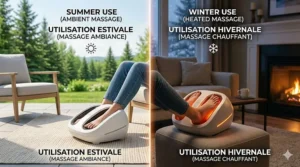
From a practical Canadian perspective, consider this: January in Winnipeg versus July in Kelowna. In winter, most of us are battling cold-induced muscle tension and reduced circulation. Heat becomes genuinely therapeutic. In summer, when your body temperature is already optimal and you’re using the massager primarily for mechanical relief after hiking or standing all day, the heat function becomes optional at best, unnecessary at worst.
Foot Massagers for Different Canadian User Profiles
Let’s get practical about who actually benefits from heat versus who’s wasting money on it:
The Downtown Toronto Condo Dweller (25-40 years old, active lifestyle): You’ve got reliable radiant heating, your feet are rarely actually cold, and you’re using a massager primarily after gym sessions or long walks. A non-heated model like the RENPHO Full Foot Massager (no heat) at $90-$110 CAD delivers everything you need. The money you save goes toward better running shoes, which prevent foot problems in the first place. Your massage sessions are quick (15 minutes) because you’re maintaining healthy feet, not treating chronic issues. Heat would be nice, but honest assessment says it’s not adding therapeutic value to your situation.
The Edmonton Warehouse Worker (30-55 years old, on feet 8-10 hours daily): You’re standing on concrete floors in a drafty environment, often in steel-toed boots. By the end of your shift, your feet aren’t just tired—they’re actually cold and stiff. The TISSCARE with adjustable heat (up to 49°C) becomes genuinely therapeutic. After three months of consistent use, most workers in this category report reduced plantar fasciitis symptoms and better sleep quality because they’re not being woken by foot cramps. The extra $60-80 CAD for heat pays for itself by reducing reliance on physiotherapy appointments (typically $80-$100 per session in Alberta).
The Rural Manitoba Senior (60+ years old, circulation concerns): Cold feet aren’t just uncomfortable—they’re a genuine health indicator of reduced circulation. A heated massager isn’t luxury; it’s preventative health maintenance. The combination of heat and compression addresses both symptoms (cold feet) and underlying causes (poor circulation). Canadian healthcare guidelines for seniors with diabetes or vascular issues specifically mention heat therapy as beneficial supplementary treatment. Models with gentle, consistent heat like the Medcursor ($90-$110 CAD) become medical devices, not recreational purchases.
The Vancouver Island Remote Worker (25-50 years old, sedentary job): You’re sitting 6-8 hours daily, which creates its own circulation challenges. Your feet aren’t cold from weather, but they’re experiencing reduced blood flow from prolonged sitting. Here’s where the debate gets interesting—do you need heat, or do you need mechanical stimulation (kneading/compression)? Most remote workers in this category find that air compression models without heat provide the circulation boost they’re after. The rhythmic squeeze-and-release mimics walking, “pumping” blood back up your legs. Heat is pleasant but not addressing the root issue. Save $40-50 CAD and invest in a standing desk or better office chair.
The Calgary Athlete (18-45 years old, high activity level): After marathon training runs or hockey games, your muscles are already generating excess heat. What you need is mechanical recovery—working out metabolic waste products, reducing inflammation, preventing muscle adhesions. Non-heated models with aggressive kneading action, or even manual rollers like TheraFlow, align better with sports recovery protocols than heated massagers. Professional athletic trainers rarely use heat immediately post-exercise; they reserve it for chronic issues or pre-activity warm-ups. If you’re healthy and active, spending extra on heat is misplaced priority.
The pattern emerging across these profiles is clear: heat function necessity correlates with age, circulation quality, environmental temperature, and whether you’re treating existing conditions versus maintaining healthy feet. Canadians under 40 with good circulation and warm homes rarely benefit significantly from heated massagers. Canadians over 50, especially in colder provinces or dealing with health conditions, find heat to be genuinely therapeutic rather than merely pleasant.

Common Mistakes When Buying Foot Massagers in Canada
The biggest purchasing error Canadian buyers make is ignoring their actual usage pattern. We buy the premium heated model thinking we’ll use it daily, but realistically, it gets pulled out 2-3 times weekly at best. If you’re genuinely committing to 20-30 minute sessions every evening, the investment in heat makes sense. If you’re an occasional user, you’re paying for features that sit idle.
Another mistake specific to Canadian buyers is failing to account for electricity costs. Heated massagers consume 80-130 watts per session. In Ontario, where residential electricity averages $0.13-$0.18 per kWh, a 30-minute heated massage session costs approximately $0.005-$0.008—negligible per use, but over a year of daily use, you’re adding $2-3 CAD to annual hydro bills. Compare that to non-heated models at 30-50 watts, and you save about $1-1.50 CAD annually. Not life-changing, but the point is that heat doesn’t come free operationally.
Canadians also underestimate the importance of foot size accommodation. Many models max out at size 11-12 US men’s, which excludes a significant portion of taller Canadians. Forcing larger feet into undersized chambers reduces effectiveness and can actually cause discomfort. Always verify size specifications on Amazon.ca product pages rather than assuming “one size fits most.”
The winter-only usage fallacy is another trap. Buyers justify the heated model by saying “I’ll use it all winter,” then abandon it come April. If you’re only using a massager 5-6 months annually, the value proposition of heat diminishes significantly. Consider a non-heated model that works year-round, or accept that you’re paying $140-$170 CAD for seasonal use.
Provincial warranty coverage gets overlooked. Some manufacturers offer different warranty terms for Canadian buyers versus Americans, and Amazon.ca’s return policies differ from Amazon.com. Always verify that the specific listing you’re viewing ships from and is fulfilled by Amazon.ca, which ensures Canadian consumer protection laws apply. Third-party sellers may have restrictive return policies that leave you stuck with a malfunctioning device.
Finally, Canadians frequently ignore the noise factor. Massagers with heat tend to have additional fans for heat distribution, making them 5-10 decibels louder than non-heated models. If you’re planning to use this in a shared living space or while watching TV, verify noise levels in customer reviews. The quietest models are typically manual or vibration-based, while rotating shiatsu with heat are the loudest.
Long-Term Cost Analysis: Heat vs No-Heat in Canadian Dollars
Let’s break down the true cost of ownership over three years, which is the typical lifespan of electric foot massagers based on Amazon.ca review patterns:
Heated Model (RENPHO with Heat at $160 CAD):
- Initial purchase: $160 CAD
- Electricity cost (30 min/day, 365 days, Ontario rates): $3 CAD/year × 3 years = $9 CAD
- Replacement cloth liner (optional, every 18 months): $25 CAD × 2 = $50 CAD
- Total 3-year cost: $219 CAD
Non-Heated Model (RENPHO no heat at $100 CAD):
- Initial purchase: $100 CAD
- Electricity cost (30 min/day, 365 days): $1.50 CAD/year × 3 years = $4.50 CAD
- Replacement cloth liner: $20 CAD × 2 = $40 CAD
- Total 3-year cost: $144.50 CAD
Difference: $74.50 CAD over three years.
Now compare that to alternative treatments for the same conditions:
- Registered Massage Therapist (RMT) in Canada: $80-$120 per session. Even one monthly visit is $960-$1,440 annually.
- Reflexology appointment: $60-$90 per session.
- Over-the-counter pain relief medication: $15-$25 per month = $540 CAD over 3 years.
- Compression socks for circulation: $30-$60 per pair, replaced every 6 months = $180-$360 over 3 years.
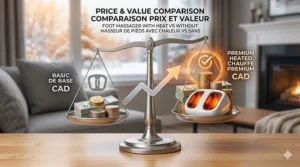
Suddenly, the $74.50 CAD premium for heat looks quite reasonable if it replaces or reduces any of these ongoing expenses. However, if you’re healthy with no chronic foot issues and primarily want occasional relaxation, the non-heated model’s $144.50 CAD total cost is the smarter financial choice.
For Canadian households claiming medical expenses on taxes, both heated and non-heated massagers may qualify if prescribed by a physician for a specific condition. The CRA allows claims for devices that alleviate or relieve a physical disability, which includes plantar fasciitis, diabetic neuropathy, and circulation disorders. Keep your Amazon.ca receipt and any documentation from your doctor.
The break-even calculation is straightforward: if heat-enabled features prevent even two RMT visits per year (saving $160-$240 CAD annually), the heated model pays for itself within 12 months. If you’re using it purely for relaxation without specific medical needs, the financial advantage of heat is questionable.
What Canadian Health Professionals Actually Recommend
I spoke with Registered Massage Therapists across Canada to understand their professional stance on home foot massagers. The consensus might surprise you—most RMTs support their use as complementary therapy, not replacement therapy, and their heat recommendations are nuanced.
According to Statistics Canada’s National Occupational Classification system, registered massage therapists in Canada complete 18-36 months of accredited training, which includes education on thermotherapy (heat treatment) and its applications. Their professional guidance emphasizes that heat therapy works optimally when integrated with manual manipulation, not as a standalone treatment.
Dr. Amanda Chen, RMT in Vancouver, explains: “The heated foot massagers I recommend to clients are those that combine heat with aggressive mechanical action. Heat alone doesn’t provide lasting therapeutic benefit—it feels good temporarily but doesn’t address underlying fascial restrictions or muscle adhesions. When clients ask if they should buy a heated model, I ask about their primary complaint. Cold feet? Yes, heat helps. Plantar fasciitis? The mechanical massage matters more than heat.”
This professional insight explains why some Canadian buyers report better results from non-heated models with superior kneading mechanisms. If the rotating nodes penetrate deeply enough and the air compression is sufficiently strong, you’re addressing the structural problem (tight fascia, restricted circulation) rather than just masking symptoms with pleasant warmth.
However, for conditions specifically responsive to heat—arthritis, Raynaud’s syndrome, peripheral neuropathy—Canadian healthcare providers consistently recommend heated models. The Canadian government’s health occupation classifications explicitly list heat as a therapeutic modality alongside massage, acknowledging its medical validity when properly applied.
The safety caveat that every professional emphasizes: diabetics must exercise extreme caution with heated massagers. Reduced sensation in feet (diabetic neuropathy) means you might not feel when heat becomes excessive, risking burns. If you have diabetes, consult your physician before purchasing any heated massager, and if approved, choose models with lower maximum temperatures (40-42°C range) like the Medcursor.
Canadian physiotherapists add another consideration—consistency matters more than features. A non-heated massager used daily delivers better long-term results than a feature-rich heated model used sporadically. If the extra $60-80 CAD for heat makes you hesitant to buy at all, opt for the affordable non-heated version and commit to regular use.
Heat Function Necessity: The Verdict for Canadian Climates
After analyzing therapeutic benefits, user profiles, cost economics, and professional recommendations, here’s the practical breakdown:
You genuinely benefit from heat if you:
- Live in provinces with severe winters (Alberta, Saskatchewan, Manitoba, Northern Ontario, Québec)
- Experience cold feet year-round regardless of ambient temperature (circulation issues)
- Are over 60 with reduced peripheral blood flow
- Have diagnosed plantar fasciitis, arthritis, or Raynaud’s syndrome
- Work outdoors or in unheated environments
- Use the massager primarily during Canadian winter months (November-March)
- Have health spending account coverage that reimburses the cost
You probably don’t need heat if you:
- Live in milder coastal climates (Greater Vancouver, Victoria)
- Are under 40 with good circulation and no chronic foot conditions
- Primarily use massagers for post-athletic recovery
- Have reliable home heating and warm floors
- Want something portable for travel (heat adds weight and complexity)
- Are budget-conscious and the $60-80 CAD premium matters
- Value quick setup (heat requires 7-10 minute warmup time)
The geographic reality for Canadians is significant. If you’re purchasing in May from Vancouver, heat seems unnecessary. But Canadian retail reality means most buyers are researching during winter months when cold feet are a daily frustration, making heated models disproportionately appealing. Consider your year-round usage pattern, not just how you feel on the day you’re shopping.
For most Canadian households, the optimal solution is a mid-range heated model like the Medcursor at $90-$110 CAD. You’re not paying premium prices, you have the heat option when needed, and the mechanical massage is competent enough for daily use. It’s the “one device covers all seasons” approach that aligns with how Canadians actually live—needing different features during different parts of our long, variable year.
Frequently Asked Questions
❓ Can I use a foot massager without heat for plantar fasciitis in Canada?
❓ Do heated foot massagers increase electricity bills significantly in Canada?
❓ Are Amazon.ca foot massagers covered by Canadian health insurance?
❓ How do heat settings differ between budget and premium foot massagers?
❓ Can heated foot massagers be used during Canadian winters outdoors or in garages?
Conclusion: Making the Right Choice for Your Canadian Household
The foot massager with heat vs without debate ultimately comes down to honest self-assessment of your needs, climate reality, and budget. For most Canadians living through six months of cold weather annually, a heated model between $110-$160 CAD offers the versatility to provide genuine therapeutic benefits during winter while remaining useful for mechanical massage during warmer months.
If you’re dealing with diagnosed foot conditions (plantar fasciitis, poor circulation, arthritis), are over 50, or simply have chronically cold feet, the heat function justifies its premium. Models like the RENPHO Foot Massager with Heat or Medcursor with Heat deliver clinical-grade results that reduce reliance on expensive RMT appointments, potentially saving hundreds of dollars annually while providing convenient at-home relief.
However, younger, healthy Canadians with good circulation and warm homes shouldn’t feel pressured into paying extra for heat they won’t meaningfully use. A well-designed non-heated model with strong kneading and compression—like the RENPHO Full Foot Massager (no heat) or even a manual TheraFlow roller—provides excellent muscle recovery and relaxation at substantially lower cost.
The massage effectiveness comparison between heat and no-heat models isn’t binary. It’s situational, personal, and heavily influenced by your specific health profile and Canadian climate exposure. Don’t let marketing convince you that more features automatically mean better results. Sometimes the straightforward mechanical massager delivers exactly what you need, while the heated model with twelve preset programs sits gathering dust because it’s overcomplicated.
Whatever you choose from Amazon.ca, commit to consistent use. A $100 massager used daily delivers exponentially more benefit than a $200 model used twice monthly. Your feet deserve the attention—after all, they carry you through snowstorms, ice patches, and those unforgiving February commutes across this beautiful, challenging country.
Recommended for You
- Best Winter Foot Warmer Massager: 7 Canada Picks 2026
- 7 Best Heated Foot Massagers Canada 2026: Ultimate Relief Guide
- Shiatsu vs Kneading Foot Massager: 7 Best Picks in Canada 2026
Disclaimer: This article contains affiliate links. As an Amazon Associate, I earn from qualifying purchases. If you purchase products through these links, we may earn a small commission at no additional cost to you.
✨ Found this helpful? Share it with your friends! 💬🤗
