
In This Article
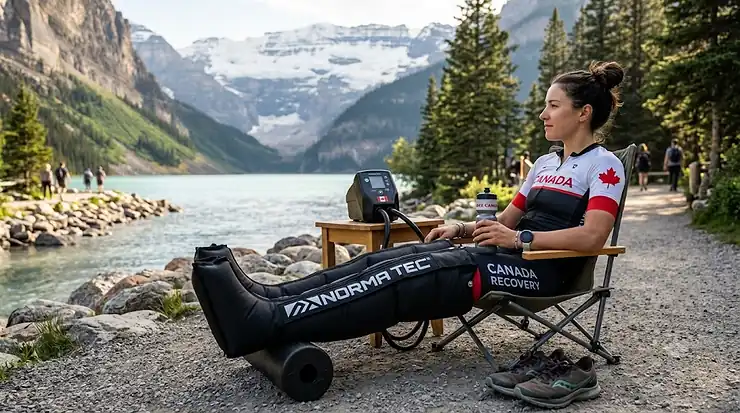
Picture this: it’s a crisp Saturday morning in October, and you just crushed a 25 km long run along the Ottawa River. Your legs feel like they’ve been filled with wet cement. You know the soreness coming the next morning — that deep, muscle-fibre ache known as delayed-onset muscle soreness (DOMS) — is going to slow your entire week. Now imagine slipping into a pair of recovery boots for athletes, sitting back for 30 minutes, and waking up Sunday feeling like you’re ready to go again.
That’s the promise of pneumatic compression therapy — and for millions of Canadian athletes, it’s becoming less of a luxury and more of a training essential.
Recovery boots for athletes use sequentially inflating air chambers to mimic the natural muscle-pump action of vigorous exercise. By applying rhythmic pressure from the foot upward through the thigh, they accelerate venous return and enhance lymphatic drainage — essentially helping your body flush metabolic waste products like lactate far faster than passive rest alone. According to a systematic review published on PubMed by the National Institutes of Health, intermittent pneumatic compression (IPC) applied to the lower limbs shows meaningful effects on sports recovery, particularly when used consistently after high-intensity efforts.
For Canadian athletes, there’s an added dimension to this conversation: our training environments are punishing. Whether you’re a trail runner in the Rockies, a triathlete in the Toronto summer heat, or a hockey player grinding through a Saskatchewan winter, your legs take a beating that athletes in milder climates simply don’t face. Recovery becomes not just a performance optimiser — it’s injury prevention. A good 20-30 minute session with compression boots for runners can make the difference between a strong Tuesday track workout and a nagging calf injury that sidelines you for three weeks.
In this guide, I’ve reviewed seven of the best recovery boots for athletes currently available on Amazon.ca (CAD — prices confirmed as of 2026 research), covering everything from budget-friendly options for recreational runners to professional-grade systems used by elite Canadian sports teams. Whether you’re a weekend warrior or training for a Boston Qualifier, there’s an option here for you. Let’s get into it.
Quick Comparison Table: Top 7 Recovery Boots for Canadian Athletes
| Product | Chambers | Wireless? | Pressure Levels | Best For | Approx. Price (CAD) |
|---|---|---|---|---|---|
| Hyperice Normatec 3 Legs | 7 zones | No (control unit) | 7 levels | Serious athletes, premium performance | $700–$900 CAD |
| Therabody JetBoots Prime | 4 chambers | ✅ Yes | 4 levels | Travel, convenience-focused athletes | $500–$650 CAD |
| QUINEAR Air Compression System | 4 chambers | No | 8 intensities | Best overall value | $150–$220 CAD |
| FIT KING Air Compression Recovery | 4 chambers | No (wired) | 8 intensities | Budget-conscious runners | $100–$160 CAD |
| FIT KING Upgraded Cordless Boots | 4 chambers | ✅ Yes | 8 intensities | Mid-range cordless buyers | $180–$250 CAD |
| CINCOM 6-Zone Recovery System | 6 zones | No | Multiple modes | Zone coverage seekers | $150–$230 CAD |
| ALLJOY Leg Massager with Heat | 4 chambers | No | 4 intensities + heat | Recovery + heat therapy combo | $100–$150 CAD |
Table Analysis: The gap between premium and mid-range compression boots on Amazon.ca has narrowed significantly in 2026. The Hyperice Normatec 3 justifies its premium price with superior ZoneBoost technology and clinical-grade pressure control — but if you’re not training at competitive levels, the QUINEAR system delivers roughly 80% of the benefit at less than 30% of the cost in CAD. Budget athletes should note that the ALLJOY adds heat therapy at its price point, making it uniquely versatile for cold-climate recovery — particularly relevant during Canadian winters when warmth and circulation are both compromised.
💬 Just one click — help others make better buying decisions too! 😊
✨ Don’t Miss These Exclusive Deals!
🔍 Take your athletic performance to the next level with these carefully selected recovery products. Click on any highlighted item to check current pricing and availability on Amazon.ca. These tools will help you recover faster, train harder, and achieve the results your effort deserves!
Top 7 Recovery Boots for Athletes: Expert Analysis
1. Hyperice Normatec 3 Legs — The Gold Standard for Serious Canadian Athletes
The Normatec 3 Legs is the compression boot that professional sports teams actually use, and it shows in every detail of the design. With 7 distinct pressure zones and patented ZoneBoost technology, it can deliver targeted compression pulses to specific areas of the leg rather than applying uniform pressure — a crucial difference when you’re dealing with quad fatigue versus calf tightness after a hard interval session.
The 7 intensity levels give you genuine control over recovery depth. At the lower end, it feels like a gentle lymphatic flush — ideal for active recovery days. At the higher settings, it mimics the deep compression you’d get from a sports physiotherapist’s manual work. Bluetooth integration with the Hyperice app allows you to programme customised recovery protocols, which is genuinely useful once you understand your body’s patterns across a training week. The Normatec 3 is also available through Canadian retailers including Northern Fitness and The Physio Store, with Amazon.ca stocking it for Prime-eligible delivery in most provinces.
What most Canadian buyers overlook about this model is its sizing versatility: the boots come in multiple lengths and two width options, sized by height, inseam, and thigh circumference. Getting the right fit isn’t a formality — a poorly fitted compression boot loses 30-40% of its therapeutic effectiveness because the air chambers can’t create proper sealing pressure. Canadian reviewers consistently praise the build quality, noting it holds up through high-frequency training seasons without the seams splitting that plague cheaper alternatives.
✅ 7-zone precision with ZoneBoost targeted compression
✅ Hyperice app integration for customised protocols
✅ Premium build quality — lasts through years of high-frequency training
❌ Premium pricing in the $700–$900 CAD range puts it out of reach for recreational athletes
❌ External control unit and hoses limit portability compared to wireless alternatives
Price range: $700–$900 CAD. For elite athletes and serious competitors, this is the recovery investment that pays dividends over a full season.
2. Therabody JetBoots Prime — Best Wireless Recovery Boots for Canadian Travellers
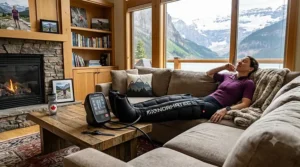
The Therabody JetBoots Prime solves the single biggest problem that keeps athletes from actually using their recovery boots: setup friction. With fully integrated pumps built directly into the boots — no hoses, no separate control unit, no cable management — you can be fully compressed and recovering in under 60 seconds. For a Canadian athlete who trains before a 7 AM work commute, that difference is not trivial.
The JetBoots Prime operates at 4 pressure levels across 4 air chambers covering the full leg, from foot through thigh. The FDA-cleared designation (relevant for cross-border shoppers) reflects genuine clinical validation, though Canadian consumers will note there is no equivalent Health Canada device licence currently listed for these boots — standard for consumer wellness devices in this category. Therabody operates its Canadian e-commerce at therabody.ca, and the JetBoots Prime is also available on Amazon.ca for Canadian buyers seeking Prime shipping. Leg sizing runs Regular (81–94 cm / 32–37 inches leg length) with a Large option for taller athletes.
The trade-off versus the Normatec 3 is pressure granularity — 4 levels versus 7 means less fine-tuning, which matters for elite athletes but is perfectly adequate for most recreational Canadians. For runners who travel to races (think: running a 10K in Montreal, flying to Vancouver for a half-marathon, road-tripping to a triathlon in Kelowna), the wireless, fold-flat design is genuinely transformative. Canadian reviewers highlight how the JetBoots Prime has replaced post-race ice baths as their go-to recovery tool.
✅ Fully wireless — no hoses, no cable mess, 60-second setup
✅ Fold-flat portability, ideal for Canadian race travel
✅ Clean, sleek design that actually gets used after a long workout
❌ Only 4 pressure levels — less fine-tuning than premium wired options
❌ Higher price point without the pressure range of the Normatec 3 at similar cost
Price range: $500–$650 CAD. The smartest buy for athletes who travel to races or value daily-use consistency above all else.
3. QUINEAR Air Compression Recovery System (QN-090A) — Best Overall Value on Amazon.ca
If there’s a single model I’d recommend to the widest range of Canadian athletes, it’s the QUINEAR QN-090A. This is the compression boot that legitimately punches above its weight class. With 4 air chambers, 12 intensity levels, and 3 distinct compression modes — sequential, overlap, and wave — it provides a level of therapeutic customisation you’d typically expect to pay three times the price for.
The built-in smart sensor is the technical feature that actually matters in practice: it automatically adjusts inflation volume based on your leg’s circumference, compensating for the size variance between the foot pocket and the thigh sleeve that causes cheaper boots to either over-compress one area or under-compress another. For Canadian athletes with varied build types — think the difference between a distance runner’s lean calves and a hockey player’s more muscular thighs — this self-adjusting feature ensures a consistently effective session rather than a one-size-fits-nobody experience.
At its price point in the $150–$220 CAD range, the QUINEAR is accessible without a Prime membership and typically ships to most Canadian provinces, though buyers in remote northern territories should verify delivery timelines, as shipping to areas like Nunavut or the Northwest Territories may take longer than the standard 2–5 day window. The QUINEAR has the largest review base of any mid-range competitor on Amazon.ca, with Canadian buyers consistently highlighting durability over 12+ months of regular use.
✅ Smart sensor auto-adjusts to your leg size — no guessing
✅ 12 intensity levels and 3 modes for genuine therapeutic range
✅ Strongest mid-range value proposition on Amazon.ca
❌ Corded (wired) operation limits positioning flexibility
❌ Control panel interface has a learning curve — takes 2-3 sessions to operate intuitively
Price range: $150–$220 CAD. The best compression boots for runners who want professional-grade therapy without a professional-grade price tag.
4. FIT KING Air Compression Recovery System (FT-082A) — Best Budget Pick for Recreational Athletes
The FIT KING FT-082A earns its place on this list because it delivers genuine functional compression therapy at an entry-level price point that puts recovery boots for athletes within reach of recreational Canadian runners and cyclists who would otherwise never consider them. At around $100–$160 CAD, this is impulse-buy territory for anyone who’s ever spent $80 on a sports massage.
The FT-082A covers the full leg with 4 independent air channels — foot, calf, knee, and thigh — using 3 compression modes and 8 pressure intensities. The precision sensor control system adjusts inflation volume based on leg shape, a feature that’s impressive at this price tier and usually reserved for more expensive models. Inflation speed is notably fast, which matters more than it sounds when you’re tired after a long ride and the last thing you want is to sit through 3 minutes of pressurisation before your session even starts.
What most Canadian buyers overlook at this price point is the operational noise level. The FIT KING’s large-capacity pump runs significantly quieter than cheaper alternatives, which means you can realistically use this while watching television or unwinding after an evening track session without disturbing a partner or roommate. For urban Canadians in Toronto condos or Vancouver apartments where thin walls are a reality, this is actually a meaningful feature. Canadian reviews note the unit holds up well through Canada’s humidity swings from summer to winter.
✅ Full-leg 4-chamber coverage at an entry-level CAD price point
✅ Fast inflation, quiet operation — practical for apartment living
✅ Smart sensor adjusts to leg size, even at budget tier
❌ No wireless option — wired only, which limits positioning in smaller spaces
❌ Build materials feel less premium than mid-range competitors; less suitable for daily professional-athlete use
Price range: $100–$160 CAD. The smartest entry point for recreational athletes testing compression therapy for the first time — excellent value for the first-time buyer.
5. FIT KING Upgraded Cordless Rechargeable Compression Boots — Best Mid-Range Wireless Option
This upgraded FIT KING model occupies an interesting position in the Canadian market: it gives you the wireless freedom of the Therabody JetBoots Prime at roughly 40–50% of the price in CAD. For athletes who’ve tried the wired FT-082A and found the cable management annoying but aren’t ready to spend Therabody money, this is the logical upgrade path.
The cordless rechargeable design uses a 2500mAh battery for 3–4 hours of operation per charge — enough for multiple recovery sessions before needing to plug in again. The 4 independent air chambers cover the full leg, with 8 intensity levels and 3 compression modes matching the wired model’s therapeutic range. What you gain over the wired version is pure positioning freedom: you can use these on the couch, on the floor, or even seated in a camping chair at the finish line of a race without worrying about reaching a wall outlet.
The spec sheet won’t tell you this, but the real advantage of going cordless at this price point is consistency of use. Recovery tools only work when you actually use them, and the friction of plugging in, positioning around a cord, and managing the cable is enough to make many athletes skip sessions on tired evenings. The cordless FIT KING removes that excuse. Canadian buyers should verify Amazon.ca availability as this newer listing has slightly less review history than the wired version — we’d suggest prioritising if wireless functionality matters to your lifestyle.
✅ Wireless freedom at a mid-range CAD price point
✅ 3–4 hour battery life — sufficient for multiple sessions per charge
✅ Same therapeutic range as the wired version without the cable hassle
❌ Newer listing with thinner review history on Amazon.ca
❌ Battery life degrades in cold Canadian environments — store indoors during winter
Price range: $180–$250 CAD. The best value wireless compression boot for Canadian athletes who want freedom of movement without a premium price tag.
6. CINCOM 6-Zone Air Compression Recovery System — Best for Full-Leg Zone Coverage
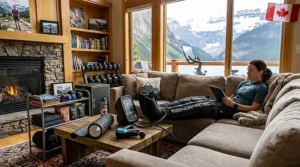
CINCOM makes a compelling case with its 6-zone coverage system, which expands on the standard 4-chamber design by adding dedicated zones for the mid-calf and upper knee areas — the exact regions that runners and cyclists most frequently complain about. If you’ve ever wished your compression boots could work more specifically on the area just below the knee where tibial stress accumulates, the CINCOM is worth a serious look.
The 6-zone system operates using professional dynamic pressure sequencing, which the brand describes as working similarly to the graduated compression of a sports physiotherapy session — pressure builds from foot to thigh in a coordinated wave rather than simply inflating simultaneously. For athletes dealing with post-workout swelling or circulation concerns in specific leg regions, this targeted coverage genuinely adds functional value over standard 4-chamber alternatives. The system is compatible with standard Canadian 120V household outlets, so no adaptor concerns.
Canadian buyers should note that the CINCOM has a thinner Amazon.ca review base than the QUINEAR at a similar price point, which means there’s less long-term Canadian user data to draw from. However, the feature set is competitive and the value proposition is strong. A 6-zone system at this price in CAD would have cost twice as much two years ago. Runner reviewers particularly mention relief from lower leg tightness after high-mileage weeks — the kind of fatigue that accumulates during Canadian fall race season when weekly mileage peaks ahead of autumn half-marathons and full marathons.
✅ 6-zone coverage targets mid-calf and upper knee areas often missed by 4-chamber systems
✅ Professional dynamic pressure sequencing mimics physiotherapy massage
✅ Competitive pricing for the feature set on Amazon.ca
❌ Thinner review history on Amazon.ca compared to QUINEAR at a similar price
❌ Corded operation only — no wireless option available
Price range: $150–$230 CAD. Best suited for runners and cyclists who need targeted lower-leg zone coverage and want more than a standard 4-chamber system.
7. ALLJOY Leg Massager with Heat and Compression — Best Budget Heat + Compression Combo
The ALLJOY earns its spot as the only entry on this list combining compression therapy with integrated heat — and for Canadian athletes, that combination is more meaningful than it might appear at first glance. When you’re recovering after a November track session in Calgary or a February cross-country ski race in Quebec’s Laurentian Mountains, your muscles don’t just need compression — they need warmth to support blood flow that cold air has been actively suppressing for hours.
The ALLJOY operates with 2 heat settings paired with 4 compression intensities across 5 modes, covering the leg from calf to thigh. The heat function raises the sleeve temperature to a therapeutic range that enhances vasodilation — essentially helping blood vessels open more readily to allow compression therapy to work more effectively. This isn’t a gimmick: sports physiotherapists routinely pair heat and compression in clinical settings, and having both in one device at this price point in CAD is genuinely useful for cold-climate athletes.
Sizing comes with 4 extension straps, which is thoughtful design for Canadian athletes with larger thighs or those wearing compression layers underneath during colder months. The ALLJOY is positioned as a general wellness device rather than a high-performance sports tool, so elite athletes will quickly outgrow its intensity ceiling — but for recreational Canadian runners, cyclists, and hockey players looking for affordable daily recovery support, it’s a practical and unique option in the under $150 CAD bracket.
✅ Only budget option combining heat and compression — uniquely valuable in Canadian climate
✅ 4 extension straps accommodate varied body sizes and cold-weather layering
✅ Under $150 CAD — most accessible entry point on this list
❌ Lower intensity ceiling not suitable for serious athletes
❌ Only 4 compression intensities limits therapeutic customisation compared to 8–12 level alternatives
Price range: $100–$150 CAD. The ideal pick for recreational Canadian athletes who want affordable daily compression with the added warmth benefit that cold-weather training demands.
How to Actually Use Recovery Boots for Maximum Results in Canada
Buying the boots is only half the equation. The spec sheet won’t tell you this, but how you use compression boots matters almost as much as which model you buy. Here’s what actually works, refined for Canadian training conditions.
Step 1: Time Your Sessions Strategically
The research is clear on session timing. For acute recovery after hard training, use your compression boots within 30–90 minutes of finishing your session, before the inflammatory response has fully set in. A 20–30 minute session at moderate intensity (levels 4–6 on an 8-level system) is the sweet spot for most athletes. Longer isn’t always better — 45+ minute sessions can actually create tissue sensitivity without adding meaningful recovery benefit.
Step 2: Adjust for Canadian Winter Conditions
This is the tip Canadian athletes rarely hear. In cold weather, your legs arrive home pre-vasoconstricted — your blood vessels have been narrowed to conserve core body heat during outdoor training. If you go straight into high-intensity compression immediately after coming inside, you’re squeezing already-narrowed vessels before they’ve had time to normalise. Warm up for 10 minutes first — a hot shower works perfectly — then apply your compression boots. This sequencing dramatically improves the therapy’s effectiveness during the October-to-April period when most Canadians are training in sub-10°C conditions.
Step 3: Size and Fit First, Always
Put your boots on while standing if possible, or seated with legs extended. The chambers should feel snug but not pinching — you should be able to slide two fingers under the sleeve at the thigh. A poorly fitted boot loses effectiveness. If you’re between sizes, most manufacturers recommend sizing up for the full-leg coverage models.
Step 4: Hydrate Before and During Sessions
Compression therapy works by moving fluid through your vascular and lymphatic systems. If you’re dehydrated after a long training session, there’s less fluid volume to circulate — the boots do less work. Drink 500 ml (about 2 cups) of water 20 minutes before your session for noticeably improved results.
Step 5: Maintenance Through Canadian Seasons
Wipe down the interior sleeves with a damp cloth after sessions — sweat accumulation degrades the fabric and the seams faster than you’d think. For cordless models, store the battery indoors when temperatures drop below -10°C; lithium batteries lose 30–40% of capacity in extreme cold and may not charge properly in a cold garage.
Which Recovery Boot Fits Your Canadian Athlete Profile?
Every Canadian athlete has a different context. Here are three common profiles and which product I’d match each one with, including the reasoning.
Profile 1: The Urban Commuter-Athlete — Toronto or Vancouver
Meet Andrea: she’s a 34-year-old marketing manager in downtown Toronto who runs 5 days a week, targeting a sub-4-hour marathon at Scotiabank Toronto Waterfront in October. She lives in a 650-square-foot condo on the 12th floor. Post-run, she has maybe 45 minutes before her partner gets home and she starts cooking dinner.
Best pick: Therabody JetBoots Prime or FIT KING Upgraded Cordless The wireless design is non-negotiable here — there’s simply no good place to position a corded unit in a Toronto condo living room without the cable becoming a trip hazard. The JetBoots Prime offers 60-second setup and can be used on the couch without any cable management. If the JetBoots Prime price in CAD is stretching the budget, the FIT KING Upgraded Cordless delivers the same wireless freedom at roughly half the cost.
Profile 2: The Competitive Age-Grouper — Calgary or Edmonton
Meet Darpan: he’s a 41-year-old IT professional and competitive triathlete training for an Ironman 70.3 in Banff next August. He trains twice daily during peak weeks — swim in the morning, bike or run in the evening. Recovery isn’t optional; it’s part of the programme. His garage gym has a full setup and he doesn’t care about portability.
Best pick: Hyperice Normatec 3 Legs Darpan needs the 7-zone pressure control and ZoneBoost targeting to address different fatigue patterns across his triathlon disciplines. Quad fatigue from long bike rides requires different compression protocols than calf tightness from marathon-pace running. The Hyperice app’s customisation allows him to dial in precise recovery protocols matched to each training day. The premium price in CAD is justified by the therapeutic precision and durability through a high-frequency training year.
Profile 3: The Recreational Weekend Warrior — Suburban Ottawa or Winnipeg
Meet Sasha: she’s a 29-year-old teacher who runs two or three times a week, does the occasional 10K race, and has been dealing with recurrent calf tightness that her physiotherapist has attributed to insufficient recovery between runs. Budget matters — she’s not spending $800 CAD on a recovery tool.
Best pick: QUINEAR Air Compression System or ALLJOY Leg Massager with Heat The QUINEAR’s 12 intensity levels give Sasha the therapeutic range her physio would recommend without the premium price. If she’s dealing with calf tightness specifically during Winnipeg’s brutal winters (where stepping outside at -25°C means her calves are perpetually cold and tight), the ALLJOY’s heat function makes it the more targeted therapeutic choice for her specific situation, at a price point that doesn’t require justification.
How to Choose Recovery Boots for Athletes in Canada: 7 Key Criteria
1. Number of Chambers and Zones
More chambers mean more targeted compression. Standard 4-chamber systems cover foot, calf, knee, and thigh adequately for most athletes. If you’re dealing with specific problem areas — particularly mid-calf or IT band fatigue common in runners — a 6-zone system like the CINCOM is worth the modest price premium. More isn’t always better: 7 precisely calibrated zones (Normatec) outperforms 6 poorly calibrated zones every time.
2. Pressure Range and Intensity Levels
Minimum viable for meaningful therapy: 6 intensity levels. Optimal: 8–12 levels. Fewer than 6 means you can’t fine-tune between a gentle lymphatic flush and deep compression work — you’re essentially choosing between two settings, which is limiting. The difference between 8 and 12 levels is more subtle; both are excellent for recreational to competitive athletes.
3. Wired vs. Wireless (Particularly Important for Canadian Apartments)
Wireless models cost more but dramatically improve compliance — the number one failure mode for compression boots isn’t performance, it’s that athletes stop using them because of setup hassle. If you live in a condo or apartment (highly common in Toronto, Vancouver, Calgary, and Ottawa), wireless is worth the CAD premium for daily-use consistency.
4. Sizing — Get This Right First
Compression therapy fails silently when you have the wrong size. The sleeve must achieve an airtight seal around your leg for the pressure chambers to function correctly. Always check the manufacturer’s sizing guide using your height, thigh circumference, and inseam measurements before purchasing. When in doubt, check Canadian-specific reviews on Amazon.ca — sizing feedback from other Canadian buyers is more relevant than US reviews, since build types and measurement contexts differ.
5. Session Length and Auto-Shutoff
Look for a 20–30 minute auto-shutoff option. Sessions longer than 45 minutes provide diminishing returns for most athletes and increase the risk of tissue sensitivity. A programmable timer means you can set it and actually relax rather than watching the clock.
6. Cold-Weather Battery Performance (Wireless Models)
This is Canada-specific and often ignored in American reviews. Lithium-ion batteries in cordless compression boots lose 20–35% of effective capacity at temperatures below 10°C. If you’re recovering in a cold garage, cabin, or vehicle after a winter race, corded models actually outperform wireless ones in that specific scenario. Store cordless boots indoors and bring them to room temperature before use.
7. Amazon.ca Availability and Prime Eligibility
Prime members on Amazon.ca get free shipping on eligible items — significant when compression boots weigh 2–4 kg and standard shipping fees can add $15–$25 CAD. Verify Prime eligibility before purchase, particularly for models from smaller brands where fulfilment varies by province. Buyers in BC’s interior, northern Ontario, or the Maritimes should check delivery estimates, as some items showing “In Stock” may still carry 7–10 business day shipping windows to certain postal codes.
✨ Don’t Miss These Exclusive Deals!
🔍 Ready to level up your athletic recovery? Click on any highlighted product to check current pricing and availability on Amazon.ca. Your legs have earned it — give them the recovery they need to bring you back stronger for tomorrow’s session!
Recovery Boots vs. Traditional Recovery Methods: What the Science Says
Canadian athletes have been using cold-water immersion (ice baths), foam rollers, and compression garments for decades. So where do recovery boots for athletes actually fit in the recovery tool hierarchy? The honest answer, supported by research, is: it’s complementary rather than replaceable.
| Recovery Method | Time Required | Cost (CAD) | DOMS Reduction | Accessibility |
|---|---|---|---|---|
| Recovery Boots (IPC) | 20–30 min | $100–$900+ one-time | Moderate | High — passive, use anywhere |
| Ice Bath / Cold Plunge | 10–15 min | $0–$5,000+ | Moderate to high | Moderate — requires cold water access |
| Foam Rolling | 15–20 min | $25–$100 | Mild to moderate | Very high — requires effort |
| Compression Garments | Ongoing (hours) | $50–$200 | Mild | Very high — wearable anywhere |
| Sports Massage | 30–60 min | $80–$150/session | Moderate to high | Low — requires booking a therapist |
Table Analysis: Recovery boots for athletes offer the most compelling passive-to-benefit ratio on this list. Unlike foam rolling, which requires active effort and technique to be effective, compression boots work while you sit and watch television. Unlike sports massage, there’s no booking required and no ongoing session cost after the initial CAD investment. The Journal of Bodywork and Movement Therapies’ 2024 review confirms that IPC produces positive responses for post-exercise recovery, particularly for venous return and perceived soreness — making it a strong complement to a Canadian athlete’s existing recovery toolkit rather than a replacement for everything else.
Common Mistakes Canadian Athletes Make When Buying Compression Boots
Mistake 1: Buying Based on Amazon.com Reviews and Assuming the Same Product Ships Well to Canada
This is probably the most expensive mistake Canadian buyers make. A product with 4,000 five-star reviews on Amazon.com may have entirely different availability, pricing, and delivery experience on Amazon.ca. Always search directly on Amazon.ca, check the “ships from” information, and verify whether the listed seller ships to your province. Cross-border orders from Amazon.com to Canada can attract customs duties and may complicate warranty claims.
Mistake 2: Ignoring Sizing Guides
Walk into any Canadian running store and ask a staff member about compression boot sizing — they’ll tell you it’s the number one source of returns. Compression therapy relies on proper sleeve-to-leg contact to maintain air pressure in the chambers. If the fit is wrong, the boot works at perhaps 50% effectiveness. Measure your thigh circumference, calf circumference, and inseam before buying, and compare against the manufacturer’s sizing chart — not the generic “Medium fits most” claim.
Mistake 3: Expecting Instant Results and Abandoning After One Session
Compression boot benefits are cumulative over consistent use. Research, including the meta-analysis indexed on PubMed, suggests that athletes who use IPC consistently across a training block see meaningfully better outcomes than those who use it occasionally after particularly hard sessions. Think of it like sleep — missing one night doesn’t derail you, but consistent sleep deprivation destroys performance over weeks. Same principle.
Mistake 4: Using Maximum Pressure Every Session
More pressure is not always better. Higher intensity settings stimulate a stronger physiological response that takes longer to resolve — using maximum compression every session is like running at race pace every single day. Moderate sessions (levels 4–6 of 8) used consistently outperform maximal sessions used sporadically. Save higher intensities for your heaviest training weeks and peak race periods.
Mistake 5: Ignoring Cold-Weather Storage for Cordless Models
This is a purely Canadian mistake that American product reviews never mention. Storing wireless compression boots in a cold garage through a Canadian winter isn’t just bad for battery life — it can permanently reduce battery capacity, meaning your boots only last 40 minutes per charge instead of the rated 3–4 hours within a single season. Keep cordless models indoors above 10°C when not in use.
Frequently Asked Questions: Recovery Boots for Canadian Athletes
❓ Are recovery boots for athletes worth the investment in Canada?
❓ Do compression boots ship to all Canadian provinces on Amazon.ca?
❓ Can I use compression boots for runners during Canadian winter training?
❓ How long should a compression boot session last for optimal muscle recovery acceleration?
❓ Are recovery boots safe to use every day for athletic performance optimization?
Conclusion: Invest in Recovery, Invest in Performance
The best training programme in the world fails without adequate recovery. For Canadian athletes who push hard — through summer race seasons, fall marathon blocks, winter hockey leagues, and spring triathlon build phases — recovery tools aren’t optional extras. They’re part of the programme.
Recovery boots for athletes have matured significantly in the past two years. The gap between clinic-grade performance and consumer pricing has narrowed dramatically on Amazon.ca, making it entirely realistic to access professional-quality pneumatic compression therapy in your living room for under $200 CAD. Whether you choose the precision of the Hyperice Normatec 3 Legs, the wireless convenience of the Therabody JetBoots Prime, or the outstanding value-to-performance ratio of the QUINEAR system, you’re making an investment that will pay back in faster recovery, reduced injury risk, and more quality training days across the year.
My recommendation for the broadest range of Canadian athletes: start with the QUINEAR Air Compression System. It delivers 80% of the therapeutic benefit of systems costing four times the price, it’s available with Prime shipping on Amazon.ca, and it has the review history to back it up. If you’re already training at a competitive level and every training day counts, move straight to the Hyperice Normatec 3 Legs — you’ll notice the difference in how you feel at Thursday’s session after a hard Tuesday and Wednesday.
Your legs carry you to the start line. Take care of them.
✨ Don’t Miss These Exclusive Deals!
🔍 Ready to recover smarter? Click on any highlighted product to check current pricing and availability on Amazon.ca. Give your legs the professional-grade recovery they’ve earned!
Recommended for You
- Are Compression Leg Massagers Worth It? 7 Picks for Canada (2026)
- Best Air Compression Leg Massager Canada 2026
- 7 Best Foot Massagers for Diabetics in Canada (2026 Guide)
Disclaimer: This article contains affiliate links. As an Amazon Associate, I earn from qualifying purchases. If you purchase products through these links, we may earn a small commission at no additional cost to you.
✨ Found this helpful? Share it with your friends! 💬🤗
