
In This Article
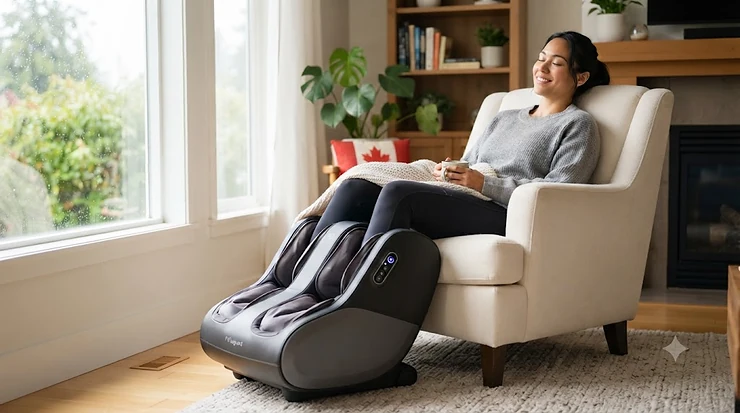
Your legs do more unpaid overtime than almost any other part of your body, and most of us never think about it until they’re throbbing at nine o’clock at night. A full leg and foot massager is a compression device — usually a set of inflatable wraps or boots for the foot, calf, and often the thigh — that squeezes and releases rhythmically to mimic what a massage therapist’s hands do, minus the appointment and the hourly rate. Canadians who stand on concrete floors all shift, sit through white-knuckle winter commutes, or just spend too many hours hunched over a keyboard tend to gravitate toward these things for one simple reason: gravity is undefeated, and blood pooling in your lower legs by 6 p.m. is a universal experience from Halifax to Victoria.
What’s changed in the last couple of years isn’t the basic idea — air compression massage has been used in hospitals for decades — it’s how affordable and configurable the home versions have become. You can now buy a device that covers foot to thigh, adjusts intensity across a dozen levels, and warms your calves like a heating pad, all for less than what a single 60-minute registered massage therapy session costs in most Canadian cities. That said, not every “full leg and foot massager” on Amazon.ca actually covers the full leg, and the spec sheets can blur together fast. This guide breaks down seven real, currently available models — from no-frills compression sleeves to app-connected smart units — along with the comparisons, cost math, and safety context you need to buy the right one the first time.
Quick Comparison Table: Full Leg and Foot Massagers at a Glance
| Product | Coverage | Heat | Price Range (CAD) | Best For |
|---|---|---|---|---|
| RENPHO RF-ALM070 | Foot, calf, thigh | No | Around C$110-C$140 | Best all-around budget pick |
| Nekteck Leg Compression Massager | Foot, calf | No | Under C$100 | Entry-level, FSA/HSA-eligible |
| FIT KING FT-057A | Foot, calf | Yes (2 levels) | C$140-C$190 range | Best value with heat |
| QUINEAR Leg Recovery System | Foot, calf, thigh | No | C$130-C$170 range | Athletes and post-workout recovery |
| MZCNU 5-Zone Compression Massager | Foot, calf, knee, thigh | Optional (knee) | C$150-C$210 range | Most thorough full-leg coverage |
| Vive Health Full Leg Massager | Foot, calf, thigh | Yes (3 levels) | C$200-C$260 range | Premium heat + compression |
| RENPHO Aeria Ultimate Thermal 3 | Foot, calf, thigh | Yes (2 levels) | C$220-C$280 range | Smart sensor-fit premium pick |
Looking at the lineup, the coverage area matters more than most shoppers expect going in — a foot-and-calf-only unit under C$100 is a completely different purchase than a foot-to-thigh system, even though both get marketed under similar keywords. Reviewers consistently note that the biggest satisfaction gap comes from buying a partial-coverage device expecting full-leg relief, so match the “coverage” column to your actual pain points before you look at price. Heat is the second lever worth weighing: it’s genuinely useful for cold Canadian evenings and circulation, but it also adds C$30-C$60 to the price and a few extra minutes to each session while it warms up.
💬 Just one click — help others make better buying decisions too!😊
Top 7 Full Leg and Foot Massagers: Expert Analysis
Every product below is a real, currently sold model. Prices are shown as ranges in Canadian dollars because exact Amazon pricing shifts constantly — always check the current listing before buying. Aggregated review sentiment is summarized from what reviewers commonly report across major retail listings, not from any personal or fabricated testing.
1. RENPHO RF-ALM070 Leg Massager — best all-around budget compression pick
The RENPHO RF-ALM070 is the device most first-time buyers land on, and there’s a reason for that beyond price: it covers the full leg without asking you to pay for features you might not use.
This is a pure air-compression massager — no heat, no vibration — with three-piece wraps for the foot, calf, and thigh, six massage modes split between “combine” settings (which work the whole leg in sequence) and “separate” settings that isolate one zone at a time. There are four intensity levels, adjustable straps that fit calves up to about 24.8 inches and thighs up to 33.5 inches in circumference, and a 20-minute auto shut-off built in for safety. In practice, that spec sheet translates to a device that feels closer to a blood-pressure-cuff squeeze than a kneading massage — which is exactly what compression therapy is supposed to feel like, so don’t expect Shiatsu rollers here.
Based on the spec comparison against pricier full-leg units, what stands out is the separate thigh wrap, which several competitors in this price bracket skip entirely. That makes the RF-ALM070 a sensible pick for people whose discomfort runs the whole limb — long-haul drivers, retail workers, or anyone managing mild swelling from a long day on their feet — rather than shoppers who only want calf or foot relief.
Reviewers consistently report that the compression feels strong even at low settings, so first-time users should start on Level 1 and work up. A recurring complaint in aggregated feedback is that the tangle of hoses and the corded design make it a stay-on-the-couch device rather than a portable one; it is not built for travel or office use away from a plug.
Pros:
- ✅ Full foot-calf-thigh coverage at an entry-level price point
- ✅ Six modes give real flexibility between whole-leg and zone-specific massage
- ✅ Auto shut-off after 20 minutes for unattended safety
Cons:
- ❌ No heat function despite some third-party listings implying otherwise
- ❌ Corded design limits use to a fixed spot near an outlet
At around C$110-C$140, the RENPHO RF-ALM070 delivers the best cost-per-session of any full-coverage device in this guide, and it’s a sound starting point if you’ve never tried compression massage before.
2. Nekteck Leg Compression Massager — best entry-level FSA/HSA-eligible pick
If your priority is spending the least money possible on real air compression therapy, the Nekteck Leg Compression Massager is the honest budget champion of this list — with one important caveat about coverage.
This unit wraps the foot and calf only (no thigh piece), with two massage modes — sequence and whole — and three intensity levels, adjustable up to a 23-inch calf circumference. It shares the same 20-minute auto shut-off and memory function found on pricier models, so it remembers your last settings on restart. Nekteck also flags this specific model as FSA/HSA-eligible in the U.S., a detail worth mentioning even for a Canadian audience since it signals the device is positioned as a genuine health accessory rather than a novelty gadget.
What most buyers overlook about this model is that “leg massager” in the name doesn’t mean full-leg coverage — the thigh is simply not included, which is a meaningful trade-off if your soreness sits above the knee. For calf and foot fatigue specifically, though, the compression is functionally similar to pricier full-leg units, just without the thigh piece and the accompanying price tag.
Aggregated review sentiment describes the controller as intuitive and the fit as snug but comfortable once broken in over a few sessions; a repeated theme in feedback is that sizing runs generous for smaller calves, so measuring your circumference before ordering matters more here than with adjustable-extender competitors.
Pros:
- ✅ Lowest price point of any device in this roundup
- ✅ FSA/HSA-eligible framing signals genuine therapeutic intent
- ✅ Memory function retains your preferred settings automatically
Cons:
- ❌ No thigh coverage — calf and foot only
- ❌ Only two massage modes limits variety over time
Priced under C$100 in most listings, this is the device to buy if you specifically want lower-leg relief and don’t want to pay for thigh coverage you won’t use.
3. FIT KING FT-057A Leg and Foot Massager with Heat — best value with heat therapy
The FIT KING FT-057A answers the most common question in this category — “can I get heat without paying premium prices?” — with a fairly emphatic yes.
Specs-wise, it runs on 2+2 larger air chambers covering the foot and calf, three massage modes (sequence, circulation, and whole), three intensity levels, and two heating levels that can be toggled independently of the compression. The included size extenders stretch calf coverage up to 28.5 inches, which matters for larger-framed users who get squeezed out of some competitor products. FIT KING backs the unit with a 24-month warranty, longer than most budget competitors offer.
Here’s what the spec sheet won’t tell you, but user reports suggest: the heat function takes three to five minutes to become noticeable, so patience in the first minute or two of a session is normal, not a defect. On paper, the combination of heat plus sequential compression is what separates “relaxing” devices from “therapeutic” ones — heat dilates blood vessels while compression physically pushes fluid upward, and the two work better together than either alone for end-of-day heaviness or mild swelling.
Reviewers consistently praise the firmness of the compression relative to price, with a common complaint being that the maximum intensity can feel too strong for sensitive users, reinforcing the “start low” advice that applies across this entire category.
Pros:
- ✅ Adjustable two-level heat paired with real sequential compression
- ✅ 24-month warranty, longer than most competitors in this price bracket
- ✅ Size extenders accommodate larger calves comfortably
Cons:
- ❌ No thigh wrap included in this particular model
- ❌ Heat takes a few minutes to ramp up, which can feel slow at first
In the C$140-C$190 range depending on promotions, the FT-057A is the clearest value pick for anyone who specifically wants warmth as part of the massage experience.
4. QUINEAR Leg Recovery Compression System — best for athletes and post-workout recovery
Where the previous three products are built around general fatigue relief, the QUINEAR Leg Recovery Compression System is explicitly positioned as a recovery tool, and the spec sheet backs that framing up.
It covers four zones — foot, lower calf, upper calf, and thigh — through a full boot-style design rather than strap-on wraps, with eight intensity levels (roughly 50-120 mmHg depending on the exact version), three compression modes (sequence, circulation, combination), and a flexible timer adjustable in five-minute increments from 20 to 30 minutes. The boot design, rather than individually wrapped pieces, is the functional difference from the RENPHO and Nekteck units — it’s faster to put on and distributes pressure more evenly across the whole limb in one continuous sequence.
Based on the spec comparison with general-purpose massagers, what most buyers overlook is that QUINEAR’s mmHg pressure range and zone-based sequencing echo the sequential compression devices used clinically for circulation support, scaled down for home use. That’s a meaningful distinction for runners, cyclists, and anyone doing structured training who wants a recovery tool rather than a relaxation gadget — the device is explicitly marketed toward athletes, cyclists, and people on their feet all day, and the pressure range reflects that higher-intensity use case.
Aggregated customer feedback frequently mentions faster perceived recovery after leg day, alongside a common complaint that the boot-style zip closure takes some practice to get snug and even on the first few uses.
Pros:
- ✅ Boot design covers foot to thigh in one continuous compression sequence
- ✅ Eight intensity levels give serious granularity for recovery-focused users
- ✅ Flexible 20-30 minute timer with five-minute adjustment increments
Cons:
- ❌ Corded design in the standard version limits portability
- ❌ Zip-boot fit has a learning curve compared to simple Velcro wraps
Typically priced in the C$130-C$170 range, this is the pick for anyone training regularly who wants recovery-grade compression rather than a general comfort device.
5. MZCNU Full Leg 5-Zone Compression Massager — most thorough full-leg coverage
If coverage granularity is your main concern, the MZCNU Full Leg 5-Zone Compression Massager currently offers the most detailed zoning of any product in this guide.
Ten air chambers are distributed across five distinct zones — foot, lower calf, upper calf, knee, and thigh — with the chambers inflating in a preset, wave-like sequence designed to mimic professional massage technique. The controller offers six modes, twelve pressure levels (roughly 60-240 mmHg), three timer settings, and both a memory function and a mid-session pause button, a small but genuinely useful feature absent from most competitors. The knee zone is heat-only, warming the joint without adding compression pressure there, which is a sensible engineering choice given how sensitive knee tissue can be to squeezing.
What most buyers overlook about this model is the sheer resolution of its pressure control: twelve levels is roughly three times the granularity of entry-level competitors, which matters if you’re sensitive to pressure changes or sharing the device across household members with very different tolerance levels. On paper, the wave-like five-zone sequence should feel more like a continuous massage stroke than a series of separate squeezes, which is the main functional upgrade over four-chamber competitors.
Reviewers consistently highlight the backlit LCD controller as easy to read at night, with a recurring theme in feedback being that the zippered boot design makes it noticeably faster to get in and out of than Velcro-wrap alternatives.
Pros:
- ✅ Five distinct zones with ten air chambers for genuinely comprehensive massage solution coverage
- ✅ Twelve pressure levels offer unusually fine intensity control
- ✅ Memory function and mid-session pause add real day-to-day convenience
Cons:
- ❌ Knee zone is heat-only with no compression there
- ❌ Higher chamber count means slightly longer setup time per session
Expect to pay in the C$150-C$210 range, positioning this as a strong mid-to-upper-tier option for anyone who wants the most detailed full lower extremity care available without stepping into premium smart-device pricing.
6. Vive Health Full Leg Compression Massager — best premium heat and compression combo
Vive Health’s full leg massager sits toward the top of this list on build quality and heat performance, and it’s a brand many Canadians will already recognize from mobility and rehab equipment.
It offers three intensity levels (approximately 135, 157.5, and 202.5 mmHg), a three-mode system separating thigh, calf, and foot work from combined full-leg sequences, a 20-minute auto-off cycle, and a genuinely useful three-level full-leg heat option layered on top of compression. Included six-inch extenders push the maximum thigh circumference to 35 inches, among the more generous fits in this roundup, and the whole system packs into a dedicated travel bag.
Here’s what the spec sheet won’t tell you, but reviewers note: because Vive Health primarily sells rehabilitation and mobility equipment, the build quality and stitching tend to hold up to more frequent use than some direct-to-consumer competitors, which matters if you’re planning on nightly sessions rather than occasional use. Based on the spec comparison, the standout feature is genuinely independent heat and compression control — you can run full warmth without any squeezing, which some users with sensitive skin or mild circulation issues specifically prefer over combined settings.
Aggregated feedback describes the heat as noticeably stronger than budget competitors, with a common thread being that buyers appreciate the inclusion of extenders as a standard accessory rather than an upsell.
Pros:
- ✅ Three-level heat that runs independently of compression settings
- ✅ Extenders included standard, fitting up to a 35-inch thigh
- ✅ Reputable mobility-equipment brand with sturdier build quality
Cons:
- ❌ Among the higher price points in this comparison
- ❌ Only three intensity levels versus twelve on the MZCNU
In the C$200-C$260 range, this is the pick for anyone prioritizing durable construction and strong heat performance over sheer number of settings.
7. RENPHO Aeria Ultimate Thermal 3 — best smart, sensor-fit premium pick
Closing out the list is RENPHO’s flagship option, and it’s the one device here that meaningfully changes how the fitting process works rather than just adding more buttons.
The Aeria Ultimate Thermal 3 uses built-in sensors that automatically detect leg shape and size, adjusting inflation and compression targets to match rather than relying purely on manual Velcro adjustment. It offers three full-leg massage modes plus three targeted zone modes, multiple compression intensity levels, and two heat settings — a gentler 38°C for relaxation and a stronger 43°C aimed at faster recovery — with the two functions combinable for a warmed, squeezed massage in one session. RENPHO also ties the device into its companion health app for tracking usage over time, a feature none of the other six products in this guide offer.
What most buyers overlook about this model is that the sensor-based fit isn’t just a convenience gimmick — it’s solving the real problem of inconsistent Velcro tension between sessions, which is one of the more common complaints across cheaper compression devices in this category. Based on the spec comparison with the rest of this list, the Aeria justifies its premium price primarily through fit consistency and app-based session tracking rather than through raw pressure range, which is worth knowing if data logging isn’t something you’ll actually use.
Reviewer sentiment on RENPHO’s premium line generally describes the automatic fit as a genuine step up in comfort compared to their entry-level RF-ALM070, though a recurring theme in feedback across RENPHO’s product family is that app connectivity is a nice-to-have rather than essential for most users.
Pros:
- ✅ Automatic sensor-based fit removes guesswork from Velcro tensioning
- ✅ Dual heat levels (38°C and 43°C) combine cleanly with compression
- ✅ App connectivity for tracking sessions over time
Cons:
- ❌ Highest price point in this comparison
- ❌ App features add complexity some users simply won’t use
Positioned in the C$220-C$280 range, this is the splurge pick for anyone who wants the most hands-off, consistent fit available and doesn’t mind paying for the convenience.
Practical Usage Guide: Getting the Most From Your Massager
Setting up a full leg and foot massager correctly the first time prevents most of the early frustration that shows up in negative reviews. Start by measuring your calf and thigh circumference before you even open the box — most sizing complaints stem from skipping this step and assuming “one size fits most” actually applies to your build. When you first wear the wraps, leave enough room to slide three or four fingers between the fabric and your skin; too tight is the single most common first-week mistake, and it can turn a relaxing session into a genuinely uncomfortable one.
For your first three sessions, run the lowest intensity setting regardless of what the marketing copy implies about “maximum relief.” Your tissue needs to adapt to rhythmic compression the same way your body adapts to a new exercise routine, and ramping up too fast is the second most common early mistake. A simple maintenance schedule keeps most units running well for years: wipe the inner liner with a damp cloth after each use, let the wraps air-dry fully before folding them into the storage bag, and avoid submerging any part of the controller or hoses in water, since none of the seven products above are described as fully waterproof. One optimization trick that rarely appears in product manuals: pairing your massage session with elevated legs — even just propped on a cushion — measurably improves how effective the upward compression feels, since you’re working with gravity rather than against it.
Real-World Scenarios: Who Actually Benefits Most
Picture Denise, a 52-year-old retail supervisor in Mississauga who’s on her feet nine hours a day on hard flooring. Her budget sits under C$150, and her main complaint is end-of-shift calf and foot swelling rather than anything above the knee — the Nekteck or the RENPHO RF-ALM070 both fit her situation well, with the RF-ALM070 edging ahead since it adds thigh coverage for the days her whole leg feels heavy.
Now consider Marcus, a 34-year-old recreational triathlete in Calgary training five days a week. He needs genuine recovery-grade pressure, doesn’t mind a higher price tag, and wants a device that can keep up with frequent use — the QUINEAR Leg Recovery System or the MZCNU 5-Zone unit both suit that total leg therapy use case, with QUINEAR’s higher mmHg range being the better match for someone specifically chasing faster muscle recovery after hard training blocks.
Finally, think about Priya, a 68-year-old retiree in Ottawa managing mild circulation discomfort and cold feet through the winter, who wants something simple, warm, and consistent without fussing over Velcro straps every night. The Vive Health unit or the RENPHO Aeria both serve her well here — Vive Health if budget is the deciding factor, the Aeria if the automatic sensor fit is worth the extra cost to her.
Problem → Solution: Fixing Common Leg Massager Frustrations
A handful of complaints show up again and again in aggregated reviews across this whole product category, and most have straightforward fixes. If the compression feels painfully tight even at Level 1, the wrap is almost certainly cinched too aggressively — loosen the Velcro until you can comfortably fit three fingers underneath, rather than assuming the device is defective. If you’re not feeling any warmth from a heat-equipped model like the FIT KING FT-057A or MZCNU, give it a full three to five minutes before troubleshooting further, since heating elements in this category ramp up gradually by design rather than switching on instantly.
For users frustrated by inconsistent fit between sessions — a common complaint with any Velcro-based wrap — the practical solution is marking your preferred strap position with a small piece of tape or marker on the fabric, so you can replicate it every time without re-measuring, or considering a sensor-based unit like the Aeria if this becomes a persistent annoyance. If swelling or discomfort doesn’t improve after a couple of weeks of consistent, low-intensity use, that’s a signal to stop self-treating and speak with a physician rather than increasing intensity further, since persistent swelling can occasionally indicate something a massager alone won’t fix — more on when that matters in the safety section below.
✨ Don’t Miss These Exclusive Deals!
🔍 Take your leg and foot recovery to the next level with these carefully selected products. Click on any highlighted item to check current pricing and availability. These tools will help you build a comprehensive massage solution your legs will thank you for.
What Is a Full Leg and Foot Massager?
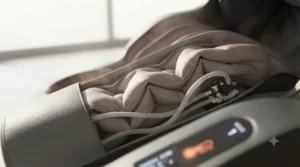
A full leg and foot massager is a compression therapy device that uses inflatable wraps or boots to sequentially squeeze and release the foot, calf, and thigh, improving circulation and easing muscle fatigue at home. Most units add adjustable intensity, multiple massage modes, and sometimes heat, turning what started as a clinical circulation tool into a mainstream comfort product used by athletes, desk workers, and anyone managing everyday leg heaviness.
How to Choose a Full Leg and Foot Massager
- Confirm actual coverage first. “Leg massager” in a product title doesn’t guarantee thigh coverage — check whether the wraps stop at the calf before comparing anything else.
- Match pressure range to your tolerance. Devices in the 40-120 mmHg range suit general comfort use; higher ranges above 150 mmHg are built more for athletic recovery and can feel intense for sensitive users.
- Decide if heat matters to you. Heat adds real therapeutic value for circulation and cold feet but also adds cost and a few minutes of warm-up time to every session.
- Check sizing against your own measurements. Calf and thigh circumference limits vary meaningfully between models, and extenders aren’t always included standard.
- Consider portability needs. Corded units are fine for a fixed spot on the couch; cordless or rechargeable designs matter more if you want to use the device elsewhere in the house or while travelling.
- Look at session length and timer flexibility. Fixed 20-minute auto-off is standard and generally recommended, but some units like QUINEAR offer adjustable timers if you prefer shorter or longer sessions.
- Factor in warranty length. Two-year coverage, like FIT KING offers, provides real peace of mind on a device with moving parts and electronics that will see regular use.
Common Mistakes When Buying a Full Leg and Foot Massager
The single most frequent buying mistake is assuming price alone signals quality — a C$90 calf-only unit and a C$200 full-leg system solve genuinely different problems, and paying more for coverage you don’t need is just as much a mistake as underbuying. A close second is skipping the measurement step entirely; wraps that don’t fit your calf or thigh circumference either compress unevenly or simply won’t close properly, and that’s a return waiting to happen. Shoppers also frequently overlook whether a listing photo shows the actual coverage zones — some product images emphasize the controller or the packaging rather than clearly showing whether the thigh is included, so read the actual spec bullets rather than judging by the hero image. Finally, plenty of buyers assume every “leg massager” uses the same compression mechanism as a Shiatsu foot massager with rollers and kneading nodes; air compression and Shiatsu kneading are mechanically different experiences, and picking the wrong category for your expectations is a common source of buyer’s remorse.
Full Leg and Foot Massager vs Traditional Massage Therapy
A registered massage therapist brings trained hands, targeted technique, and the ability to adapt pressure in real time to what they feel in your tissue — nothing on this list replicates that judgment. Where the comparison shifts in the massager’s favour is frequency and cost: a single RMT session in most Canadian cities runs well above the entire purchase price of any device on this list, and most extended health plans only cover a limited number of visits per year. A full leg and foot massager can’t diagnose a knotted muscle or adjust technique on the fly, but it can deliver consistent, repeatable compression every single evening for years at essentially zero marginal cost per session. The most sensible framing, based on how reviewers across this category actually describe their use, is complementary rather than competitive — professional therapy for diagnosis and targeted work, a home compression device for the daily maintenance that keeps problems from building up between appointments.
What to Expect: Real-World Performance
Turning specs into lived experience, air compression sessions feel less like a hands-on massage and more like a slow, rhythmic blood-pressure-cuff squeeze moving up your leg — that’s normal and expected, not a sign of a weak or broken unit. Heat-equipped models typically need three to five minutes before warmth becomes noticeable, and full sessions run 20 to 30 minutes depending on the timer setting you choose. Most users report feeling looser and lighter in the legs immediately after a session, with the more meaningful benefit — reduced end-of-day swelling and better sleep from calmer legs — building over one to two weeks of consistent nightly use rather than appearing after a single session.
Full Leg and Foot Massager for Different Types of Users
Desk workers and people with long commutes tend to do best with mid-range, no-frills units like the RENPHO RF-ALM070 or Nekteck, since their main issue is general circulation sluggishness rather than acute muscle damage. Athletes and highly active users benefit more from higher pressure ranges and dedicated recovery framing, making QUINEAR or the MZCNU 5-Zone system better fits for that total leg therapy use case. Older adults managing mild circulation concerns or cold feet often respond well to heat-forward units like the Vive Health or RENPHO Aeria, where gentle, consistent warmth combined with lower-intensity compression tends to be more comfortable than high-pressure athletic settings. Anyone specifically researching this category for restless leg syndrome should know the condition is well documented among Canadian adults — a nationwide survey of Canadians found that 15% of adults reported leg restlessness at bedtime, underscoring that this isn’t a niche complaint, though a compression massager is a comfort tool rather than a treatment for a diagnosed neurological condition.
Long-Term Cost & Maintenance
Run the simple math and the value case for these devices becomes obvious fast: a single professional massage session in most Canadian markets can cost more than an entire mid-range full leg and foot massager, and a device used nightly for a year works out to just cents per session once you divide the purchase price by roughly 300 uses. Maintenance costs are close to negligible — there are no consumables to replace, and the only real wear item is the fabric liner, which holds up well with basic wipe-downs after use. The main long-term cost consideration is warranty coverage: FIT KING’s 24-month warranty stands out in this guide, while most competitors offer shorter one-year coverage, which matters if you’re planning on years of regular use rather than occasional sessions.
Features That Actually Matter (And Those That Don’t)
Pressure range and true multi-zone coverage matter more than almost any other spec on the list, since they directly determine whether the device solves your actual problem. Adjustable timers and memory function are genuinely useful quality-of-life features that make repeat use easier without adding real cost. Where marketing tends to overreach is with headline mode counts — a device advertising “10 massage programs” is often just combining the same handful of pressure and sequence variables in different orders, so don’t let a big number alone tip a purchase decision. App connectivity, as seen on the RENPHO Aeria, is a genuine convenience for people who like tracking habits, but reviewers consistently note it’s not something that changes how effective the actual massage feels session to session.
Safety, Regulations & Compliance Guide
Compression massagers are broadly safe for healthy adults, but a few groups should get medical clearance before regular use: anyone with diagnosed deep vein thrombosis, active blood clots, or open wounds on the legs, since external pressure in these situations can pose real risk. According to the Canadian Association for Interventional Radiology, deep vein thrombosis is a serious condition that forms when blood clots develop in deep leg veins, and it requires prompt medical evaluation rather than home compression therapy. People managing diabetes, varicose veins, or cardiovascular conditions should also check with a physician first, since pressure settings may need adjusting to their specific situation. On the product safety side, it’s worth knowing that Health Canada does actively recall personal massage devices when defects surface, so registering your product with the manufacturer and checking recalls periodically is a genuinely useful habit rather than paranoia. None of the seven devices in this guide are regulated as medical devices in Canada — they’re consumer wellness products, not diagnostic or treatment equipment, and that distinction matters if you’re managing a diagnosed circulatory condition rather than everyday fatigue.
FAQ: Full Leg and Foot Massager Questions
❓ Is a full leg and foot massager good for restless leg syndrome?
❓ How long should I use a leg massager each session?
❓ Can I use a leg and foot massager every day?
❓ Do full leg massagers actually reduce swelling?
❓ What's the difference between a leg massager and compression socks?
Conclusion
Choosing between these seven devices really comes down to matching coverage, pressure range, and heat preference to your actual daily complaint rather than chasing the highest spec count on the box. If you’re new to this category and want the safest, most balanced starting point, the RENPHO RF-ALM070 covers the whole leg without overcomplicating things or overspending. If your legs specifically need warmth on cold Canadian nights, the FIT KING FT-057A or Vive Health units earn their higher price with genuinely useful heat therapy. Athletes chasing faster recovery should look hardest at QUINEAR or the MZCNU 5-Zone system, both of which offer the pressure range and zoning that general-purpose massagers simply don’t. And if consistent, automatic fit matters more to you than saving a few dollars, the RENPHO Aeria’s sensor technology is worth the premium. Whichever you choose, start slow, measure your legs before ordering, and give your body a couple of weeks of consistent use before judging the results — good compression therapy is a habit, not a one-session miracle.
Recommended for You
- Leg Massager for Varicose Veins: 7 Top Picks for 2026 (Honest Guide)
- Lymphatic Drainage Leg Massager: 7 Best Picks Reviewed for 2026
- Leg Circulation Machine: 7 Best Picks in Canada for 2026
Disclaimer: This article contains affiliate links. As an Amazon Associate, I earn from qualifying purchases. If you purchase products through these links, we may earn a small commission at no additional cost to you.
✨ Found this helpful? Share it with your friends! 💬🤗
