
In This Article
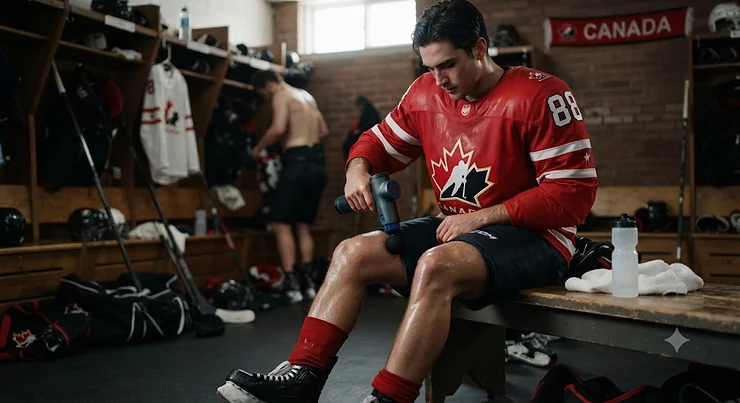
Your shoulder is barking after Sunday beer league, your hip flexors feel like guitar strings tuned a half-step too tight, and the freezer bag of peas you’ve been icing with since university just isn’t cutting it anymore. Enter the cryotherapy percussion massager — part jackhammer, part ice pack, and honestly one of the more useful pieces of recovery gear to land in Canadian gym bags in the last few years. It combines percussive therapy (the rapid, rhythmic pounding that loosens tight muscle fibre) with a chilled head attachment that mimics the numbing, anti-inflammatory effect of a traditional ice pack, minus the soggy towel.

This isn’t a niche gadget anymore. Physiotherapists in Calgary, athletic trainers behind Junior A benches in Ontario, and weekend warriors from Halifax to Victoria have all quietly added one to their recovery kit. But the category is crowded, spec sheets are dense, and Amazon.ca listings rarely tell you which cryotherapy percussion massager is actually worth your money versus which one is a vibrating paperweight with a fancy attachment. We dug through real product specs, aggregated review sentiment, and comparative data across seven genuine, currently available devices to help you sort the signal from the noise — budget picks, premium options, and everything in between.
What Is a Cryotherapy Percussion Massager?
A cryotherapy percussion massager is a handheld device that pairs rapid percussive strokes (typically 1,800 to 3,200 per minute) with a cooled or coolable head attachment, delivering localized cold therapy alongside deep-tissue massage in a single tool — a combination traditional ice packs and standalone massage guns can’t offer on their own.
Quick Comparison Table
| Product | Best For | Cold Method | Price Range (CAD) |
|---|---|---|---|
| Therabody TheraGun Cold Attachment | Existing TheraGun owners | 3-level active cooling | C$100-C$150 |
| Sharper Image Powerboost Pro+ | All-around hot & cold recovery | Built-in cold head, no freezing | C$150-C$220 |
| RENPHO Active Thermacool Deluxe | Tech-forward home users | App-controlled cold head | C$130-C$190 |
| Bob and Brad C2 Pro | Budget-conscious athletes | Detachable cold-capable head | C$100-C$140 |
| RENPHO Active+ Thermacool | Everyday muscle maintenance | Standard cold head attachment | C$90-C$130 |
| Carepeutic Bionic-Point Massager | Seniors, gentle daily use | Built-in cooling mode | C$60-C$90 |
| Sharper Image Powerboost Move Evo | Travel and small hands | Compact cold-capable head | C$100-C$150 |
Looking at this lineup, the spread runs from roughly C$60 for the simplest AC-powered option up past C$200 for app-connected premium models, and that gap mostly comes down to motor strength, cold-head sophistication, and battery independence rather than gimmicks. If you’re just testing whether cold-plus-percussion actually helps your recovery, the Carepeutic Bionic-Point Massager or RENPHO Active+ Thermacool let you find out without a big financial commitment. If you already train seriously and want the cold therapy dialed to a specific temperature on demand, the app-connected and multi-level options earn their higher price tags.
💬 Just one click — help others make better buying decisions too!😊
Top 7 Cryotherapy Percussion Massagers: Expert Analysis
1. Therabody TheraGun Cold Attachment — three-level active cooling for existing TheraGun owners
This isn’t a standalone massage gun — it’s a cryo head attachment massager accessory that clips onto compatible TheraGun handles (Pro Plus, Mini Plus, and Prime Plus), and that distinction matters more than it sounds. If you already own one of those handles, the Therabody TheraGun Cold Attachment turns your existing percussion tool into a genuine dual-therapy device without buying a whole new unit. The attachment offers three distinct cold-therapy temperature levels, so you can dial in a gentler chill for sensitive areas like the neck or a deeper cold for a swollen knee after a hard skate. Based on the spec comparison with fixed-temperature cold heads on competing brands, having three selectable levels is a genuine practical advantage — most rivals give you one cooling intensity and that’s it. This product is built for people who’ve already bought into the Therabody ecosystem and want to extend it, not for someone shopping for their first device. Reviewers consistently note that the cold sensation ramps up gradually rather than shocking the skin, which aggregated feedback frames as more comfortable for longer sessions than an ice pack straight from the freezer. The trade-off is compatibility — this only works with specific Therabody handles, so it’s not a fit if you own a different brand or no massage gun at all.
Pros:
- ✅ Three selectable cold-therapy temperature levels
- ✅ Extends the life of an existing TheraGun handle
- ✅ Gradual cooling ramp feels gentler on sensitive tissue
Cons:
- ❌ Only compatible with specific TheraGun handle models
- ❌ Requires buying a full-price handle separately if you don’t own one
At around C$100-C$150 for the attachment alone, this only makes financial sense layered onto gear you already own — but for existing Therabody users, it’s a smart, targeted upgrade rather than a full-price gamble.
2. Sharper Image Powerboost Pro+ — dual-temperature deep tissue for daily hot-and-cold rotation
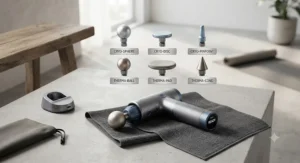
The Sharper Image Powerboost Pro+ ships with six interchangeable attachment heads, including a dedicated hot-and-cold head that switches between roughly 38°F cooling and 115°F heating without needing a freezer or microwave. That built-in temperature range is the standout here — a lot of “cold therapy” massage guns actually require you to pre-chill the head in your freezer for hours, which defeats the point when you need relief right after a game. Six adjustable speed settings mean the percussion side scales from a gentle warm-up pass to genuinely deep tissue work on stubborn knots along the traps and lower back. What most buyers overlook about this model is the brushless “Quiet-Drive” motor, which keeps noise low enough to use during a Zoom call or while the kids are asleep — a small detail spec sheets underplay but daily users tend to appreciate. Aggregated customer feedback frequently praises the instant hot/cold switching and criticizes the carrying case as slightly bulky for gym bags. It’s a genuinely well-rounded option for someone who wants one device that does temperature therapy and percussion without extra prep steps.
Pros:
- ✅ Instant hot and cold with no pre-freezing required
- ✅ Six interchangeable heads for targeted muscle groups
- ✅ Quiet brushless motor for home or office use
Cons:
- ❌ Carrying case runs bulkier than competitors
- ❌ Heavier in hand during extended sessions
Sitting in the C$150-C$220 range, this is a mid-to-premium buy that earns its price through genuine hot/cold convenience rather than marketing flash.
3. RENPHO Active Thermacool Deluxe — app-controlled cold sessions with guided video courses
The RENPHO Active Thermacool Deluxe connects via Bluetooth to the RENPHO Health app, which unlocks video-guided recovery courses tailored to specific muscle groups and lets you track your massage history over time — a feature almost nobody else in this category offers. The cold head reaches down to roughly 47°F while the percussion motor delivers up to 45 lbs of stall force, which on paper means it won’t bog down on larger muscle groups like the glutes or quads the way weaker motors sometimes do under pressure. Here’s what to weigh: the app integration is genuinely useful for people who like structure and tracking, but it’s an unnecessary layer of complexity if you just want to grab a device and go. Reviewers consistently report that the charging stand (included with the Deluxe model) is a nice quality-of-life touch, since fumbling with a USB-C cable after a workout is nobody’s favourite task. A common complaint in user reviews is that the app occasionally lags behind firmware updates, which is worth knowing if you’re not particularly patient with companion apps.
Pros:
- ✅ App-guided recovery courses by muscle group
- ✅ High stall force handles larger muscle groups well
- ✅ Included charging stand skips the cable hassle
Cons:
- ❌ App occasionally lags behind device firmware
- ❌ Overkill if you don’t want a connected device
Expect to pay in the C$130-C$190 range, positioning it as a strong mid-range pick for the tech-curious recovery crowd.
4. Bob and Brad C2 Pro — physical-therapist-developed design at a genuinely accessible price
Bob and Brad, the physical therapist duo behind a massive YouTube following, developed the Bob and Brad C2 Pro with input from actual rehab practice rather than just engineering specs — and that shows up in small ergonomic choices, like the angled handle that reduces wrist strain during longer sessions on the lower back. The detachable head system supports cold-capable attachments, and the unit is FSA/HSA eligible in markets where that applies, which Canadian readers should note doesn’t directly translate but does signal the brand targets a health-and-recovery-conscious buyer rather than a pure fitness-gadget audience. On paper, this means you’re getting rehab-informed design thinking without paying premium-brand pricing. Aggregated review sentiment is notably positive on value-for-money, with users frequently comparing it favourably against name-brand competitors costing significantly more. What most buyers overlook is that the “PT-developed” branding isn’t just marketing — Bob and Brad have publicly walked through their design reasoning on video, which is a rare level of transparency in this space. The main knock from reviewers is a smaller attachment head selection compared to six-head competitors.
Pros:
- ✅ Ergonomic handle angle reduces wrist fatigue
- ✅ Strong value-for-money relative to name-brand rivals
- ✅ Transparent, rehab-informed design philosophy
Cons:
- ❌ Fewer attachment head options than competitors
- ❌ Cold performance less aggressive than dedicated cold-head models
Priced around C$100-C$140, this is one of the smarter budget-to-mid-range plays if you value practical design over flashy features.
5. RENPHO Active+ Thermacool — the reliable everyday workhorse
The RENPHO Active+ Thermacool strips things down to five speeds, five attachment heads, and a straightforward cold head that runs from roughly 47°F to 113°F on the warm side, without the app dependency of its Deluxe sibling. Reviewers consistently note the LED display and 10-minute auto-off function as small but appreciated safety touches, particularly for anyone who tends to fall asleep mid-massage on the couch (we’ve all been there). Based on the spec comparison, the 15W PD fast charging is a genuine practical win — a 1.5 to 2 hour full charge versus the 4-plus hours some budget competitors require means less downtime between your Tuesday and Thursday gym sessions. This is squarely a device for people who want reliable daily maintenance rather than clinical-grade recovery — it handles general soreness, tight traps from desk work, and post-run calves well, but reviewers note it’s not the most powerful option here for genuinely deep, stubborn knots. A common theme in aggregated feedback is praise for the quiet operation relative to price point, which matters if you’re using it in a shared apartment or condo.
Pros:
- ✅ Fast 15W PD charging cuts downtime significantly
- ✅ 10-minute auto-off adds a helpful safety layer
- ✅ Notably quiet for its price bracket
Cons:
- ❌ Less percussive depth than premium competitors
- ❌ Cold head lacks multiple selectable temperature levels
Landing in the C$90-C$130 range, this is arguably the best all-around value pick for someone who wants dependable daily recovery without overspending.
6. Carepeutic Bionic-Point Massager — gentle, AC-powered simplicity for everyday relaxation
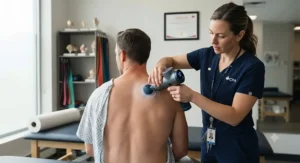
Unlike the battery-powered guns on this list, the Carepeutic Bionic-Point Massager plugs directly into the wall via its AC adaptor, which sacrifices portability but sidesteps battery degradation entirely — a trade worth considering if this will live on a nightstand rather than travel to the rink. The dual cast-aluminum massage nodes combine vibration with selectable heat or cold modes that can run independently or together, and the “customizable” framing genuinely holds up since you’re not locked into a single intensity curve the way some pricier guns force you into. What the spec sheet won’t tell you, but reviewers note, is that the gentler vibration style (versus true high-amplitude percussion) makes this notably more comfortable for older adults or anyone with sensitive tissue, arthritis flare-ups, or a lower pain tolerance than the deep-tissue crowd this category usually targets. Aggregated sentiment describes it as a relaxation tool first and a serious athletic recovery tool second, which is an honest distinction worth making rather than overselling its percussive depth. At this price point, it’s less a competitor to the performance-focused massage guns above and more a comfortable, low-commitment entry into cold-and-vibration therapy.
Pros:
- ✅ AC-powered means no battery replacement ever needed
- ✅ Gentler vibration suits sensitive users and seniors
- ✅ Heat and cold modes run independently or combined
Cons:
- ❌ Corded design limits use to near an outlet
- ❌ Lacks true high-amplitude percussion depth
At roughly C$60-C$90, this is the most accessible entry point on the list — a sensible starting point for cautious first-time buyers.
7. Sharper Image Powerboost Move Evo — the compact travel companion
The Sharper Image Powerboost Move Evo trims down to a lighter, more compact build with four adjustable speeds and five attachment heads, including a hot-and-cold option, aimed squarely at people who need something that fits in a gym bag side pocket or a carry-on rather than a full-size case. Based on the spec comparison against its bigger Pro+ sibling, you’re trading some raw power and head-count for genuine portability — a fair trade if you’re the type who travels for tournaments, work, or weekend ski trips and doesn’t want to leave recovery gear at home. Reviewers consistently describe the smaller grip as easier to manage for people with smaller hands, an ergonomic detail full-size guns sometimes overlook. The brushless motor still delivers respectable percussion depth for its size class, though aggregated feedback suggests it’s better suited to arms, calves, and shoulders than heavy-duty glute or quad work where a stronger motor matters more. What most buyers overlook is that “compact” doesn’t mean “weak” here — it’s a legitimate secondary device even for people who own a full-size gun at home, purpose-built for the suitcase.
Pros:
- ✅ Genuinely compact, travel-friendly form factor
- ✅ Comfortable grip for smaller hands
- ✅ Includes a hot-and-cold attachment despite the size
Cons:
- ❌ Less raw power for large muscle groups
- ❌ Smaller battery than full-size counterparts
Priced around C$100-C$150, it’s a smart secondary pick for frequent travellers rather than a primary home unit for serious deep-tissue work.
Top 7 Products: Full Comparison
| Product | Speeds | Cold Range | Battery/Power | Best For | Price Range (CAD) |
|---|---|---|---|---|---|
| Therabody TheraGun Cold Attachment | N/A (attachment) | 3 levels | Uses handle’s battery | Existing TheraGun owners | C$100-C$150 |
| Sharper Image Powerboost Pro+ | 6 | ~38°F-115°F | Rechargeable | Instant hot/cold users | C$150-C$220 |
| RENPHO Active Thermacool Deluxe | 5+ (app) | ~47°F+ | Rechargeable + stand | Tech-forward users | C$130-C$190 |
| Bob and Brad C2 Pro | Multiple | Cold-capable head | Rechargeable | Budget PT-informed design | C$100-C$140 |
| RENPHO Active+ Thermacool | 5 | ~47°F-113°F | Rechargeable, 15W PD | Everyday maintenance | C$90-C$130 |
| Carepeutic Bionic-Point Massager | Adjustable vibration | Built-in cold mode | AC-powered (corded) | Seniors, gentle use | C$60-C$90 |
| Sharper Image Powerboost Move Evo | 4 | Hot/cold head | Rechargeable, compact | Travel | C$100-C$150 |
Scanning across the table, the pattern is clear: cold sophistication (multiple temperature levels, app control) tracks closely with price, while the biggest jump in raw usability comes from whether the cold head needs pre-freezing or works instantly. Buyers prioritizing convenience over ultimate power should lean toward the Sharper Image Powerboost Pro+ or RENPHO Active Thermacool Deluxe, while anyone testing the category for the first time is better served starting with the RENPHO Active+ Thermacool or Carepeutic Bionic-Point Massager before committing to premium pricing.
✨ Don’t Miss These Exclusive Deals!
Take your recovery routine to the next level with a device matched to how you actually train. Click through to check current pricing and availability on any model above — inventory and promotions shift often, so it’s worth a quick look before you decide.
Practical Usage Guide: Getting the Most From Your Device
Unboxing a cryotherapy percussion massager and immediately blasting your quads on the highest setting is a rookie mistake, and it’s one of the most common first-30-days errors reviewers mention. Start on the lowest speed for your first two or three sessions to let your nervous system and connective tissue adjust — jumping straight to maximum amplitude on a cold, tight muscle can actually cause more soreness rather than less. For the cold head specifically, most models need either a few hours in the freezer (for passive cold attachments) or simply switching on the built-in cooling mode; check your model’s spec sheet, since mixing these up is a genuinely common frustration reported in reviews.
Maintenance is minimal but not nonexistent: wipe down attachment heads after every use, especially if you’re using them post-workout when sweat and skin oils build up, and store the device in its case rather than loose in a gym bag where the motor housing can pick up dust and grit. Battery-powered models should avoid being left at 0% for extended periods — top up every few weeks even during light-use stretches, since lithium batteries degrade faster when fully drained and idle. A genuinely useful optimization trick most listings don’t mention: run the percussion head over the muscle for 30-60 seconds before switching to the cold attachment, since warming the tissue slightly first can make the subsequent cold application feel more effective and less shocking.
Real-World Scenarios: Recovery Routines for Hockey Players and Beyond
The recreational hockey player. Consider someone playing two beer-league games a week plus a Sunday morning skate, dealing with the usual hip flexor tightness and occasional groin strain that comes with quick lateral stops. A recovery routine for hockey players in this bracket typically benefits from a straightforward, no-fuss device like the RENPHO Active+ Thermacool — percussion on the hip flexors and quads for five minutes post-game, followed by the cold head on any spot that felt like it tweaked during play. The goal here isn’t clinical rehab; it’s staying ahead of the cumulative wear that turns into a real injury by February.
The competitive junior athlete. A 16-year-old playing Junior B hockey with three practices and two games weekly faces a different calculus — higher training volume means higher injury risk and a genuine need for structured, trackable recovery. This is where something like the RENPHO Active Thermacool Deluxe, with its app-guided courses, earns its higher price tag; a parent or coach can help the athlete follow a consistent post-practice protocol rather than guessing at technique. Ice hockey injury recovery at this level often benefits from combining percussion-and-cold sessions with the stretching and warm-up protocols outlined in resources like Hockey Canada’s injury prevention materials, since gear alone doesn’t replace proper technique and pacing.
The desk-bound weekend warrior. Someone who sits at a desk five days a week and then plays pickup basketball or goes for long runs on weekends deals with a different problem entirely: chronically tight hip flexors and a lower back that seizes up under sudden load. For this profile, a gentler option like the Carepeutic Bionic-Point Massager used a few times a week for general maintenance, paired with occasional deeper percussion sessions after the more intense weekend activity, tends to strike the right balance between daily relaxation and post-exertion recovery.
Problem → Solution: Common Recovery Pain Points
Problem: You keep forgetting to ice injuries within the recommended window. Traditional ice packs require you to remember, retrieve, and often re-freeze — friction that means a lot of injuries never actually get iced promptly. Solution: keeping a cryotherapy percussion massager charged and accessible removes several steps, since the cold head is either already cool or ready in minutes rather than hours.
Problem: Ice packs feel harsh and you stop using them consistently. Direct ice-pack contact can cause discomfort or even minor skin irritation if left too long, which is a big reason people abandon consistent icing. Solution: percussion massagers with adjustable cold levels, like the Therabody TheraGun Cold Attachment, let you moderate intensity so cold therapy stays tolerable enough to actually stick with.
Problem: You don’t know if it’s a “heat” day or “cold” day. Confusing heat and cold application timing is one of the most common mistakes flagged by physiotherapists — cold generally suits the acute, swollen 24-72 hour window, while heat suits chronic stiffness. Solution: dual hot-and-cold devices like the Sharper Image Powerboost Pro+ remove the guesswork of owning separate tools for each scenario.
Problem: Deep tissue work on a fresh injury makes things worse. Aggressive percussion directly on an acutely inflamed area can aggravate swelling rather than help it. Solution: apply the cold head first to calm inflammation, then use light percussion on surrounding (not injured) tissue once acute swelling has subsided, generally after the first 48 hours.
How to Choose a Cryotherapy Percussion Massager
- Match cold-head type to your patience level. Passive attachments that need freezer time work fine for planned, at-home sessions, but active-cooling heads matter more if you need cold therapy immediately after a game or workout.
- Check stall force against your muscle groups. Larger muscle groups like glutes and quads need a stronger motor that won’t bog down under pressure — check the stated stall force or amplitude rather than just speed count.
- Consider battery independence versus corded reliability. Corded models like the Carepeutic Bionic-Point Massager never run out of charge but limit where you can use them.
- Weigh app connectivity honestly. Features like guided courses genuinely help less experienced users build consistent habits, but add unnecessary complexity if you already know your routine.
- Factor in noise level for shared spaces. Brushless motors marketed as “quiet” tend to deliver noticeably lower decibels — worth prioritizing if you’ll use the device around a partner, roommate, or sleeping kids.
- Think about attachment head variety versus your actual use case. Six heads sound impressive, but most users settle into using two or three regularly — don’t overpay for variety you won’t use.
- Budget for the full ecosystem, not just the base unit. Cold-capable heads sometimes ship separately or as an upgrade, so confirm what’s actually included before comparing sticker prices.
Cryotherapy Massage Gun vs Ice Pack: Which Wins for Recovery?
| Factor | Cryotherapy Percussion Massager | Traditional Ice Pack |
|---|---|---|
| Setup time | Minutes (or instant with active cooling) | Hours (freezer time required) |
| Combines with percussion | Yes, built-in | No, separate tool needed |
| Portability | Rechargeable models travel easily | Requires a cooler or freezer access |
| Precision targeting | Adjustable heads for specific muscles | General, broad-area application |
| Upfront cost | C$60-C$220 | Under C$20 typically |
The honest answer is that a cryotherapy massage gun versus ice pack comparison isn’t really a winner-take-all situation — they solve overlapping but distinct problems. An ice pack is cheap, requires zero charging, and remains genuinely effective for straightforward acute swelling, which is why Arthritis Society Canada still recommends basic cold therapy as a frontline option for inflamed joints. Where the percussion massager pulls ahead is convenience and versatility: you get cold therapy and muscle release from one device, without needing to plan hours ahead or deal with a soggy compress. For a serious recreational or competitive athlete managing recovery multiple times a week, the massager’s time savings and dual functionality generally justify the cost; for occasional, single-injury icing, a basic ice pack remains a perfectly reasonable and far cheaper choice.
Cold Therapy and Inflammation: What the Science Says
Cold therapy works primarily through vasoconstriction — the narrowing of blood vessels in response to cold temperature, which reduces blood flow to the treated area and, in turn, limits the inflammatory markers and fluid buildup that cause swelling and pain. This mechanism is why cold application remains a first-line recommendation for acute soft-tissue injuries in the 24-to-72-hour window after they occur, a principle documented across sports medicine literature and outlined in accessible form on Wikipedia’s overview of cryotherapy. The numbing effect cold produces also interrupts pain signal transmission to the brain, which is a big part of why athletes reach for it instinctively after a hard hit or an awkward landing.
That said, the science isn’t unanimous, and honest coverage of this topic should say so. Some more recent research has questioned whether icing every minor strain actually speeds healing or simply masks discomfort in the short term, since inflammation itself is part of the body’s natural repair signalling. What this means practically for cryotherapy percussion massager users is that cold therapy is best treated as a tool for managing pain and acute swelling in the short window after activity or injury, not as a guaranteed long-term healing accelerant on its own — pairing it with proper rest, gradual mobility work, and, for anything beyond routine soreness, a conversation with a physiotherapist or doctor remains the more complete approach.
Cryo Head Attachment Massagers: Are They Worth It?
The cryo head attachment massager format — where cold therapy is delivered through a dedicated, swappable head rather than a whole separate device — has become the dominant design in this category for good reason. It lets manufacturers keep the core percussion motor focused on what it does best while treating temperature as a modular add-on, which is why products like the Therabody TheraGun Cold Attachment exist as standalone accessories rather than forcing an entire new purchase. Whether it’s worth it comes down to how often you’d actually use the cold function versus just the percussion side. If you’re mostly dealing with muscle tightness and rarely with actual swelling or acute injury, a straight percussion-only device might serve you just as well at a lower price. But for anyone managing recurring inflammation — a bad knee, a chronically cranky shoulder, or a hockey-related nagging strain — having cold on demand in the same device you already reach for daily removes enough friction that it genuinely gets used more consistently than a standalone ice pack sitting forgotten in the freezer.
Ice Hockey Injury Recovery: Where Percussion and Cold Therapy Fit In
Hockey’s combination of high-speed collisions, repetitive skating strain, and awkward falls on hard ice produces a fairly predictable injury pattern — groin and hip flexor strains, shoulder separations, and lower back tightness from the forward-flexed skating posture chief among them. None of this is a substitute for proper medical evaluation, and anything involving a head injury, suspected fracture, or joint that won’t bear weight needs professional assessment immediately, following protocols like those laid out in Hockey Canada’s safety and injury prevention resources. Within that framework, cryotherapy percussion massagers fit specifically into the maintenance and minor-strain recovery layer: cooling a tweaked groin after practice, working out post-game stiffness in the traps and lower back from goalie stance or forward-leaning stride, or managing the general cumulative soreness of a long season. Coaches and trainers increasingly view a well-used recovery device as part of the same injury-prevention picture as proper warm-ups and stretching — not because it prevents collisions, but because consistently managed muscle tightness reduces the odds of a minor strain becoming a multi-week absence from the lineup.
Common Mistakes When Buying a Cryotherapy Percussion Massager
The single most common mistake is buying based on speed count alone — a device with 20 “speeds” crammed into a narrow, weak power range isn’t actually more capable than one with 5 well-differentiated, genuinely powerful settings. Another frequent misstep is overlooking whether the cold function is active (built-in cooling) or passive (requires freezer pre-chilling), which drastically changes how usable the device is in the moment you actually need it. Buyers also commonly underestimate noise output, only realizing after purchase that a “quiet” 60-decibel motor is still loud enough to wake a sleeping partner or disrupt a shared living space. Finally, plenty of shoppers skip checking attachment head compatibility and cost for replacements, then discover months later that a lost or worn head means an unexpectedly expensive reorder rather than a quick, cheap swap.
Long-Term Cost and Maintenance
Thinking in terms of total cost of ownership rather than sticker price changes the calculus meaningfully. A C$60 corded option like the Carepeutic Bionic-Point Massager has essentially zero ongoing cost since there’s no battery to replace and no cold-head consumable to buy separately. Battery-powered models, by contrast, carry a hidden long-term cost: lithium batteries in daily-use devices typically show noticeable capacity decline after 18-24 months of regular charging cycles, and while most manufacturers don’t sell standalone replacement batteries for these consumer massage guns, that’s worth factoring into your expected device lifespan. Attachment heads, particularly cold-specific ones, also wear or occasionally crack from repeated freeze-thaw cycling on passive-cooling models, so budgeting an extra C$20-C$40 every year or two for replacement heads on the devices you use most is realistic. Viewed over a three-year window, the cost-per-use on a mid-range C$130 device used twice weekly works out to just a few cents per session — genuinely reasonable value if it’s displacing physiotherapy visits or over-the-counter pain relief purchases.
Safety, Regulations, and Compliance in Canada
Before buying any electrical percussion massager online, confirm the listing shows a recognized certification mark — CSA, cUL, or cETL are the marks Canadian shoppers should specifically look for, since Health Canada explicitly warns against buying electrical products without visible certification marks. This matters more than it might seem for a handheld massager: these are rechargeable, battery-containing devices used directly against skin, and counterfeit or uncertified units have a documented history of overheating or battery failure. Beyond certification, basic safety practices apply across every product on this list: avoid running any percussion or cold-head attachment directly over bone, joints, varicose veins, or open wounds, and never use these devices on numb skin or areas with reduced sensation, since you won’t get the pain feedback that normally tells you to stop. Anyone managing a diagnosed circulatory condition, Raynaud’s phenomenon, or a recent fracture should check with a physician before incorporating cold therapy percussion into a routine, rather than assuming a consumer device is automatically appropriate for a medical condition.
Frequently Asked Questions
❓ Is a cryotherapy percussion massager the same as a regular massage gun?
❓ How long should I use the cold head per session?
❓ Can I use a cryotherapy percussion massager every day?
❓ Do I need to freeze the cold attachment before every use?
❓ Are these devices safe for hockey injuries like a pulled groin?
Conclusion
Choosing between these seven cryotherapy percussion massagers really comes down to being honest with yourself about how you’ll actually use one. If you’re managing a genuine, recurring recovery need — hockey-related hip and groin tightness, chronic shoulder stiffness, or post-run soreness that shows up like clockwork — investing in a device with active cooling and real percussive depth, like the Sharper Image Powerboost Pro+ or RENPHO Active Thermacool Deluxe, pays for itself in convenience and consistency compared to constantly digging for a frozen ice pack. If you’re newer to structured recovery and just want to see whether the combination of cold and percussion helps your particular aches, starting with a more affordable option like the RENPHO Active+ Thermacool or Carepeutic Bionic-Point Massager lets you build the habit without a big financial leap.
None of these devices replace proper warm-ups, adequate rest between intense sessions, or a physiotherapist’s assessment when something feels genuinely wrong rather than just tired. But as a practical, evidence-informed addition to a recovery routine — for hockey players managing a long season, weekend athletes juggling a desk job and a training schedule, or anyone tired of soggy ice packs — a well-chosen cryotherapy percussion massager earns its spot in the gym bag.
✨ Ready to Upgrade Your Recovery Routine?
🔋 Whichever model fits your training load and budget, click through to check current pricing on amazon.ca before you decide — availability and promotions shift regularly, so it’s worth a final look.
Recommended for You
- Heat and Cold Massage Gun: 7 Best Dual Therapy Picks 2026
- Heat and Cold Therapy Massage Gun Benefits: 7 Best Picks (2026)
- Heated Massage Gun: 7 Best Picks to Beat Winter Pain (2026)
Disclaimer: This article contains affiliate links. As an Amazon Associate, I earn from qualifying purchases. If you purchase products through these links, we may earn a small commission at no additional cost to you.
✨ Found this helpful? Share it with your friends! 💬🤗
