
In This Article
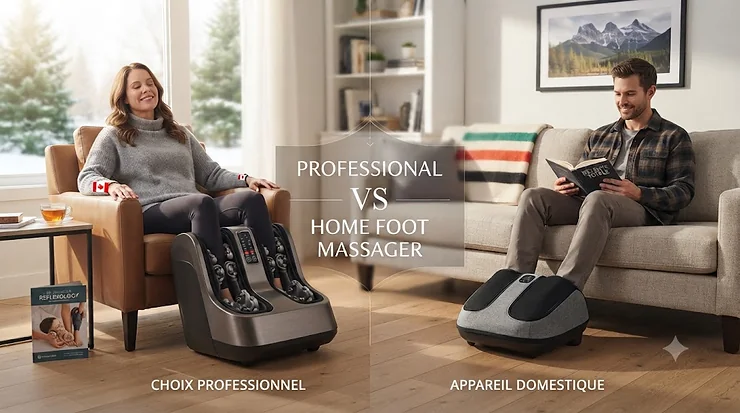
Your feet log roughly 8,000 to 10,000 steps a day, and by dinnertime they know it. Somewhere between the aching arches and the “I’ll just sit here for a minute” collapse onto the couch, a question tends to surface: should you buy a home unit, or is a proper professional vs home foot massager comparison the smarter place to start before you spend a dollar? A foot massager, in plain terms, is a mechanical or air-compression device that kneads, squeezes, or vibrates the soles, arches, and sometimes the calves to mimic manual massage techniques — the good ones layer in heat, adjustable intensity, and multiple modes to fit different needs. The catch is that “professional” and “home” aren’t just marketing words slapped on a box; they describe real differences in motor durability, materials, and how many hours a day a machine is built to run before something gives out. This guide walks through seven real, currently available products spanning budget consumer units to genuine salon-grade equipment, with honest analysis of where each one earns its price tag and where it cuts corners. We’ll also dig into commercial durability features, spa quality vs consumer massager distinctions, and the investment value comparison that actually matters once you’ve used a unit for more than a few weeks. Whether you’re shopping for tired feet after a 10-hour shift or outfitting a small clinic, the goal here is a professional vs home foot massager breakdown you can actually act on — not another rehash of an Amazon listing.
Quick Comparison Table
| Product | Type | Best For | Price Range (CAD) |
|---|---|---|---|
| Nekteck Shiatsu Foot Massager with Heat | Home | Budget-conscious first-timers | Under C$150 |
| RENPHO Foot Massager Machine with Heat | Home | Cordless convenience seekers | C$100-C$180 range |
| Miko Foot Massager Deluxe | Home | Customizable pressure fans | C$150-C$220 range |
| COMFIER Shiatsu Foot Massager (13-in) | Home | Larger feet, plus-size fit | C$150-C$230 range |
| FIT KING Air Compression Leg & Foot Massager | Prosumer | Circulation and swelling relief | C$180-C$260 range |
| QUINEAR Recovery Compression System | Prosumer/Professional | Athletes and post-workout recovery | around C$300-C$400 |
| Belava Pro Foot Heater-Massager | Commercial/Professional | Salons, clinics, mobile spa services | in the mid-C$300s and up |
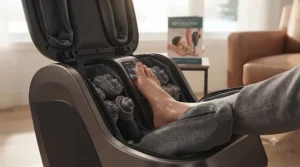
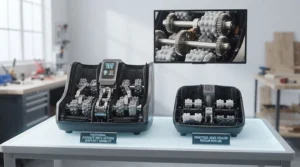
Looking at the spread above, the gap between Nekteck Shiatsu Foot Massager with Heat and Belava Pro Foot Heater-Massager isn’t just price — it’s duty cycle. A home unit is engineered around maybe 20-30 minutes of daily use by one or two people, while a commercial-grade machine like the Belava Pro Foot Heater-Massager is built to run back-to-back client sessions for eight-hour shifts without overheating. That distinction, more than any single spec, is what separates a professional vs home foot massager purchase decision from a coin flip.
💬 Just one click — help others make better buying decisions too!😊
Top 7 Professional vs Home Foot Massagers: Expert Analysis
1. Nekteck Shiatsu Foot Massager with Heat — best no-frills value pick
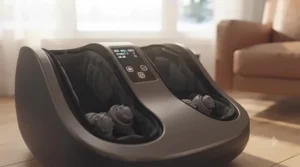
The standout here is simplicity: three massage modes and a heat toggle, nothing more to fumble with. The shiatsu kneading nodes rotate through combo, air-pressure, and pure kneading settings, and the unit accommodates larger feet (men’s size 11.5 and up) without the toe-crunching squeeze some budget massagers are known for. In practice, that wider bed means fewer people bounce off this pick for fit reasons alone. Based on the spec comparison with pricier home units, what stands out is how little this model asks of the user — no app, no multi-page manual, just plug in and go, which matters more than it sounds like for anyone who wants relief at 9 p.m., not a learning curve. Reviewers consistently report that the massage feels thorough from toe to heel without leaving feet tingling afterward, and testers with plantar fasciitis have noted genuine, lasting relief rather than temporary numbing. This is the pick for someone who wants dependable relaxation without paying for features they’ll never touch.
Pros:
- ✅ Fits larger feet without pinching or crowding
- ✅ Dead-simple controls, no learning curve
- ✅ Reviewers report real plantar fasciitis relief
Cons:
- ❌ Only three massage modes, no calf coverage
- ❌ Corded design limits placement flexibility
Priced under C$150, this is arguably the best entry point in the whole professional vs home foot massager conversation — you’re paying for reliable basics, not bells and whistles.
2. RENPHO Foot Massager Machine with Heat — best cordless control setup
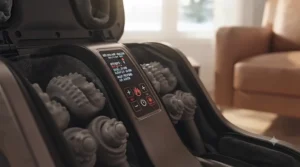
RENPHO’s standout feature is the cordless controller, which means you can adjust modes and intensity without leaning forward or fumbling behind the unit. The shiatsu rollers pair with adjustable heat and multiple compression settings aimed specifically at plantar fasciitis discomfort, and the compact folding profile means it doesn’t eat up closet space the way boxier units do. What most buyers overlook about this model is that the cordless remote isn’t just a convenience gimmick — for anyone with mobility limitations or lower-back pain, not having to bend over mid-massage to change settings is a genuine quality-of-life upgrade. The brand has built a loyal following in the FSA/HSA-eligible wellness space, which signals a level of consumer trust that’s hard to fake at scale. Aggregated review sentiment points to strong satisfaction with heat consistency and quiet operation, though a handful of users note the intensity ceiling is lower than shiatsu purists might want.
Pros:
- ✅ Cordless remote for easy mid-massage adjustments
- ✅ Consistent, evenly distributed heat output
- ✅ FSA/HSA eligible for many Canadian health spending accounts
Cons:
- ❌ Maximum intensity feels mild to deep-pressure fans
- ❌ No calf or ankle attachment included
In the C$100-C$180 range, this is a strong pick for anyone prioritizing ease of use over raw intensity.
3. Miko Foot Massager Deluxe — best for customizable pressure
The Miko’s calling card is its unusually wide range of adjustable pressure settings, letting users dial in everything from a gentle warm-up to genuinely deep compression. That range is a double-edged sword: reviewers and product testers alike have flagged that the highest pressure setting can cross from firm into uncomfortable territory for sensitive feet, so this isn’t the pick for someone who wants a “set it and forget it” gentle massage. On the flip side, that same adjustability is exactly why athletes and people managing chronic foot tension gravitate toward this model — you’re not stuck with a factory-preset intensity that’s either too soft or too aggressive. The unit also folds flat for storage, which home users with limited space consistently mention as a practical win. Here’s what to weigh: if you know you like a strong, borderline-therapeutic massage, the ceiling on this unit is a feature; if you’re massage-shy, it might be more machine than you need.
Pros:
- ✅ Widest pressure adjustment range in its class
- ✅ Folds flat for compact storage
- ✅ Handles deep tension well for tougher muscles
Cons:
- ❌ Top pressure setting can feel too intense
- ❌ Bulkier housing than slimmer competitors
Expect to pay in the C$150-C$220 range, positioning it squarely as a mid-tier home option with professional-leaning intensity.
4. COMFIER Shiatsu Foot Massager (13-in size) — best fit for larger feet
COMFIER’s headline feature is its extra-large 13-inch bed, engineered specifically for buyers who’ve struggled to fit into standard-sized home massagers. Fast-heating elements combine with kneading, rolling, compression, and an extra vibration mode layered on top — four distinct mechanisms working together rather than the two or three modes typical of entry-level units. On paper, that stacking of mechanisms means a more textured, varied massage experience rather than the same kneading pattern on a loop. Reviewers frequently highlight the quick heat-up time as a differentiator versus competitors that take several minutes to feel warm, along with genuine comfort even during extended sessions. The extra size does come with a footprint cost — this unit takes up noticeably more floor or shelf space than the compact folding models on this list, something apartment dwellers should weigh before buying.
Pros:
- ✅ Roomy 13-inch bed fits larger feet comfortably
- ✅ Fast heat-up compared to similarly priced units
- ✅ Four massage mechanisms for varied sessions
Cons:
- ❌ Larger footprint, harder to store compactly
- ❌ Vibration mode can feel buzzy rather than deep
At C$150-C$230, this is the practical answer for anyone who’s been frustrated by “one size fits all” foot massagers that clearly weren’t sized for them.
5. FIT KING Air Compression Leg & Foot Massager — best for circulation-focused use
This unit’s standout feature is the pressure sensor paired with an LCD display, letting users see and adjust exact compression levels rather than guessing from a vague dial. Full leg-and-foot coverage through inflatable air chambers sequentially squeezes from foot to calf, a mechanism closer to what’s used in clinical circulation therapy than in typical shiatsu foot massagers. Based on the spec comparison with the shiatsu-style units earlier in this list, the FIT KING trades deep-tissue kneading for rhythmic, medically-adjacent compression — a meaningfully different massage philosophy aimed at people managing swelling, mild edema, or long-haul circulation complaints rather than muscle soreness. What the spec sheet won’t tell you, but reviewers note, is that the sequential squeeze-and-release pattern feels less like a “massage” and more like a gentle, repeating hug, which some users find more soothing during long recovery periods than aggressive kneading. Anyone managing diabetes-related circulation concerns should still check with a healthcare provider before relying on any device — read more on foot care and circulation from Diabetes Canada before self-treating persistent symptoms.
Pros:
- ✅ Precise pressure sensor with LCD readout
- ✅ Full leg coverage, not just the foot
- ✅ Gentler profile suited to circulation concerns
Cons:
- ❌ Less intense kneading than dedicated shiatsu units
- ❌ Bulkier leg wraps take longer to put on
Priced in the C$180-C$260 range, it’s a specialized pick rather than a general relaxation gadget.
6. QUINEAR Recovery Compression System — best for athletic recovery
Marketed explicitly as a professional sequential device for massage therapy, the QUINEAR’s standout feature is its multi-chamber compression boots that squeeze in a rolling, sequential pattern from toe to thigh rather than all at once. That sequencing mimics techniques used in sports-medicine recovery clinics, and it’s a meaningful step up in sophistication from the single-zone compression found in home foot massagers. Reviewers and recreational athletes report noticeably reduced muscle soreness after intense training sessions, with the “professional” branding earning its keep through genuinely adjustable intensity zones rather than a single overall setting. Based on the spec comparison with the FIT KING above, this unit goes further up the leg and offers more granular chamber-by-chamber control, which is exactly why it costs more and why it’s the closest thing to prosumer-grade recovery tech on this list. The trade-off is bulk: this isn’t a device you tuck under a couch between uses.
Pros:
- ✅ Multi-zone sequential compression up the leg
- ✅ Adjustable intensity per chamber, not just overall
- ✅ Genuinely reduces post-workout soreness per user reports
Cons:
- ❌ Bulky storage case, not a grab-and-go item
- ❌ Overkill for casual, non-athletic users
Sitting around C$300-C$400, this is where the “professional vs home foot massager” line starts to blur into genuine sports-recovery equipment.
7. Belava Pro Foot Heater-Massager — true commercial durability features
This is the anchor point for anything genuinely deserving the word “professional” on this list. Designed to withstand heavy-duty salon traffic, the standout feature is three levels of heat paired with true oscillating vibration — a motor design that rotates clockwise and counterclockwise to deliver a stronger, more dynamic massage while minimizing splash during wet pedicure services. This is where commercial durability features stop being a buzzword and start being an engineering spec: the unit is modular, usable standalone or docked into a full pedicure tub setup, and includes an automatic 30-minute shut-off to prevent overheating across back-to-back client sessions — a feature home units simply don’t need and therefore don’t include. What most buyers overlook about commercial-grade equipment like this is that the premium isn’t really about the massage feeling dramatically different to the end user; it’s about the unit surviving eight hours a day, five or six days a week, for years, which home-grade plastics and motors aren’t built to do. Clinics, mobile spa services, podiatry offices, and small business owners are the core audience, though some home buyers with heavy usage needs (multiple family members daily) do choose it for the same durability logic.
Pros:
- ✅ True oscillating vibration motor, salon-tested
- ✅ Modular — standalone or full pedicure tub setup
- ✅ Auto shut-off protects against commercial overuse
Cons:
- ❌ Premium price versus home-grade alternatives
- ❌ Overbuilt (and overpriced) for occasional personal use
Expect to invest in the mid-C$300s and up, and treat that price as the cost of genuine commercial-grade longevity, not a relaxation luxury tax.
Practical Usage Guide: Getting the Most From Any Foot Massager
Whichever unit you land on, the first 30 days set the tone for how long it actually lasts. Start with shorter 10-15 minute sessions rather than immediately maxing out intensity — feet (and the machine’s motor) both benefit from a break-in period. Clean the removable liners or foot bed covers weekly if you’re using the unit daily; trapped moisture from sweat is one of the most common — and most preventable — causes of premature odor and bacterial buildup in shiatsu units. A common first-month mistake is leaving units plugged in and powered on standby for hours; unplugging between uses reduces wear on internal components and trims a small but real amount off your electricity bill over a year. For anyone using heat settings regularly, let the unit fully cool between sessions rather than immediately restarting it, since back-to-back heat cycles are what typically shorten a heating element’s working life in home-grade machines. If you notice a burning smell, unusual noise, or a heat setting that no longer engages, stop using the unit immediately and check the manufacturer’s warranty terms rather than troubleshooting a mains-powered device yourself.
Real-World Scenarios: Who Actually Needs Which Massager
Picture Priya, a nurse working 12-hour hospital shifts three or four days a week. Her feet take a beating, but she’s not chasing athletic recovery — she wants fast relief before bed and doesn’t want to think about settings. The Nekteck Shiatsu Foot Massager with Heat or RENPHO Foot Massager Machine with Heat fit that use case precisely: simple, reliable, and inexpensive enough that replacing one in a few years isn’t a financial event. Now consider Marcus, a weekend triathlete logging 15+ hours of training. His feet and calves need genuine recovery support, not relaxation — the QUINEAR Recovery Compression System matches his frequency and intensity of use far better than a basic shiatsu unit ever could. Finally, there’s Denise, who runs a two-chair nail salon and offers pedicures six days a week. For her, a home unit would burn out within months under that traffic; the Belava Pro Foot Heater-Massager is the only sensible option because its entire design brief is commercial-grade endurance, not occasional home comfort.
How to Choose a Professional vs Home Foot Massager
- Match frequency to durability. Daily multi-person or client use points toward prosumer or commercial units; occasional personal use fits any home-grade pick.
- Decide what “massage” means to you. Deep kneading (shiatsu) and sequential air compression are genuinely different sensations aimed at different goals.
- Check foot size compatibility first. Standard beds fit most adults, but larger feet should prioritize models like COMFIER Shiatsu Foot Massager (13-in size) with confirmed roomy dimensions.
- Weigh heat as a feature, not an afterthought. Consistent, adjustable heat meaningfully changes how effective a massage feels, especially for stiff or arthritic joints.
- Read aggregated reviews for durability complaints specifically, not just comfort ratings — motor burnout after 6-12 months is the most telling red flag in this category.
- Budget for the full lifecycle, not just the sticker price — cheaper units replaced every year can cost more over five years than one durable mid-range pick.
- Consider your space honestly. Bulkier commercial and recovery-system units need dedicated storage that compact folding models don’t.
🔍 Ready to Compare Your Shortlist Side by Side?
Take a closer look at the models above and check current pricing and availability before you decide — a few extra minutes now can save you a return shipment later.
Commercial Durability Features That Actually Matter
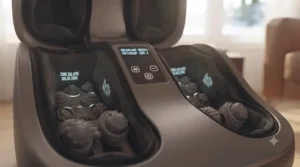
When shoppers search out commercial durability features, they’re usually trying to figure out whether a price premium is justified or just branding. The honest answer: a handful of specs genuinely separate commercial-grade builds from home units, and the rest is marketing polish. Real commercial durability features include continuous-duty motors rated for extended daily runtime, auto shut-off systems calibrated for back-to-back sessions rather than a single use, and reinforced housings that resist the kind of repeated flexing and cleaning chemical exposure a salon environment demands. The Belava Pro Foot Heater-Massager checks each of these boxes explicitly, which is precisely why it costs more than anything else on this list. By contrast, some products slap “professional” on the packaging while using the same internal components as a home unit — a marketing tactic worth watching for. If a listing doesn’t specify duty-cycle ratings or a defined auto shut-off window, treat “commercial grade” claims with healthy skepticism until you can verify them through independent reviews or the manufacturer’s spec sheet.
Professional-Grade Technology Explained
Professional-grade technology in this category generally refers to three things: motor sophistication, sensor precision, and massage-pattern complexity. On the motor side, oscillating designs — like the one in the Belava Pro Foot Heater-Massager — that rotate in alternating directions produce a more dynamic, therapeutic effect than the fixed-direction motors common in budget units. On the sensor side, the pressure sensor and LCD readout in the FIT KING Air Compression Leg & Foot Massager represent a step toward the kind of precise, repeatable output used in clinical compression therapy, rather than a vague low-medium-high dial. Shiatsu-style kneading itself borrows its underlying technique from traditional Japanese finger-pressure massage — you can read more on the origins of the practice on Wikipedia’s Shiatsu entry — and modern motorized units attempt to replicate that finger-pressure pattern mechanically, with premium units doing a noticeably closer job than entry-level ones. What most buyers overlook is that more “modes” on a control panel doesn’t necessarily mean more sophisticated technology underneath; two units with identical mode counts can feel completely different depending on motor quality and node design.
Spa Quality vs Consumer Massager: What’s the Real Difference
The spa quality vs consumer massager debate usually comes down to a single question: are you paying for a better experience, or a longer-lasting one? In blind-feel terms, a well-reviewed home unit like the Miko Foot Massager Deluxe can genuinely rival the sensation of a professional-grade machine for an individual session — the pressure nodes and heat elements aren’t dramatically different in isolation. Where spa-grade equipment actually separates itself is consistency across thousands of uses and multiple users, plus design details aimed at hygiene between clients, like the removable, sanitizable liners built into salon equipment. A home buyer massaging their own feet twice a week doesn’t need that layer of between-user hygiene engineering; a salon serving 15 clients a day absolutely does. So the honest verdict: for personal relaxation, spending up for “spa quality” branding alone rarely buys a better massage — it buys durability and hygiene features that matter far more in a commercial setting than a living room.
Investment Value Comparison: Long-Term Cost & ROI
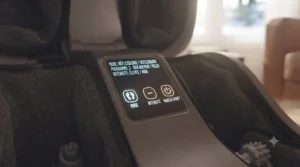
Doing an honest investment value comparison means looking past the sticker price to cost-per-use over a realistic lifespan. A C$120 unit used three times a week that fails after 14 months works out to roughly C$0.60 per use before it needs replacing — not bad, but not as efficient as it first appears once you factor in a second purchase. A C$220 mid-range unit lasting three years at the same frequency drops to roughly C$0.47 per use, and a commercial unit like the Belava Pro Foot Heater-Massager, used daily across a business for five-plus years, spreads its higher upfront cost across thousands of sessions, making it the cheapest option per use by a wide margin — provided the volume of use justifies the initial outlay. The takeaway: home users massaging their own feet a few times weekly rarely recoup a commercial-grade premium, while anyone using a unit daily, across multiple people or paying clients, almost always comes out ahead financially with the sturdier build.
Professional Foot Massager for Home Use: Who Actually Needs One
Not every home buyer should default to the cheapest option — there’s a real, if smaller, market for a professional foot massager for home use. People managing chronic conditions like plantar fasciitis or mild circulation issues, multi-person households where three or four family members use the same unit daily, and home-based massage therapists seeing a handful of private clients each week all put enough cumulative wear on a device to justify stepping up from entry-level. In these cases, a prosumer pick like the QUINEAR Recovery Compression System or even a scaled-down commercial unit bridges the gap nicely — more durable than a basic home massager, without the full cost or bulk of true salon equipment. The test is simple: if you’re doing rough mental math on how many people and how many sessions per week a unit needs to survive, and that number climbs past “just me, a few times a week,” it’s worth paying for the sturdier build.
Common Mistakes When Buying a Foot Massager
Buyers most often go wrong by ignoring foot size compatibility, assuming “one size fits all” applies the same way pantyhose ads used to claim it did — it doesn’t, and a cramped fit ruins the experience regardless of how good the motor is. A second common mistake is chasing the highest mode count without checking whether those modes are meaningfully different or just marketing padding on a basic motor. Third, plenty of shoppers skip reading for durability complaints specifically, focusing only on comfort ratings and missing early warning signs about motor burnout. Fourth, some buyers overspend on commercial-branded units for purely occasional personal use, paying for a duty cycle they’ll never come close to using. Finally, ignoring heat consistency is a frequent oversight — a unit that heats unevenly or slowly can undercut an otherwise decent massage experience, and that detail rarely shows up in a five-star headline rating.
Safety, Certification & Regulations Guide
Any electrical foot massager plugged into a Canadian outlet should carry a recognized certification mark — CSA, cUL, or cETL are the ones to look for, and products lacking any of these marks may not meet Canadian electrical safety requirements. The Government of Canada’s own consumer guidance on electrical product safety recommends checking for these marks before buying any plug-in device, foot massagers included, and avoiding units that show frayed cords or overheating during normal use. People managing diabetes or significant circulation issues should treat any foot massager as a comfort tool, not a medical treatment, and check with a healthcare provider before relying on compression or heat therapy for symptom management. Commercial operators — salons, clinics, mobile spa businesses — should also confirm that any unit purchased for client use meets applicable provincial health and safety requirements for equipment used on multiple people, since hygiene and liner-cleaning protocols differ meaningfully from personal home use.
FAQ: Professional vs Home Foot Massager
❓ Is a professional foot massager worth it for home use?
❓ What's the main difference between commercial and home foot massagers?
❓ Do more expensive foot massagers actually feel better?
❓ How long should a home foot massager last?
❓ Can foot massagers help with plantar fasciitis?
Conclusion
The professional vs home foot massager decision really isn’t about which category is “better” — it’s about matching duty cycle to actual need. A nurse coming off a 12-hour shift and a salon owner running back-to-back pedicures are solving completely different problems, even though both end up shopping in the same product category. Budget and mid-range home units like the Nekteck Shiatsu Foot Massager with Heat or RENPHO Foot Massager Machine with Heat cover the vast majority of personal relaxation needs without overspending, while genuinely commercial-grade equipment like the Belava Pro Foot Heater-Massager earns its price tag through durability that home users will simply never test. Somewhere in between, prosumer picks like the QUINEAR Recovery Compression System serve a real niche for serious athletes and heavy home users. Whichever tier fits your life, the honest math on investment value comparison and commercial durability features should guide the decision more than marketing language on the box.
Recommended for You
- Top foot massager brands in Canada 2026: 7 Trusted Picks
- 7 Best Foot and Calf Massager Combo Picks in Canada (2026)
- Full Leg and Foot Massager: 7 Real Picks for 2026 (Canada Guide)
Disclaimer: This article contains affiliate links. As an Amazon Associate, I earn from qualifying purchases. If you purchase products through these links, we may earn a small commission at no additional cost to you.
✨ Found this helpful? Share it with your friends! 💬🤗
