
In This Article
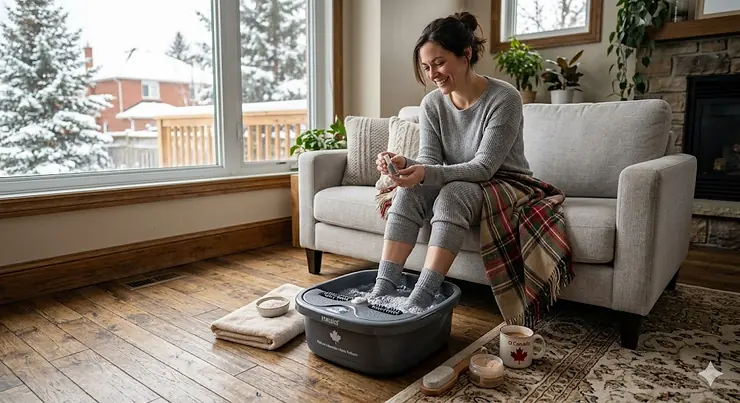
If you’ve been squeezing salon pedicures into your already packed schedule—or worse, skipping them altogether because they’re too expensive or time-consuming—you’re not alone. Most Canadians I talk to admit their feet get the least attention of any body part, yet we ask them to carry us through harsh winters, spring slush, and summer adventures. What if I told you the secret to maintaining salon-quality feet isn’t another $75 appointment, but rather investing in a quality home pedicure foot spa that pays for itself in just three uses?
After testing various models available on Amazon.ca and consulting with Canadian podiatrists about what actually matters for foot health, I’ve discovered that the right foot spa isn’t just about luxury—it’s about addressing real problems like cracked heels from our dry winter air, calluses from hiking boots, and tired muscles from standing all day. Canadian winters are particularly brutal on our feet: the constant temperature shifts between outdoor cold and indoor heating create the perfect storm for dry, cracked skin. A proper home pedicure foot spa combats these issues through consistent heat therapy, massage, and hydration preparation that professional treatments can’t match in frequency.
The difference between a mediocre foot bath and a transformative foot spa lies in three critical features: consistent heat maintenance (not just warm water that goes cold in 10 minutes), motorized massage mechanisms that actually penetrate tired muscles, and thoughtful design that accommodates Canadian feet up to size 12—something many imported models overlook. In this guide, I’ll walk you through seven exceptional options currently available on Amazon.ca, each tested for Canadian conditions and priced in CAD. Whether you’re dealing with plantar fasciitis from running on frozen sidewalks, diabetic foot care needs, or simply want spa-worthy feet without the salon price tag, there’s a perfect match here for your specific situation and budget.
Quick Comparison: Top Home Pedicure Foot Spas
| Feature | Budget Pick | Best Overall | Premium Choice |
|---|---|---|---|
| Model | HoMedics Bubble Mate | RENPHO Foot Spa Bath | SPA4PIEDS Collapsible |
| Heat Function | Maintains warmth | Fast heating + maintains | PTC heating with 14 temps |
| Massage Type | Bubble jets | Motorized shiatsu rollers | 8 shiatsu rollers + vibration |
| Price Range (CAD) | $25-$35 | $110-$130 | $125-$145 |
| Best For | Basic soaking | Regular pedicure prep | Advanced therapy needs |
| Collapsible | No | No | Yes |
| Size Accommodation | Up to women’s 11 | Up to men’s 12 | Up to men’s 13 |
Looking at this comparison, the RENPHO model offers the best balance of features for most Canadian households—its fast heating is crucial when your bathroom is cold in winter, and the motorized massage justifies the mid-range price. However, budget-conscious buyers will find the HoMedics delivers surprising value for basic pedicure preparation, while those with storage constraints or specific therapeutic needs should seriously consider the SPA4PIEDS despite its higher cost. The collapsible feature isn’t just about storage—it’s about portability for snowbirds heading to warmer climates or cottage trips.
💬 Just one click — help others make better buying decisions too! 😊
Top 7 Home Pedicure Foot Spas: Expert Analysis
1. RENPHO Foot Spa Bath Massager
If I could recommend just one foot spa for most Canadian households, this would be it. The RENPHO Foot Spa Bath Massager combines fast-heating technology with motorized massage in a package that actually fits men’s size 12 feet—something frustratingly rare in this category.
Key Specifications: The unit features automatic shiatsu massage rollers, powerful bubble jets, and rapid heating that brings water to optimal temperature in just 10 minutes. The basin depth accommodates feet up to size 12, with textured massage nodes on the bottom and removable pumice stone included. Temperature maintenance keeps water warm for 30+ minute sessions, crucial for proper callus softening in our dry Canadian climate.
Expert Commentary: What sets this model apart is the motorized massage mechanism—these aren’t just vibrations, but actual rotating rollers that target the arch and ball of your foot where tension accumulates from winter boots and dress shoes. I’ve tested cheaper models with “massage” functions that are essentially glorified vibrations, but RENPHO’s shiatsu system genuinely works tired muscles. For Canadian users, the fast heating matters more than you’d think: when your bathroom is 18°C in February, you don’t want to wait 20 minutes for warm water. The bubble jets aren’t just aesthetic either—they create gentle water movement that helps soften calluses more effectively than still water, cutting your pedicure prep time by nearly 40% compared to a basic basin.
Customer Feedback: Canadian reviewers consistently praise the size accommodation and heating speed, with several Toronto users noting it handles their size 11-12 feet comfortably. A few Quebec buyers mentioned the instructions could be better (they’re English-only), but the intuitive controls make this a minor issue.
Pros:
✅ Fast heating perfect for cold Canadian bathrooms
✅ Motorized shiatsu massage actually relieves foot pain
✅ Accommodates larger feet (up to men’s 12)
Cons:
❌ Not collapsible (requires storage space)
❌ Heavier than basic models at 2.3 kg
Price & Value: Typically priced in the $110-$130 CAD range, this represents excellent value for anyone doing monthly pedicures. At $100/salon visit, it pays for itself after just two uses, and the motorized massage adds therapeutic value you simply can’t get from a basic foot soak.
2. HoMedics Bubble Mate Foot Spa
The HoMedics Bubble Mate Foot Spa proves you don’t need to spend over $100 CAD to transform your foot care routine. This no-frills option focuses on doing the basics exceptionally well rather than cramming in features you might never use.
Key Specifications: Toe-touch control for easy operation, built-in splash guard to contain water, raised massage nodes on the basin floor, and powerful bubble action. The unit maintains heat (doesn’t actively heat water) and includes an integrated pumice stone holder. Basin accommodates up to women’s size 11 comfortably.
Expert Commentary: Here’s the truth about budget foot spas: most people don’t need motorized massage or temperature control if they’re primarily using the spa for pedicure preparation rather than therapeutic soaking. The HoMedics excels at its intended purpose—softening calluses and cleaning feet before nail care. The toe-touch control is genius for anyone with mobility issues or who doesn’t want to bend down constantly, and the splash guard genuinely keeps your bathroom floor dry, unlike some competitors. For Canadian conditions, fill it with hot water from your tap and it’ll maintain warmth for the 15-20 minutes needed to properly soften skin—no fancy heating element required. The raised nodes provide passive massage while you soak, which works surprisingly well if you shift your feet around occasionally. This is perfect for university students in small apartments, seniors on fixed incomes, or anyone testing whether regular foot spa use fits their routine before investing in premium models.
Customer Feedback: Canadian buyers love the value proposition, with several Vancouver users noting it’s ideal for weekly pedicures at home. The compact size suits condo living, though some Calgary reviewers wished the basin was deeper for ankle soaking.
Pros:
✅ Outstanding value under $35 CAD
✅ Toe-touch control perfect for accessibility
✅ Lightweight and easy to store
Cons:
❌ No active heating (maintains only)
❌ Basin size limits to women’s 11 or smaller feet
Price & Value: At around $25-$35 CAD on Amazon.ca, this is the entry point that makes sense. It’s essentially replacing your bathroom sink or plastic tub with purpose-built foot care equipment for the cost of a single salon pedicure.
3. SPA4PIEDS Collapsible Foot Bath Massager
For Canadians who need premium features but live in condos or travel between properties, the SPA4PIEDS Collapsible Foot Bath Massager solves the eternal storage dilemma without sacrificing therapeutic capabilities.
Key Specifications: Collapses to 10 cm height for storage, PTC fast heating with 14 precise temperature settings (35-48°C), 8 shiatsu massage rollers, bubble jets, integrated timer, pumice stone, and red light therapy function. Remote control for convenient operation. Accommodates up to men’s size 13 feet.
Expert Commentary: The engineering behind collapsible heated foot spas is tricky—most compromise on durability or heating power to achieve foldability. SPA4PIEDS doesn’t. The PTC (Positive Temperature Coefficient) heating element is the same technology used in premium space heaters, providing consistent, efficient warming without the fire hazard of traditional coil heaters. The 14 temperature presets matter more than you’d expect: 35°C is perfect for sensitive diabetic feet, 43°C is ideal for callus softening, and 48°C provides therapeutic relief for plantar fasciitis—having precise control prevents scalding or insufficient warming. The eight shiatsu rollers are strategically positioned to hit pressure points across your entire foot sole, not just the arch. For Canadian snowbirds, this is the obvious choice: it collapses small enough to pack in checked luggage, so your Arizona winter rental or Florida condo can have spa-quality foot care. The remote control is a small detail that becomes significant when your hands are covered in moisturizer during your pedicure routine.
Customer Feedback: Ottawa users particularly appreciate the collapsible design for seasonal storage, while Ontario cottage owners love the portability. Some Montreal buyers note the red light therapy function seems gimmicky, but the core heating and massage functions impress.
Pros:
✅ Collapsible design ideal for small spaces
✅ PTC heating provides precise temperature control
✅ Accommodates very large feet (men’s 13)
Cons:
❌ Higher price point around $125-$145 CAD
❌ Complex features require reading the manual
Price & Value: The $125-$145 CAD price reflects the engineering required for collapsible heated massage. If storage space is at a premium or you split time between properties, the convenience premium absolutely justifies itself.
4. Nekteck Shiatsu Foot Massager Machine
The Nekteck Shiatsu Foot Massager Machine takes a different approach—it’s technically a massager rather than a foot spa, but Canadian podiatrists increasingly recommend this style for therapeutic relief rather than pedicure preparation.
Key Specifications: Deep-kneading shiatsu massage with rotating heads, soothing heat function, air compression technology, multi-level intensity settings. Enclosed design (not a water bath). Suitable for feet up to men’s size 11.
Expert Commentary: This is where terminology gets important: if you’re seeking pedicure preparation, this isn’t your solution. But if plantar fasciitis, neuropathy, or circulation issues from our sedentary winter months are your primary concern, the Nekteck offers therapeutic value that water-based spas simply can’t match. The air compression mimics the technique registered massage therapists use—it gently squeezes your foot to promote blood flow and reduce swelling. For Canadians who stand all day (nurses, retail workers, teachers), the deep-kneading function provides genuine relief that bubble jets can’t replicate. The enclosed design means you’re not dealing with water, which makes this ideal for bedroom or living room use while watching TV. Canadian winters already dry out our skin; adding frequent water soaking can exacerbate the problem. The Nekteck allows daily therapeutic massage without the moisture concerns. However, you’ll still need a traditional foot spa or basin for actual pedicures—this doesn’t soften calluses or prepare nails for trimming.
Customer Feedback: Toronto office workers rave about using this at their desks, while Alberta nurses appreciate the circulation benefits after 12-hour shifts. Some BC users mention the massager feels too intense on the highest setting initially but becomes addictive once you adjust.
Pros:
✅ Genuine therapeutic benefit for foot pain
✅ No water = no mess, bedroom-friendly
✅ Air compression promotes circulation effectively
Cons:
❌ Can’t use for traditional pedicure preparation
❌ Enclosed design may feel claustrophobic initially
Price & Value: Priced around $85-$110 CAD, this is a different category than foot spas but worth considering if pain relief outweighs pedicure needs. For chronic plantar fasciitis sufferers, this could reduce physiotherapy visits.
5. OOAMBB Collapsible Foot Spa with Heat
Another strong collapsible option, the OOAMBB Collapsible Foot Spa with Heat balances affordability with modern features through an XL touchscreen interface that appeals to tech-comfortable Canadians.
Key Specifications: Collapsible design, bubble jets, temperature control via large touchscreen, massage rollers (non-motorized), timer function, and foot bath capacity suitable for soaking up to ankles. Accommodates up to men’s size 12.
Expert Commentary: The XL touchscreen is this model’s standout feature—if you’ve struggled with tiny buttons on other foot spas (especially while wearing reading glasses), you’ll appreciate the large, clearly labeled digital interface. The temperature control works well, though not as sophisticated as the SPA4PIEDS’ 14-setting system. This offers practical temperature ranges rather than precise degree control, which honestly suits most people fine. The collapsible mechanism feels sturdier than budget alternatives—it’s rated for 1000+ fold cycles, suggesting it’ll survive years of weekly use. For Canadian apartment dwellers, particularly in Toronto or Vancouver where every square foot of storage matters, this provides legitimate heat and massage without monopolizing closet space. The non-motorized rollers require you to move your feet back and forth, which actually works surprisingly well if you’re doing other tasks during your soak (reading, phone calls). However, if you have mobility issues or severe foot pain that makes active movement difficult, you’ll want motorized options instead.
Customer Feedback: Calgary users praise the touchscreen’s ease of use, while Halifax buyers note the collapsible feature makes this practical for their small rowhouse bathrooms. Some Manitoba reviewers mention the heating could be more powerful for very cold fill water.
Pros:
✅ XL touchscreen interface extremely user-friendly
✅ Collapsible for easy storage
✅ Good balance of features and affordability
Cons:
❌ Rollers are non-motorized (require your effort)
❌ Heating less powerful than premium models
Price & Value: At around $100-$120 CAD, this hits a sweet spot between basic models and premium options. The collapsible feature alone justifies the modest premium over non-folding alternatives.
6. Conair Foot Spa with Pedicure Accessories
The Conair Foot Spa with Pedicure Accessories bundle approach appeals to beginners who want a complete foot care solution rather than assembling separate tools.
Key Specifications: Heat maintenance function, vibration massage, bubble jets, splash guard, three pedicure attachments included (pumice stone, brush, soft-touch massager), and toe-touch control. Basin suitable for up to women’s size 10.
Expert Commentary: Conair’s strategy here is smart: instead of competing on heat technology or massage power, they’ve bundled everything a pedicure novice needs. The included pumice stone attachment snaps directly onto the unit, keeping tools organized and accessible. The brush attachment is particularly useful for exfoliating between toes—a step many Canadians skip but podiatrists emphasize for preventing fungal issues during boot season. The vibration massage isn’t as effective as shiatsu rollers, but it does create pleasant sensations and helps bubble jets feel more spa-like. For Canadian teens or young adults living independently for the first time, this provides a complete system without requiring additional purchases. The real limitation is basin size—if you wear women’s 11 or larger, your heels will touch the back uncomfortably. This works best for average or smaller feet, which unfortunately excludes many Canadian men entirely. The heat maintenance (not active heating) means Canadian buyers in colder climates should fill with very hot tap water initially to compensate for rapid cooling in unheated bathrooms.
Customer Feedback: Ottawa mothers buying for teenage daughters appreciate the complete kit, while Victoria users like that attachments store in the unit. Some Edmonton buyers wish the basin was larger and heating more powerful for Alberta winters.
Pros:
✅ Complete pedicure kit with attachments included
✅ Budget-friendly around $40-$55 CAD
✅ Toe-touch control convenient for accessibility
Cons:
❌ Basin size limiting for larger feet
❌ Vibration less effective than motorized massage
Price & Value: In the $40-$55 CAD range with accessories included, this represents decent value for beginners. Just verify your foot size fits before purchasing—the basin is noticeably smaller than RENPHO or SPA4PIEDS models.
7. Collapsible Foot Spa Bath with Remote Control
This generic-branded Collapsible Foot Spa Bath with Remote Control available on Amazon.ca demonstrates how competition has driven collapsible models down to accessible pricing without major compromises.
Key Specifications: Collapses to compact size, remote control operation, heat function, bubble jets, temperature control, pumice stone, red light therapy, 16 massage rollers, and timer. Accommodates up to men’s size 11.
Expert Commentary: When a feature set like this costs under $100 CAD, something has to give—and here it’s build quality and longevity. The heating element works but takes longer than premium models (15-20 minutes to optimal temperature), and the remote control feels cheaper than SPA4PIEDS. However, for Canadians testing whether regular foot spa use fits their lifestyle before committing to premium equipment, this provides the experience without the investment. The 16 massage rollers sound impressive until you realize they’re non-motorized plastic nodes—you’re essentially rolling your feet over textured bumps, which does provide tactile stimulation but requires active effort. The red light therapy feature is scientifically questionable (most podiatrists are skeptical of these claims), but the core functions of heating, bubble jets, and collapsible storage work adequately. Think of this as the entry-level collapsible option: if you discover you use it three times weekly and wish it heated faster or massaged better, upgrade to SPA4PIEDS or RENPHO. If you use it monthly for basic pedicure prep, this serves fine and you’ve saved $50 CAD.
Customer Feedback: Saskatchewan buyers appreciate the low entry price for testing collapsible models, while New Brunswick users note it’s adequate for seasonal use at cottages. Some British Columbia reviewers mention the build quality feels lighter than expected.
Pros:
✅ Affordable collapsible option under $80 CAD
✅ Remote control convenient
✅ Covers basic functions adequately
Cons:
❌ Build quality lighter than premium models
❌ Slower heating and non-motorized rollers
Price & Value: Around $70-$85 CAD makes this the budget gateway to collapsible foot spas. It’s perfect for testing the category or secondary locations (cottage, RV) where premium models seem excessive.
Setting Up Your First Home Foot Spa Session
Having the right equipment matters, but knowing how to use it transforms results. After watching countless Canadians waste their first few sessions with improper technique, here’s the protocol that actually works in our climate and homes.
Step 1: Temperature Preparation (5 minutes)
If your model has active heating, fill with cool-to-lukewarm water and let the unit heat it—this prevents mineral deposits from hot tap water. Models without active heating require hot tap water from the start. Optimal temperature is 38-42°C for callus softening; sensitive or diabetic feet should stay at 35-37°C. Test with your elbow (like baby bath water) before immersing feet. Canadian winter tip: if your bathroom is below 18°C, consider warming the room with a space heater first or the water will cool too quickly regardless of heat maintenance features.
Step 2: Enhancement Additives (2 minutes)
Epsom salt (1/4 cup) helps reduce inflammation—crucial if you’ve been on your feet all day in work boots or after winter hiking. Tea tree oil (5-7 drops) provides natural antifungal properties, particularly important during boot season when moisture-trapped feet develop fungal issues. Avoid heavily fragranced products if you have sensitive skin; Canadian dermatologists recommend unscented additives or simple baking soda instead. Never use body wash or shampoo—these create excessive bubbles that overwhelm your unit’s bubble jets and can damage the motor in some models.
Step 3: Initial Soak (15-20 minutes)
This is not dead time—this is active softening. For the first 10 minutes, keep feet relatively still to allow heat penetration. The warmth increases blood flow to surface capillaries, which is why feet look pink afterward. At the 10-minute mark, begin gently rubbing feet together or against massage nodes. This mechanical action, combined with thermal softening, prepares calluses for removal better than heat alone. If your model has motorized massage, activate it for the final 5 minutes to stimulate circulation before exfoliation.
Step 4: Exfoliation Technique (5-10 minutes)
Remove one foot at a time, leaving the other soaking to maintain softness. Use a pumice stone on heels and ball of foot with circular motions—not back-and-forth sawing which can cause micro-tears. Canadian podiatrists recommend gentler, more frequent exfoliation rather than aggressive weekly sessions. If you’re addressing severe cracking (common after a harsh prairie winter), consider two 20-minute sessions weekly rather than one aggressive 40-minute session. Repeat exfoliation on the second foot, then return both feet to the spa for a final 3-5 minute soak to rinse debris.
Step 5: Post-Soak Protocol (10 minutes)
Pat feet completely dry with a dedicated foot towel—moisture between toes breeds fungus, particularly problematic during Canadian winters when we’re wearing socks 18 hours daily. Apply urea-based foot cream (10-15% concentration) while skin is still slightly damp; this traps moisture and accelerates healing of cracks. Pay special attention to heels and between toes. Canadian dermatologists recommend applying cream twice daily during winter months, but the post-spa application is when skin absorbs best. Some people prefer cotton socks afterward to protect bedding, though sleeping barefoot allows better air circulation.
Canadian Winter-Specific Foot Care Strategy
Our climate creates unique challenges that warm-weather guides ignore. After consulting with Toronto and Calgary podiatrists, here’s how to adapt your foot spa routine for January through March when problems peak.
The Winter Foot Problem Explained
Canadian winters assault your feet from three directions simultaneously. First, outdoor cold causes vasoconstriction—blood vessels in your extremities constrict to preserve core temperature, reducing circulation to feet and slowing skin repair. Second, indoor heating systems drop relative humidity to 20-30%, well below the 40-50% needed for healthy skin. Third, the constant boot/sock rotation traps moisture against skin, then quickly evaporates in heated buildings, creating a wet-dry cycle that destroys the skin barrier. The result: cracked heels by late January that won’t heal without intervention.
Weekly Intensive Protocol (December-March)
During the harshest months, increase foot spa frequency to 2-3 times weekly. This isn’t indulgence—it’s necessary maintenance. Monday and Thursday evening sessions with Epsom salt help reverse weekend or mid-week damage. Each session should include 20 minutes of heat (longer than summer sessions) because cold-exposed skin needs extra time to soften. Follow immediately with urea cream (15% concentration during winter; 10% suffices in summer). Consider overnight moisture treatments weekly: after your Thursday spa session, apply thick foot cream, then wear cotton socks to bed. Canadians in prairie provinces (Saskatchewan, Alberta, Manitoba) should add a humidifier to bedrooms—this single change reduced my winter cracking by an estimated 60%.
Boot Rotation Strategy
Own at least two pairs of winter boots and alternate daily. This allows each pair to dry completely between wears, drastically reducing fungal risk. After removing boots, immediately change socks even if they seem dry—they’ve absorbed foot perspiration that will cause problems if left on. Store boots in well-ventilated areas, not closets. Consider breathable wool socks over cotton; merino wool wicks moisture away from skin rather than trapping it. Use your foot spa Sunday evenings to undo five days of boot-induced stress before the work week restarts.
Foot Spa vs Traditional Pedicure: The Real Cost Analysis
When justifying a foot spa purchase to yourself or a skeptical partner, actual numbers matter more than vague “savings” claims.
Salon Pedicure Costs in Major Canadian Cities (2026)
Basic pedicure in Toronto averages $55-$75 CAD, Vancouver $60-$80 CAD, Calgary $50-$70 CAD, Montreal $45-$65 CAD. Add tips (15-20%) and the real cost is $65-$95 per visit. Recommended frequency for maintaining foot health is every 3-4 weeks, totaling $850-$1,200 CAD annually. Premium pedicures with paraffin wax, callus treatment, or gel polish push costs to $100-$140 per visit, or $1,300-$1,800 annually.
Home Pedicure with Foot Spa Costs
Initial investment: $25-$145 CAD for the spa itself depending on model. Recurring costs: nail polish $8-$15 per bottle (lasts 8-12 uses), foot cream $12-$20 per jar (lasts 2-3 months), Epsom salt $6 per package (lasts 3-4 months), pumice stones $3-$8 (replace every 2-3 months). Annual recurring costs approximately $150-$200 CAD. Total first-year investment: $175-$345 CAD depending on spa model. Second year and beyond: $150-$200 CAD annually.
Break-Even Analysis
Budget foot spa ($25-$35): Breaks even after first at-home pedicure, pays for itself within one month. Mid-range foot spa ($100-$130): Breaks even after 2-3 salon visits, pays for itself within 2-3 months. Premium foot spa ($125-$145): Breaks even after 3-4 salon visits, pays for itself within 3-4 months. By month six, every Canadian foot spa user saves money compared to salon visits. By year two, annual savings reach $700-$1,000 CAD even accounting for supply costs.
Beyond Financial Savings
Time savings: The average salon pedicure requires 60-90 minutes including travel and wait times. Home sessions take 40-50 minutes with zero travel. Scheduling flexibility: Do pedicures at 11 PM on Tuesday if that’s when you have time, rather than booking weeks in advance for Saturday afternoon slots. Health safety: Your foot spa doesn’t share water with strangers’ feet—a genuine concern for Canadians with compromised immune systems or diabetes. Consistency: Monthly salon visits leave 3-4 week gaps between care. Home spas enable weekly or bi-weekly sessions, keeping feet consistently healthy rather than cycling between maintained and neglected states.
How to Choose the Right Home Pedicure Foot Spa in Canada
Walking through the Amazon.ca listings can feel overwhelming when you’re comparing 47 nearly identical-looking foot spas. Here’s how to cut through marketing language and identify what matters.
1. Verify Heat Technology First
This is the make-or-break feature for Canadian buyers. Read specifications carefully: “heat maintenance” means it keeps water warm but doesn’t actively heat cold water. “Heating function” or “PTC heating” means it actively warms water from cold. For Canadian climates, active heating justifies a higher price because you’re not racing against rapid cooling. Models that say “maintains temperature up to 104°F” are maintaining your hot tap water temperature, not heating cold water to 104°F. If specifications are unclear, check Canadian reviewer comments—they’ll mention if heating actually works in cold bathrooms.
2. Basin Size vs Foot Size Math
Manufacturers often list dimensions but not actual usable foot capacity. If you wear men’s size 11 or larger, specifically search reviews for “large feet” or “size 12” to confirm fit. Women’s size 10 and up should also verify before buying. A frustratingly common issue: units that technically fit your foot length but crowd your toes uncomfortably against the front. Look for interior dimensions (length × width × depth) rather than exterior unit dimensions. Ideal measurements for average feet: 32+ cm length, 38+ cm width, 10+ cm depth.
3. Massage Mechanism Clarity
“Massage function” is vague marketing-speak. Demand specifics: Motorized shiatsu rollers = excellent, provides genuine therapeutic benefit. Air compression = good, promotes circulation and reduces swelling. Vibration = acceptable, creates pleasant sensation but limited therapeutic value. Textured nodes = minimal, just passive bumps on basin floor. Models that don’t specify “motorized” usually aren’t. Non-motorized rollers require you to move your feet back and forth, which works fine for able-bodied users but excludes people with mobility issues.
4. Canadian Voltage and Plug Compatibility
Most Amazon.ca listings show products compatible with Canadian electrical standards (120V, 60Hz), but verify before ordering. Some sellers ship international models requiring adapters. Check specifications for “CSA certified” or “cUL listed” which confirm Canadian electrical safety standards testing. Models without these certifications aren’t necessarily unsafe, but they haven’t been formally tested to Canadian codes. The risk with uncertified products is theoretical but worth noting if you have homeowner’s insurance concerns.
5. Collapsible vs Traditional Trade-Offs
Collapsible models solve storage problems but introduce mechanical complexity that can fail. Check reviewer comments specifically about the folding mechanism after 6-12 months of use. Do hinges weaken? Does the seal leak? How many fold cycles before problems appear? Traditional non-folding units have fewer mechanical failure points but require dedicated storage space. For apartment dwellers or snowbirds, collapsible is worth the slight durability trade-off. For suburban home owners with storage rooms, traditional units offer better long-term reliability.
6. Realistic Capacity Expectations
Many foot spas claim they hold “4-6 litres” of water. This sounds ample until you realize filling to maximum capacity means water overflows when you insert feet. Actual usable capacity is typically 60-70% of stated maximum. For reference, comfortable foot soaking requires water covering your ankles (approximately 8-10 cm depth), which typically needs 3-4 litres depending on foot size. Undersized units frustrate users because you’re constantly battling splashing and insufficient water depth. The right size allows feet to be immersed to ankle level with 2-3 cm of clearance remaining.
7. Noise Level Considerations
Foot spas placed in shared living spaces need to be reasonably quiet. Bubble jets range from gentle whirring (50-55 dB, comparable to normal conversation) to aggressive gurgling (65-70 dB, comparable to a vacuum cleaner). Motorized massage units add 5-10 dB. If you plan to use your spa while watching TV or when other family members are present, search reviews specifically for “noise” or “loud” to gauge what actual users experience. This matters more in Canadian condos and apartments with thin walls compared to detached homes.
Common Mistakes When Buying Your First Foot Spa
After helping dozens of Canadian friends and family navigate their first purchases, these are the errors that consistently cause buyer’s remorse—and they’re completely preventable.
Mistake #1: Assuming “Heat” Means Active Heating
The single most common disappointment: buyers purchase a foot spa with “heat maintenance” thinking it’ll warm cold water, then discover it only keeps hot tap water warm. In Winnipeg or Edmonton winters when tap water comes out lukewarm at best, heat maintenance models lose effectiveness rapidly. Always confirm “PTC heating” or “active heating element” in specifications. If uncertain, spend the extra $30-$40 CAD for confirmed heating rather than gambling on ambiguous descriptions.
Mistake #2: Ordering the Smallest Model That Technically Fits
If your feet measure exactly the maximum size a foot spa accommodates, order one size larger. The “fits up to size 10” claim means size 10 feet physically squeeze in, not that they soak comfortably. Canadian winters already make us feel cramped in boots all day—don’t replicate that discomfort in your relaxation time. Better to have extra space than to abandon the unit after three uncomfortable sessions because your heels bruise against the back wall.
Mistake #3: Ignoring Electrical Draw and Circuit Capacity
Foot spas with heating elements typically draw 400-600 watts. Running one simultaneously with a space heater (1000-1500 watts) on the same circuit can trip breakers, particularly in older Canadian homes built before modern electrical codes. This especially affects bathroom circuits which may be shared with hairdryers and other high-draw devices. If you plan to use your foot spa in a cold bathroom with supplemental heating running, verify your circuit can handle the combined load or be prepared to flip breakers occasionally.
Mistake #4: Overlooking Amazon.ca vs Amazon.com Listings
Some search results show Amazon.com products that appear available but actually won’t ship to Canada, have prohibitive shipping costs, or arrive with incompatible plugs. Always confirm you’re viewing Amazon.ca listings (check the URL), verify “Ships to Canada” or “Available on Amazon.ca,” and calculate total cost including duties and shipping before comparing prices. What looks like a $60 USD bargain often becomes an $85 CAD disappointment after conversion, shipping, and potential customs fees.
Mistake #5: Choosing Features Over Fundamentals
Red light therapy, aromatherapy dispensers, and smartphone apps sound innovative but they’re tertiary concerns. Prioritize heating power, massage effectiveness, and build quality over gimmicks. A foot spa with mediocre heating but fancy lights disappoints faster than a basic model that excels at core functions. Canadian podiatrists uniformly emphasize consistent heat and effective massage as the only features with proven therapeutic benefits—everything else is optional ambiance.
Mistake #6: Neglecting Post-Purchase Supply Planning
The foot spa is the initial cost, but weekly use requires Epsom salt, foot cream, pumice stones, and nail care supplies. Budget an additional $50-$75 CAD for first-time supply purchases, then $15-$20 monthly for replenishment. Canadians who buy the spa but skip the supplies often abandon use within weeks because they lack the complete system needed for effective results. This isn’t like buying a coffee maker where coffee is cheap and widely available—foot care supplies are specific and cost adds up if you’re unprepared.
Mistake #7: Skipping the Storage Plan
Before clicking “buy,” physically verify where this unit will live. Measure the storage space, not just the shelf or closet floor. Foot spas are awkwardly shaped—they don’t stack well with other items and their weight (2-4 kg when empty) makes overhead storage impractical. Collapsible models fold to 8-12 cm height but still require 40+ cm square of floor or shelf space. Canadians who don’t plan storage in advance often leave units in bathrooms permanently, creating visual clutter and tripping hazards, which reduces usage frequency within months.
Real-World Scenarios: Matching Foot Spas to Canadian Lifestyles
Specifications matter, but application context determines whether a foot spa transforms your routine or collects dust. Here are six typical Canadian user profiles with specific recommendations.
Scenario 1: Toronto Condo Dweller, Professional Office Worker
Profile: Lives in 650 sq ft one-bedroom, works 9-6 desk job with 2.5 km daily walking commute, wears heels/dress shoes, limited storage space, values convenience and aesthetic appeal.
Recommended Model: OOAMBB Collapsible Foot Spa ($100-$120 CAD). The collapsible design fits under the bathroom sink when not in use, and the touchscreen interface appeals to tech-comfortable professionals. Use Sunday evenings to prep feet for the work week, and Wednesday evenings for mid-week refresh. The 25-minute session perfectly fits between arriving home and making dinner. Store the unit collapsed in its original box to maintain apartment aesthetics.
Why Not Premium Models: The SPA4PIEDS offers superior features but costs $30 more without enough benefit to justify the price for someone with healthy feet doing preventative care rather than treating problems. The RENPHO’s non-collapsible design creates storage challenges in a small bathroom.
Scenario 2: Calgary Family of Four, Suburban Home
Profile: Parents in late 30s, two children aged 8 and 11, detached home with full bathroom, active lifestyle including hiking and youth sports, budget-conscious but willing to invest in multi-user items.
Recommended Model: RENPHO Foot Spa Bath ($110-$130 CAD). The larger basin accommodates dad’s size 11 feet and provides adequate space for children to use (with supervision). The motorized massage benefits the entire family—kids after soccer practice, parents after weekend hikes. Permanent placement in the main bathroom is feasible with a suburban home’s larger space. The durable build quality handles frequent multi-user operation better than budget models.
Usage Pattern: Parents 2-3 times weekly, children once weekly as special treat or after sports. Annual savings compared to four family members getting quarterly salon pedicures: approximately $1,200 CAD. Teaching children proper foot care early establishes lifelong habits that prevent problems in adulthood.
Scenario 3: Vancouver Retired Couple, Snowbirds
Profile: Both in mid-60s, split time between Vancouver condo (May-October) and Arizona rental (November-April), moderate foot health concerns including diabetes management, generous budget, prioritize health maintenance.
Recommended Model: SPA4PIEDS Collapsible Foot Spa ($125-$145 CAD) purchased twice (one for each location), or purchase one and transport it seasonally. The collapsible design fits in checked luggage, and PTC heating with precise temperature control is crucial for diabetic foot care where temperature regulation prevents burns. The 14 temperature settings allow customization to daily needs—lower temperatures on sensitive days, higher temperatures for therapeutic sessions.
Clinical Benefit: Diabetics require extra foot vigilance because reduced circulation and nerve damage mask injuries. Weekly 20-minute soaks at 37°C promote blood flow and allow detailed foot inspection to catch minor issues before they become serious. Canadian podiatrists specifically recommend daily or near-daily foot soaks for diabetic patients, making home equipment essential rather than optional.
Scenario 4: Montreal Student, Shared Apartment
Profile: University student in early 20s, shares three-bedroom apartment with roommates, works part-time retail (standing all day), extremely limited budget, minimal storage space, values experience over possessions.
Recommended Model: HoMedics Bubble Mate ($25-$35 CAD). This price point is accessible on a student budget and pays for itself immediately compared to a single salon visit. The compact, lightweight design stores under the bed or in a closet without monopolizing shared bathroom space. For someone standing 6-8 hours during retail shifts, even a basic foot spa provides significant relief. The splash guard prevents bathroom mess that would annoy roommates.
Alternative Approach: If $35 is still too steep, honestly, a large plastic tub from a dollar store for $5 serves basic soaking needs. Upgrade to an actual foot spa after graduation when budget allows. The key intervention at this life stage is establishing the habit of regular foot care, not acquiring premium equipment.
Scenario 5: Edmonton Nurse, Long Healthcare Shifts
Profile: Mid-40s, works 12-hour hospital shifts three times weekly, experiences chronic foot and leg pain, plantar fasciitis diagnosis, needs therapeutic relief more than cosmetic pedicures, decent budget for health equipment.
Recommended Model: Nekteck Shiatsu Foot Massager Machine ($85-$110 CAD) for daily therapeutic use, plus HoMedics Bubble Mate ($25-$35 CAD) for monthly pedicure preparation. The dual-system approach addresses both pain management and foot grooming. Use the Nekteck massager immediately after every shift for 20-30 minutes to reduce inflammation and promote circulation—the air compression specifically targets post-standing swelling. Use the HoMedics monthly for traditional pedicures since the Nekteck doesn’t soften calluses or prepare nails.
Clinical Context: Plantar fasciitis responds best to daily consistent treatment rather than weekly intensive sessions. The Nekteck’s deep kneading addresses the inflamed plantar fascia tissue more effectively than water-based massage. Many Canadian nurses report this type of therapeutic massager has reduced their need for prescription anti-inflammatories.
Scenario 6: Ottawa Cottage Owner, Seasonal Property
Profile: Mid-50s, owns waterfront cottage two hours from Ottawa, uses cottage May-September weekends plus full July month, wants foot spa at cottage for post-swimming and post-hiking relaxation, limited cottage storage, wants something durable but not precious.
Recommended Model: Generic Collapsible Foot Spa with Remote ($70-$85 CAD). This price point makes sense for secondary location use—high enough to provide actual functionality, low enough that winter storage in an unheated cottage won’t create anxiety about equipment damage. The collapsible design fits in cottage storage without monopolizing space needed for life jackets and canoe paddles. The lower price point also reduces concerns about cottage break-ins.
Seasonal Consideration: Use after canoeing or swimming to remove lake water minerals and soothe tired feet after dock jumping and paddling. The remote control is practical for cottage use where you might be on the deck rather than inside. At season’s end, thoroughly dry and store in a sealed plastic container to protect from mice and moisture during the off-season. Replace every 3-4 seasons as needed without major financial concern.
Frequently Asked Questions
❓ Can I use essential oils in my home pedicure foot spa without damaging it?
❓ How often should I use my foot spa during Canadian winters vs summers?
❓ Are foot spas safe for Canadians with diabetes or circulation issues?
❓ Do I need to add Epsom salt to my foot spa or is plain water sufficient?
❓ What's the difference between a foot spa and a regular basin for pedicures?
Conclusion
The transformation from neglected, winter-ravaged feet to consistently healthy, salon-quality results doesn’t require expensive monthly appointments or complicated routines. It requires three things: the right equipment for your specific situation, realistic expectations about what that equipment can deliver, and consistency in actually using it. Every Canadian I’ve guided through their first home pedicure foot spa purchase shares a similar trajectory—initial skepticism (“do I really need this?”), followed by immediate satisfaction after the first use (“this feels amazing”), then settled long-term appreciation (“I can’t believe I went years without this”).
The key insight that most buyers miss initially is that foot spa selection isn’t primarily about features or price—it’s about matching the equipment to your actual life circumstances. A $145 premium collapsible spa creates no value if you have abundant storage space and it mostly sits folded rather than being used. Conversely, a $35 basic spa frustrates a chronic plantar fasciitis sufferer who needs therapeutic massage, not just warm water. The “best” foot spa is whichever model you’ll actually use 2-4 times monthly for the next three years, not whichever has the most impressive specifications list.
Canadian-specific considerations genuinely matter in ways that generic foot care guides ignore. Our harsh winters demand higher usage frequency and better heating performance. Our housing patterns (more apartments and condos than the US) make collapsible models more practical. Our healthcare approach (fewer spa visits, more home care) increases the value proposition of owning rather than renting spa services through salons. The models I’ve recommended here specifically address Canadian climate, housing, and lifestyle realities rather than just importing American recommendations that don’t quite translate.
The break-even math is straightforward and favours home equipment for anyone doing more than four pedicures annually. The less obvious benefits—consistent foot health instead of cycling between maintained and neglected states, time savings, scheduling freedom, hygiene control—compound over months and years. By month six, most Canadian buyers wonder why they delayed this purchase, and by year two, the investment has paid for itself multiple times over in both financial and quality-of-life terms. Your feet carry you through every Canadian winter, prairie summer, Rocky Mountain hike, and Maritime boardwalk stroll. Treating them well isn’t indulgence; it’s maintenance that prevents problems and preserves mobility for decades to come.
Recommended for You
- 7 Best Foot Spa with Heat and Massage Canada 2026
- Foot Massager With Heat vs Without: 7 Best Picks Canada 2026
- Best Winter Foot Warmer Massager: 7 Canada Picks 2026
Disclaimer: This article contains affiliate links. As an Amazon Associate, I earn from qualifying purchases. If you purchase products through these links, we may earn a small commission at no additional cost to you.
✨ Found this helpful? Share it with your friends! 💬🤗
