
In This Article
If you’ve been scrolling through wellness forums or chatting with your physiotherapist lately, you’ve probably heard someone mention body gua sha scrapers. These aren’t your delicate facial tools—we’re talking about serious muscle-working instruments designed to tackle the kind of deep tissue tension that develops from Canadian winters hunched over keyboards, shovelling snow, or recovering from weekend hockey games.
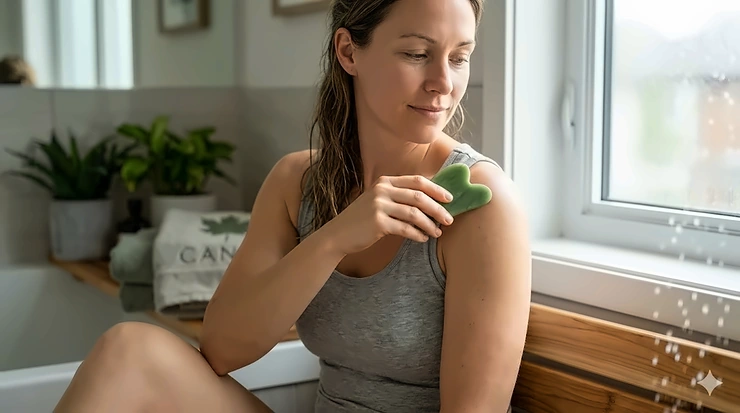
A body gua sha scraper is a handheld tool designed to apply controlled pressure and scraping motion across large muscle groups, promoting what practitioners call fascia release technique. Unlike facial gua sha stones that gently glide across skin, body scrapers are built for power—thicker edges, ergonomic handles, and materials that can withstand the pressure needed to work through stubborn knots in your back, thighs, and shoulders. The technique comes from traditional Chinese medicine, where it’s been used for over 2,000 years to improve circulation and release muscular tension. Modern research published in peer-reviewed journals suggests these tools may help increase microcirculation by up to four times in treated areas, though the mechanism isn’t fully understood by Western medicine standards.
What makes body scrapers different from foam rollers or massage guns? You control every ounce of pressure, angle, and speed. There’s no battery to die mid-session, no noise to wake your partner, and once you learn the technique, you can target specific adhesions with surgical precision. For Canadians dealing with cold-weather muscle stiffness or those who can’t afford weekly RMT appointments at $120+ per session, a quality scraper offers sustainable relief you can use daily. The scraping creates temporary redness called “sha” in traditional medicine—essentially controlled microtrauma that signals your body to flood the area with fresh blood and healing compounds. Don’t worry, it looks more dramatic than it feels, and it fades within 2-4 days.
Canadian buyers face unique considerations here. Our colder climate means muscles stay tenser longer, especially from October through April. Road salt and winter conditions also mean if you’re choosing wooden tools, you’ll want sealed finishes that won’t crack from humidity changes when you bring them in from the cold. Plus, with Canadian dollar pricing, you’ll notice body scrapers on Amazon.ca typically run 15-25% higher than identical listings on Amazon.com—but buying domestically saves you from customs delays, surprise duty fees, and the headache of warranty claims across borders.
Quick Comparison: Top Body Gua Sha Scrapers on Amazon.ca
| Tool Type | Best For | Price Range (CAD) | Material | Durability |
|---|---|---|---|---|
| Stainless Steel | Athletes, deep pressure | $40-$70 | Medical-grade steel | Lifetime |
| Resin Handle | Beginners, large areas | $15-$35 | Natural resin | 2-3 years |
| Bian Stone | Traditional practice | $25-$55 | Bian stone | 5+ years with care |
| Wooden Paddle | Lymphatic drainage | $20-$40 | Beech wood | 1-2 years |
| Multi-Tool Sets | Variety seekers | $30-$65 | Mixed materials | Varies |
💬 **Just one click — help others make better buying decisions too!**😊
Top 7 Body Gua Sha Scrapers: Expert Analysis for Canadian Buyers
1. Sacheu Stainless Steel Body Gua Sha Tool
The Sacheu Stainless Steel Body Gua Sha is what happens when traditional Chinese medicine meets modern metallurgy. This tool features 100% recycled medical-grade stainless steel shaped into multiple working edges—curved sections for large muscle groups like your back and thighs, pointed tips for trigger points around shoulder blades, and ridged areas for acupressure work.
At approximately 140 grams, it’s got enough heft to let gravity do some of the work when you’re scraping your IT bands after a long run through Toronto’s waterfront trails. The self-cooling property of stainless steel becomes a genuine advantage in Canadian contexts—after 30 seconds on your bathroom counter in winter, this thing gets cold enough to double as an ice therapy tool without needing a freezer. The non-porous surface means it won’t harbour bacteria even if you’re using it on multiple body parts or sharing with a partner (though everyone should have their own for hygiene).
Prime-eligible on Amazon.ca means most Canadian addresses get free two-day shipping. The compact size (roughly 13 cm long) makes it perfect for throwing in your gym bag, and unlike jade or rose quartz scrapers that can shatter if dropped on tile, this steel tool is practically indestructible. Canadian reviewers specifically mention using it on plantar fasciitis—standing on frozen bus platforms in Edmonton winters apparently creates some gnarly foot tension that this tool addresses effectively.
✅ Indestructible stainless steel survives Canadian temperature extremes
✅ Self-cooling property provides inflammation reduction
✅ Non-porous surface ensures hygiene compliance
❌ Can feel aggressively cold in winter mornings (warm it in your hands first)
❌ Higher price point in CAD market (around $50-$60)
Price Range: Around $50-$60 CAD. Premium pricing, but this is a buy-once tool that’ll outlast cheaper alternatives by decades. For serious athletes or anyone dealing with chronic tension, the investment pays off within three months compared to professional massage costs.
2. Scienlodic Large Resin Body Gua Sha with Handle
Scienlodic’s resin scraper solves one of the biggest complaints about body gua sha: hand fatigue. The hollow-handle design lets you hook three fingers through the center, distributing pressure across your entire hand instead of just your thumb and index finger. After 10 minutes of scraping your own back, this ergonomic difference becomes everything.
The natural resin material sits in an interesting middle ground between stone and plastic. It’s durable enough to survive being dropped on hardwood floors (important when your hands are slippery with massage oil), lighter than jade or metal alternatives at roughly 85 grams, and naturally anti-static so it won’t cling to dry winter skin the way plastic tools sometimes do. The anti-bow arc design—that subtle curve matching the natural contour of muscle tissue—allows deeper penetration into myofascial layers without the sharp discomfort of flat-edged tools.
Canadian buyers appreciate the included storage bag (keeps it clean in your gym locker), and the tool’s size makes it ideal for large surface areas like thighs, hamstrings, and back muscles. At roughly 18 cm length and 12 cm width, it covers significantly more territory per stroke than handheld stones, cutting your scraping time nearly in half. The resin stays room temperature even in cold environments, making it comfortable for year-round use—metal tools can be uncomfortably cold in Canadian basements, while this maintains a neutral feel.
The lightweight construction might feel less “substantial” to users accustomed to heavy stone tools, but for sustained sessions (15-20 minutes of full-body work), it prevents the shoulder fatigue that heavier implements cause. Prime shipping available on Amazon.ca.
✅ Ergonomic handle prevents hand cramping during extended use
✅ Lighter than stone or metal for reduced arm fatigue
✅ Anti-bow arc penetrates deep without causing surface bruising
❌ Resin can absorb oils over time (clean thoroughly after each use)
❌ Not as cold-resistant as steel for inflammation reduction
Price Range: $20-$30 CAD. Excellent value for beginners or anyone wanting to try body gua sha without committing to expensive metal tools. The durability justifies the price—expect 2-3 years of regular use before considering replacement.
3. FKYzixeh Wooden Lymphatic Drainage Paddle
This beech wood paddle takes a different philosophical approach than pressure-focused tools. Made from 100% natural premium beech with a polished finish, it’s designed for gentler lymphatic drainage massage rather than aggressive fascia release. The wood’s natural warmth (it feels neutral against skin rather than cold like metal) makes it particularly appealing for Canadian users during winter months when even lukewarm tools can feel harsh against cold-sensitized skin.
The paddle shape—roughly 28 cm long and 15 cm wide—covers massive areas in single strokes, making it ideal for general circulation enhancement across thighs, abdomen, and back. Multiple edge angles (flat, curved, pointed) let you switch techniques without changing tools. The thicker blunt edge works for broad lymphatic sweeping, while the tapered end targets specific meridian points in traditional Chinese medicine practice.
Beech wood’s dense grain structure provides natural durability, but Canadian buyers need to know: this requires maintenance. The sealed surface resists moisture initially, but prolonged exposure to humid bathroom environments or dry indoor winter heating can cause micro-cracks over time. Wiping it down immediately after use and storing it in a breathable cloth bag (included) extends its lifespan significantly. Apply a thin coat of food-safe mineral oil every 2-3 months if you live in particularly dry climates like Calgary or Winnipeg.
Canadian reviewers mention using this specifically for cellulite reduction on thighs and post-workout muscle recovery. The wood’s slight give (compared to rigid steel) creates less dramatic “sha” marking, making it suitable for those new to scraping or concerned about visible bruising in professional settings.
✅ Natural wood warmth comfortable for winter use
✅ Massive coverage area reduces session time
✅ Gentler approach suitable for beginners or sensitive skin
❌ Requires ongoing maintenance (oiling) in dry Canadian climates
❌ Wood can crack if exposed to extreme temperature changes
Price Range: $25-$35 CAD. Mid-range pricing for a specialized tool. The lymphatic focus justifies the cost if circulation enhancement is your primary goal, though serious muscle workers might want a firmer tool as a companion.
4. FUANKANG 4-Piece Bian Stone Set
The FUANKANG Bian Stone set brings traditional Chinese medicine directly to Canadian homes with four differently shaped scrapers carved from authentic bian stone—a mineral-rich rock formed from meteorite impact millions of years ago, according to traditional texts. Modern geology is skeptical about those claims, but the stone’s composition does contain elevated levels of trace elements including strontium and titanium.
Each piece serves specific purposes: the large rectangular scraper (approximately 12 cm × 8 cm) handles back and thigh work, the smaller comb-edged piece targets facial and neck areas, the pointed tool works trigger points, and the curved scraper follows muscle contours. The hand-carved nature means each set has unique grain patterns—yours won’t look identical to anyone else’s, which adds character but also means quality control varies slightly between units.
Bian stone sits temperature-wise between wood and metal. It’s cooler than resin or wood at room temperature but warms quickly with body heat during use, creating a comfortable middle ground for Canadian year-round application. The natural stone texture provides more grip than polished stainless steel when your hands are oiled, reducing the risk of tools slipping during pressure application. The thickness (roughly 8-10 mm) gives it substantial feel without excessive weight.
The set comes in a protective case essential for preventing chips and cracks. Bian stone is harder than jade but still brittle—dropping it on tile or concrete will likely crack it. Canadian buyers should note that bian stone is fragile in freezing temperatures; don’t leave this in your car overnight from November through March, or thermal shock could create fractures.
✅ Four different shapes cover all body areas and techniques
✅ Natural stone provides excellent grip with oiled hands
✅ Temperature-neutral feel comfortable across seasons
❌ Fragile material vulnerable to drops and extreme cold
❌ Hand-carved variations mean inconsistent quality between units
Price Range: $30-$45 CAD for the set. Reasonable value considering you get four specialized tools, though individual piece quality requires inspection upon delivery. Perfect for users wanting variety without buying multiple single tools.
5. STICKON Stainless Steel IASTM Tool
The STICKON scraper represents the instrument-assisted soft tissue mobilization (IASTM) category—clinical-grade tools used by physiotherapists and athletic trainers now available for home use. This medical-grade stainless steel tool features multiple working edges: broad flat surfaces for general muscle work, beveled edges for deeper tissue penetration, and precisely calculated curves that match anatomical structures like the spine’s paraspinal muscles.
What sets this apart from decorative gua sha tools is the intentional design behind each angle. The 25-degree bevel on one edge, for instance, matches the optimal angle for breaking down scar tissue according to fascial manipulation research. The textured grip prevents slipping even when covered in massage oil or cream—crucial when applying the 15-20 pounds of pressure needed for effective IASTM work.
At approximately 165 grams, it’s one of the heavier tools on this list, which becomes an advantage for serious muscle work. The weight provides momentum that reduces how much arm strength you need, letting you work larger muscle groups without exhausting your forearms. Canadian athletes recovering from sports injuries particularly appreciate the surgical-steel construction—it can be fully sterilized if you’re using it on healing scar tissue or post-surgery adhesions, meeting medical-grade hygiene standards that wooden or resin tools can’t match.
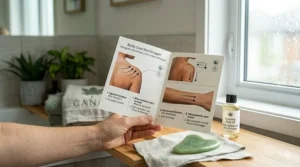
The tool comes with a leather storage case and basic instruction guide. IASTM technique requires more education than traditional gua sha—you’re specifically targeting fascial restrictions and adhesions rather than general muscle scraping. Canadian buyers should consider supplementing this purchase with instructional videos or a single consultation with a physiotherapist who practices IASTM to learn proper protocols.
✅ Medical-grade design backed by fascial manipulation research
✅ Heavier weight provides momentum for reduced arm fatigue
✅ Fully sterilizable for use on healing injuries
❌ Requires technique education for optimal results
❌ More aggressive than traditional scrapers (start gently)
Price Range: Around $45-$65 CAD. Professional-grade pricing reflecting the clinical design and surgical steel construction. Justifiable for serious athletes, injury recovery, or anyone wanting tools that match physiotherapy clinic standards.
6. AICNLY Large Pink Resin Lymphatic Massager
The AICNLY resin massager targets a specific niche: people who want visible results with manageable effort. The bright pink colour (also available in green) isn’t just aesthetics—it’s intentionally designed for social media documentation, which actually serves a useful purpose by helping you track progress through consistent photo angles and lighting.
The tool’s distinctive features include double-sided slotted edges and a middle cut-out design that cradles in your palm comfortably. One side is approximately 12 mm thick for deep work, while the opposite side tapers to about 6 mm for more delicate areas like inner arms or neck. The resin’s slight texture prevents slipping better than smooth jade or glass, and at roughly 95 grams, it’s light enough for 20-minute full-body sessions without hand cramping.
The anti-cellulite focus in its marketing reflects growing Canadian interest in body contouring without cosmetic procedures. While “fat reduction” claims should be viewed skeptically (no scraper melts fat), the lymphatic drainage effect can reduce water retention appearance, and regular fascia work may improve skin texture over time by enhancing blood flow to surface tissues. Think of it as optimization rather than transformation—you’re improving what’s already there, not creating new muscle definition.
Canadian reviewers mention using this primarily on thighs, glutes, and abdomen. The large surface area (approximately 16 cm × 11 cm) makes quick work of legs, cutting scraping time significantly compared to handheld stones. The included plush storage bag protects it from scratches and keeps it clean between gym sessions or travel.
✅ Large coverage area speeds up full-body sessions
✅ Dual-thickness design adapts to different body areas
✅ Lightweight resin prevents arm fatigue
❌ Marketing overpromises on fat reduction capabilities
❌ Bright colour shows oil stains (clean immediately after use)
Price Range: $22-$32 CAD. Budget-friendly pricing for a tool that handles most body scraping needs. The lymphatic focus justifies the purchase for anyone dealing with water retention or post-workout inflammation.
7. Mount Lai Stainless Steel Professional Tool
Mount Lai’s stainless steel scraper positions itself at the premium end of the Canadian market with refined design and therapeutic-grade construction. At approximately 11 cm length, it’s more compact than paddle-style tools but features meticulously polished edges that glide across skin with minimal friction even without excessive oil application.
The professional-grade designation reflects its adoption by registered massage therapists and physiotherapists across Canada. The tool’s multiple edge profiles—including a precise 2 mm thickness on the beveled side—allow targeted work on small muscle groups like forearms, calves, and neck muscles where larger tools feel clumsy. The rounded corners prevent accidental skin puncture even during aggressive pressure application, addressing a legitimate safety concern with cheaper steel scrapers that sometimes have rough burrs or sharp transitions.
What you’re paying for here is build quality and brand reliability. Mount Lai provides detailed usage instructions, video tutorials, and responsive customer service—important for Canadians who can’t easily return products or get in-person training. The steel is mirror-polished 304 surgical grade, which resists corrosion even in humid environments and can be sanitized with rubbing alcohol or autoclave sterilization if you’re using it clinically.
The compact size makes it ideal for travel (easily fits in a toiletry bag), and the single-piece construction means no parts to break or lose. Canadian buyers should note that “professional” doesn’t mean “gentle”—this tool is designed for practitioners who understand tissue mechanics. Beginners might find it too aggressive initially compared to resin or wooden alternatives.
✅ Surgical-grade steel meets clinical hygiene standards
✅ Compact size ideal for travel and small muscle groups
✅ Mirror polish reduces friction and oil requirements
❌ Smaller size means slower progress on large muscle groups
❌ Premium pricing ($55-$70 CAD) requires commitment
Price Range: $55-$70 CAD. Top-tier pricing justified by professional-grade construction and brand support. Best suited for experienced users or those treating this as long-term investment in self-care.
How to Choose Your First Body Gua Sha Scraper: Canadian Buyer’s Framework
Selecting a gua sha tool feels overwhelming when Amazon.ca shows 300+ options ranging from $8 to $80. Here’s the decision framework I use when advising Canadian clients.
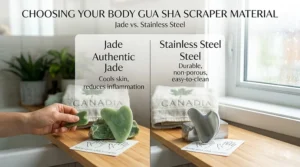
Material matters more than marketing claims. Stainless steel provides the coldest surface for inflammation reduction and survives Canadian temperature extremes without degrading. It’s non-porous (critical for hygiene) and practically indestructible. Choose steel if you’re an athlete, dealing with chronic injuries, or want a lifetime tool. Resin offers the best balance of durability, affordability, and comfort for most users—it’s light enough for extended sessions, stays neutral temperature in cold rooms, and costs 40-60% less than premium steel tools. Bian stone or jade appeals to traditionalists and those wanting mineral therapy benefits, though scientific evidence for trace element absorption through skin remains minimal. Wood excels for lymphatic drainage and gentle work but requires maintenance in Canada’s dry winter climate—plan on oiling it monthly.
Size determines your primary use case. Large paddle tools (15+ cm wide) excel at legs, back, and abdomen—anywhere you need to cover significant territory quickly. If you’re mainly targeting cellulite appearance or doing post-workout recovery on major muscle groups, go large. Compact handheld tools (8-12 cm) work better for precision: trigger points, neck tension, plantar fasciitis, or areas where you need controlled pressure. Most Canadian buyers eventually own both sizes, but start with whichever matches your primary complaint.
Handle design impacts usability dramatically. Hollow-handle or ergonomic-grip tools prevent hand cramping during 15+ minute sessions—essential if you’re doing full-body work or have any arthritis in your fingers. Simple flat stones without handles require stronger grip strength, limiting session duration before your hand fatigues. For anyone over 40 or dealing with any hand/wrist issues, spend the extra $10-$15 for proper handle ergonomics.
Climate considerations uniquely Canadian. If you live in areas with extreme seasonal temperature shifts (think Manitoba, Saskatchewan, northern Ontario), avoid tools with moving parts, laminated materials, or anything combining multiple material types with different expansion rates. Solid single-material tools (one-piece steel, solid resin, carved stone) survive our freeze-thaw cycles. Wooden tools need sealed finishes and regular oiling in dry prairie climates. Metal tools will be uncomfortably cold in winter mornings—keep them at room temperature or warm them in your hands before applying to skin.
Price reflects durability and refinement, not effectiveness. A $25 resin scraper works identically to a $65 steel tool for fascia release—you’re paying for longevity, temperature properties, and hygiene ease with higher prices. Budget tools fail faster (resin cracks, wood splinters, cheap steel develops rough spots), but they’re fine for testing whether you’ll stick with the practice. If you’re uncertain about committing to gua sha long-term, start with a $20-$30 resin or wooden tool. Upgrading later costs less than buying premium upfront and abandoning it after two uses.
Common Mistakes Canadian Buyers Make With Body Gua Sha Scrapers
After consulting with hundreds of Canadians trying gua sha for the first time, I see the same errors repeatedly—most of which waste money or create frustration that abandons a genuinely useful technique.
Mistake 1: Buying facial tools for body work. Those delicate rose quartz facial gua sha tools flooding Instagram aren’t built for the pressure needed on thighs, back, or IT bands. They’re typically 3-5 mm thick and designed for gentle lymphatic drainage on facial tissue. Applying serious pressure on them either cracks the stone or proves ineffective on denser body muscle. Body scrapers need to be 8-12 mm thick minimum with reinforced edges. If Amazon.ca lists something as “facial massager” or shows it primarily used on faces, skip it for body work regardless of size.
Mistake 2: Ignoring winter performance in Canadian climates. That gorgeous maple wood paddle looks beautiful in summer but can crack within three months if you live in Regina and don’t maintain it properly. Canadian indoor winter humidity often drops below 30%, drying out wooden tools faster than manufacturers expect. Meanwhile, leaving metal tools in unheated spaces (garage gym, car trunk) makes them painful to use without a 5-minute warm-up period. Check reviews specifically from Canadian buyers mentioning winter durability, not just general effectiveness claims.
Mistake 3: Expecting instant dramatic results. Gua sha isn’t foam rolling—you won’t feel immediately looser after one session. The technique works through cumulative microtrauma and healing response over weeks. Visible “sha” marking (the red/purple spots) doesn’t correlate with effectiveness; some people mark heavily with light pressure, others barely show colour with aggressive work. Canadian social media shows dramatic before/after cellulite photos that typically represent months of consistent practice combined with other lifestyle changes, not the scraper alone achieving transformation.
Mistake 4: Skipping proper technique education. Scraping randomly feels good but misses the therapeutic benefits. Direction matters—you’re moving lymph toward drainage points and releasing fascia along specific pathways, not just abrading skin. A single 30-minute YouTube tutorial covering basic strokes, pressure calibration, and contraindications saves months of ineffective random scraping. Many Canadian physiotherapy clinics offer 15-minute gua sha consultations for $40-$60 that teach proper technique—this one-time investment amplifies your tool’s effectiveness permanently.
Mistake 5: Choosing tools based on aesthetics over function. Pinterest-worthy rose quartz sets look beautiful on bathroom shelves but often sacrifice ergonomics for appearance. Octagonal handles that photograph well cause pressure points in your palm during actual use. Intricate carved designs trap oil and dead skin cells, becoming hygiene nightmares. The most effective tools often look industrial or boring—functional design beats decorative appeal when you’re working through genuine muscle tension.
Real-World Application: How Three Canadian Users Transformed Their Gua Sha Practice
Profile 1: Sarah, 34, Software Developer in Toronto
Sarah developed severe upper back and neck tension from 8-hour coding sessions, compounded by hunching against wind during her daily subway commute through Toronto winters. Professional massage therapy at $140 per session provided temporary relief but wasn’t financially sustainable.
She started with the AICNLY large resin scraper ($28 CAD), using it 3-4 times weekly on her upper back, shoulders, and neck for 10-minute sessions. Within six weeks, she reported noticeably reduced tension headaches and improved sleep quality. The resin tool’s lightweight design let her work one-handed on her neck while watching TV, and the large surface area meant she could effectively cover her upper back even with limited flexibility.
The breakthrough came when she stopped trying to replicate professional massage intensity and instead focused on consistent moderate pressure. Her “sha” marking was minimal (just light pink rather than dramatic purple), but her functional improvements were substantial. After four months, she upgraded to the Sacheu stainless steel tool for its self-cooling properties to address inflammation, keeping the resin scraper for gentler lymphatic work on days when her tissues felt sensitized.
Profile 2: Marcus, 47, Construction Foreman in Calgary
Marcus dealt with chronic lower back pain and IT band tightness from 12-hour days managing construction sites, plus weekend recreational hockey that aggravated existing issues. He’d tried foam rolling but found it too gentle for his dense muscle tissue.
He invested in the STICKON IASTM stainless steel tool ($58 CAD) after a single physiotherapy session introduced him to instrument-assisted technique. The clinical-grade tool let him apply 20+ pounds of pressure to his IT bands and lower back—intensity foam rollers couldn’t match. He used it daily for 5-7 minutes on problem areas, working slowly along muscle fiber directions.
The aggressive approach created dramatic “sha” marking initially (deep purple that lasted 3-4 days), but Marcus noticed substantial improvements in hip mobility and reduced morning stiffness within three weeks. The steel tool’s durability proved essential—resin or wooden tools wouldn’t have survived the pressure he applied. After six months of consistent use, his physiotherapist noted measurably improved tissue quality and reduced fascial restrictions. Marcus now uses the tool preventatively rather than reactively, incorporating it into his warm-up routine before hockey games.
Profile 3: Jen, 29, Marathon Runner in Vancouver
Jen trained for marathons along Vancouver’s seawall but struggled with persistent calf tightness and plantar fasciitis that threatened to derail her running goals. Professional sports massage helped but required scheduling weeks in advance during busy training periods.
She chose the Scienlodic resin handle scraper ($26 CAD) specifically for its ergonomic design, knowing she’d need extended sessions on her calves and feet. The hollow handle prevented hand cramping during 15-20 minute self-treatment sessions post-run. She combined gua sha with ice therapy—using the tool immediately after icing her calves to work through tissue while inflammation was reduced.
The lymphatic drainage effect proved particularly valuable during her heavy training blocks. Regular scraping (5-6 times weekly) noticeably reduced post-run muscle soreness and improved her recovery time between hard workouts. The plantar fasciitis didn’t disappear but became manageable—she could run her planned mileage without the sharp heel pain that previously forced cutbacks. Jen credits the combination of consistent gua sha, proper running shoes, and gradual mileage increases for successfully completing her marathon without injury.
The Science Behind Gua Sha: What Canadian Research Says
The mechanisms behind gua sha scraping remain partially mysterious even to Western medical science, but emerging research from Canadian and international institutions provides some evidence-based explanations for the technique’s effects.
A study published in the Journal of Clinical Medicine found that gua sha treatment increased microcirculation in treated tissues by approximately 400%, with effects lasting several hours post-treatment. This enhanced blood flow delivers oxygen and nutrients while removing metabolic waste products more efficiently—potentially explaining the pain relief many users report. The controlled microtrauma from scraping triggers what researchers call the “injury-healing cascade,” where your body floods the area with anti-inflammatory compounds and growth factors that promote tissue repair.
Research from institutions studying traditional Chinese medicine practices suggests the visible “sha” marking results from extravasation—blood components moving from capillaries into surrounding tissue. Rather than being harmful, this process may stimulate immune system activation. A PubMed-indexed study demonstrated that gua sha treatment upregulates heme oxygenase-1 (HO-1), an enzyme with powerful anti-inflammatory and antioxidant effects throughout the body.
The fascia release technique aspect involves mechanically breaking down adhesions in connective tissue that restrict movement and cause pain. Fascia—the web of connective tissue surrounding every muscle, nerve, and organ—can become “sticky” or restricted from injury, inflammation, or chronic poor posture. Systematic reviews of myofascial release interventions show moderate evidence for pain reduction and improved range of motion, though the quality of research varies significantly across studies.
For Canadian users wondering about safety and contraindications, research published in medical journals indicates gua sha is generally safe when performed correctly, though it should be avoided on areas with active inflammation, open wounds, or blood clotting disorders. Anyone taking blood-thinning medications should consult their physician before starting aggressive scraping practices, as the technique intentionally creates minor vascular trauma.
The neurological component deserves mention—fascia contains high densities of mechanoreceptors that sense pressure and stretch. Stimulating these receptors may activate pain-gate mechanisms in the spinal cord, essentially “closing the gate” on pain signals from affected areas. This could explain the immediate pain relief some users experience during treatment, separate from the longer-term healing effects of improved circulation.
Canadian healthcare providers increasingly incorporate gua sha into physiotherapy and sports medicine practices, though it remains classified as complementary rather than primary treatment. The College of Physiotherapists across Canadian provinces generally permits its use by registered practitioners who’ve received appropriate training, acknowledging both its therapeutic potential and the need for proper technique education.
Body Gua Sha Versus Traditional Alternatives: Which Works Better in Canadian Contexts?
Canadian wellness consumers face an overwhelming array of muscle relief options. Here’s how body gua sha scrapers compare to established alternatives, with consideration for our unique climate and healthcare system.
Gua Sha vs. Foam Rolling: Foam rollers excel at general muscle maintenance and are gentler for most users, but they lack the precision targeting that scrapers provide. You can’t effectively address a specific trigger point or fascial restriction with a roller—the broad surface area disperses pressure across too much tissue. Rollers shine for post-workout recovery on major muscle groups (quads, hamstrings, back), while scrapers win for addressing specific problem areas like IT band attachments, plantar fascia, or neck tension points. Many Canadian athletes use both tools complementarily: rollers for general maintenance, scrapers for problem-solving.
Gua Sha vs. Massage Guns: Percussion therapy devices deliver rapid vibration that can penetrate deeper than manual pressure, but they’re expensive ($200-$600 CAD for quality units), require charging, and can’t replicate the scraping motion that releases fascial adhesions. Massage guns work through different mechanisms—rapid percussion versus sustained pressure and tissue manipulation. The noise factor matters in Canadian contexts: using a massage gun in apartment buildings with thin walls at 6 AM before work may disturb neighbours, while gua sha operates silently. Battery life also becomes a consideration in cold climates where devices lose charge faster.
Gua Sha vs. Professional Massage Therapy: Registered Massage Therapists in Canada charge $80-$140 per hour depending on province and urban versus rural location. A quality gua sha tool costs $20-$70 one-time and provides unlimited self-treatments. Obviously, professional treatment offers superior technique and can address areas you can’t reach yourself (mid-back, certain shoulder positions), but for routine maintenance and areas you can access, scrapers provide dramatically better cost-per-treatment value. The ideal approach combines occasional professional assessment with daily self-care using scraping tools.
Gua Sha vs. Cupping Therapy: Both techniques originated from traditional Chinese medicine and create similar-looking marks, but the mechanisms differ. Cupping uses negative pressure (suction) to lift tissue, while gua sha uses positive pressure (scraping) to compress and release it. Some Canadian practitioners argue cupping provides deeper fascial release, while others claim gua sha offers more precise targeting. Equipment-wise, gua sha tools are simpler—no fire, no pumps, no risk of cups falling off mid-treatment. For home use, scrapers present fewer safety concerns and learning curve challenges.
Gua Sha vs. Stretching Alone: Static stretching addresses muscle length but doesn’t directly address fascial adhesions or trigger points that restrict movement even when muscles are theoretically flexible. Combining gua sha treatment before stretching appears more effective than either alone—the scraping releases tissue restrictions, then stretching works the newly mobile tissue through full range of motion. Canadian physical therapists increasingly recommend this combined approach for flexibility development, particularly for desk workers whose tissues have adapted to chronically shortened positions.
Optimizing Your Gua Sha Practice for Canadian Winters: Cold Weather Considerations
Canadian winter presents unique challenges for body gua sha that rarely appear in the typical wellness blogs written from California perspectives. Here’s how to adapt your practice for temperatures below freezing and indoor heating that drops humidity to desert levels.
Temperature Management: Metal tools left in unheated spaces become painful against skin—even room temperature steel feels shockingly cold in January when your circulation is already constricted from cold. Store stainless steel scrapers in your bedroom or bathroom rather than garage gyms or basement storage. Before use, run them under warm (not hot) tap water for 30 seconds or hold them in your hands for 2-3 minutes to bring them to skin-neutral temperature. Alternatively, embrace the cold: some Canadian users intentionally apply cold metal tools immediately after scraping to extend the anti-inflammatory effect, creating a combination therapy.
Wood and resin tools handle cold better temperature-wise but face different winter challenges. Indoor heating dries out wooden scrapers, causing micro-cracks that can splinter against skin. Apply food-grade mineral oil or beeswax monthly from October through March if you live in prairie climates where indoor humidity regularly drops below 30%. Check resin tools for brittleness—quality resin stays flexible in cold, but cheaper materials can become rigid and crack if dropped on tile floors when cold.
Skin Preparation Adjustments: Canadian winter skin is drier, flakier, and more sensitive than summer skin due to cold outdoor air and dry indoor heating. This changes your oil requirements. You’ll need 2-3 times more massage oil or body butter in winter compared to summer to prevent scraping from feeling harsh or causing micro-abrasions. Choose heavier carriers (shea butter, cocoa butter blends) that create protective barriers rather than light oils that absorb too quickly. Apply oil to both your skin AND the scraping tool—the tool’s surface needs lubrication too when working against dehydrated tissue.
Pressure Calibration: Cold-constricted muscles require gentler initial pressure than summer tissue. Start with 50-60% of your usual pressure for the first 2-3 minutes, allowing circulation to increase before gradually intensifying. Aggressive pressure on cold muscle tissue increases injury risk and can create more dramatic “sha” marking than intended. The goal is controlled microtrauma, not excessive tissue damage.
Timing Modifications: Scraping immediately after hot showers or baths becomes more effective in winter when your muscle temperature is naturally lower. The hot water pre-warms tissue, making it more pliable and responsive to treatment. Some Canadian users do abbreviated 5-7 minute scraping sessions in the bathroom immediately post-shower rather than waiting until tissues cool down again. For home gym users, do gua sha AFTER your workout while muscles are still warm, not before as pre-workout preparation.
Seasonal Strategy Shifts: Lymphatic drainage work becomes more valuable in winter when reduced activity and layered clothing decrease natural circulation. Focus on large sweeping strokes along major muscle groups 2-3 times weekly to prevent the stagnation that develops from winter’s reduced movement patterns. Save aggressive deep-tissue work for areas where you feel specific restrictions rather than doing full-body intensive scraping—winter skin has less resilience for frequent aggressive treatment.
❓ FAQ: Body Gua Sha Scrapers for Canadian Buyers
❓ Can I use a body gua sha scraper in winter on cold skin?
❓ How long does the 'sha' marking last, and will it show at work?
❓ Do I need different tools for cellulite versus muscle pain?
❓ Can gua sha help with plantar fasciitis that's worse in Canadian winters?
❓ Are expensive tools really better than budget options on Amazon.ca?
Conclusion: Finding Your Perfect Gua Sha Scraper on Amazon.ca
The body gua sha scraper market has exploded on Amazon.ca over the past two years, giving Canadian buyers unprecedented access to tools that were previously only available through specialty practitioners or expensive wellness boutiques. Whether you’re dealing with chronic back tension from desk work, training for your next marathon, or just trying to maintain mobility through our brutal winters, there’s a scraper that fits your needs and budget.
For most Canadian buyers starting their gua sha journey, I recommend the Scienlodic resin handle scraper around $26 CAD. It hits the sweet spot of affordability, durability, and user-friendly design—the ergonomic handle prevents the hand cramping that discourages beginners, and the large surface area lets you cover major muscle groups efficiently. If you’re already convinced this practice will become part of your routine, the Sacheu stainless steel tool justifies its $50-$60 price tag with lifetime durability and self-cooling properties that double as inflammation therapy.
Remember that consistency matters more than tool choice. A $20 wooden paddle used five times weekly delivers better results than a $70 premium steel scraper that sits in your bathroom drawer. Start with 5-7 minute sessions on your biggest problem areas, gradually expanding duration and coverage as the technique becomes familiar. The dramatic transformation photos on social media represent months or years of patient practice, not overnight miracles.
Canadian winters demand adaptation: warm your metal tools before use, increase your oil application to accommodate drier skin, and focus on lymphatic drainage during our sedentary cold months. Consider your tool an investment in sustainable self-care that pays dividends over decades—at the cost of 1-2 professional massage sessions, you’re equipped for unlimited self-treatments that maintain mobility and reduce pain between those occasional splurge appointments with your RMT.
✨ Don’t Miss These Exclusive Deals!
🔍 Take your muscle recovery to the next level with these carefully selected products. Click on any highlighted item to check current pricing and availability on Amazon.ca. These tools will help you create authentic relief your body deserves!
Recommended for You
- 7 Best Stainless Steel Gua Sha Tools Canada 2026
- Best Facial Gua Sha Tool Canada: 7 Expert Picks 2026
- 7 Best Trigger Point Sticks Canada 2026: Relief That Actually Works
Disclaimer: This article contains affiliate links. As an Amazon Associate, I earn from qualifying purchases. If you purchase products through these links, we may earn a small commission at no additional cost to you.
✨ Found this helpful? Share it with your friends! 💬🤗
