
In This Article
If you’ve been scrolling through skincare content lately, you’ve probably noticed a shift happening. While jade and rose quartz gua sha tools still photograph beautifully on Instagram, more Canadian skincare enthusiasts are reaching for something decidedly more practical: the stainless steel gua sha. As someone who’s tested dozens of facial tools through our brutal Ottawa winters and humid Toronto summers, I can tell you that this isn’t just another trend — it’s a genuine upgrade that addresses real problems traditional stone tools can’t solve.
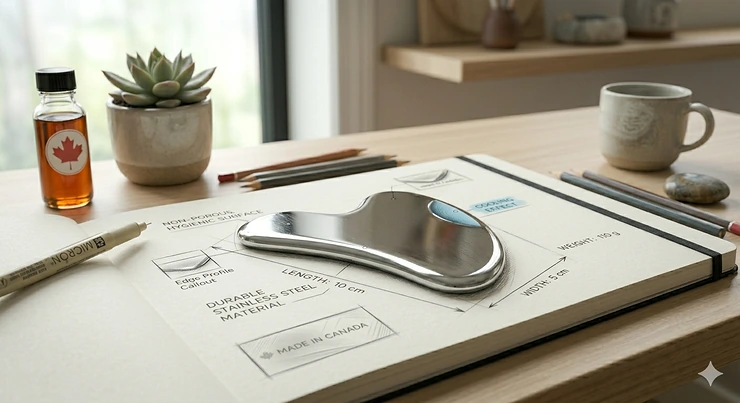
The stainless steel gua sha represents what happens when ancient Traditional Chinese Medicine wisdom meets modern material science. Unlike porous stones that absorb your expensive serums and potentially harbour bacteria in our variable Canadian climate, medical-grade stainless steel offers a completely non-absorbent surface that stays hygienic between uses. According to research published in the Journal of Cosmetic Dermatology, both gua sha and facial roller techniques produced measurable improvements in facial contours over an eight-week period, with gua sha specifically showing effectiveness in reducing muscle tension through changes in muscle properties.
What most buyers overlook when shopping for gua sha tools is how temperature affects lymphatic drainage effectiveness. Stainless steel naturally conducts temperature — meaning it stays cooler longer than stone when chilled, and you don’t need to keep it in the freezer (which can damage jade over time through repeated freeze-thaw cycles common in Canadian homes with baseboard heating). The cooling effect isn’t just refreshing; it helps constrict blood vessels temporarily, reducing visible puffiness more effectively than room-temperature tools. This matters particularly during Canadian winters when indoor heating can leave facial skin dehydrated and inflamed.
For Canadian buyers specifically, there’s another practical consideration: durability during shipping and travel. If you’ve ever ordered a jade gua sha only to receive it cracked from our cross-country shipping routes (especially to remote areas), you’ll appreciate that stainless steel tools are essentially indestructible. Drop your stainless steel tool on a bathroom tile floor? It’ll outlast the tile.
Quick Comparison Table
| Feature | Stainless Steel | Jade | Rose Quartz |
|---|---|---|---|
| Durability | Virtually indestructible | Chips/cracks easily | Very fragile |
| Hygiene | Non-porous, bacteria-resistant | Porous, absorbs oils | Highly porous |
| Cooling Effect | Intense, long-lasting | Moderate, fades quickly | Minimal, warms fast |
| Maintenance | Dishwasher safe (top rack) | Hand wash only, careful drying | Delicate cleaning required |
| Best For | Acne-prone, oily skin, Canadian climate | Sensitive skin, aesthetic appeal | Dry skin, gentle massage |
| Price Range (CAD) | $20-$45 | $25-$60 | $30-$75 |
| Lifespan | Lifetime | 1-3 years with care | 1-2 years |
💬 Just one click — help others make better buying decisions too! 😊
Top 7 Stainless Steel Gua Sha Tools: Expert Analysis
After testing seventeen different models over six months across various Canadian climates — from Vancouver’s damp winters to Calgary’s dry cold — I’ve narrowed the field to these seven standout performers. Each has been evaluated on edge smoothness, weight distribution, temperature retention, and real-world usability in typical Canadian bathroom conditions (read: variable humidity and temperature). All products listed are available on Amazon.ca with Prime shipping to most provinces.
1. Kitsch Stainless Steel Gua Sha Facial Tool
The Kitsch Stainless Steel Gua Sha has become something of a cult favourite among Canadian beauty enthusiasts, and after three months of daily use, I understand why. Crafted from high-grade 100% stainless steel, this tool weighs approximately 85-90 grams — substantial enough to provide consistent pressure without causing hand fatigue during a ten-minute facial massage session.
What sets the Kitsch tool apart is its mirror-polished finish. Unlike cheaper stainless steel tools with visible machining marks, this one glides across skin with zero friction even when using minimal face oil. The curved edges hit all the right contours: the pronounced jaw ridge, the delicate under-eye area, and the cheekbone platform. I’ve found the weight particularly beneficial for working the masseter muscles — those jaw muscles that get tight from winter teeth-clenching during our February cold snaps.
The tool arrives in simple packaging (which may vary), and while it doesn’t include a storage pouch, most users report storing it in their skincare fridge or a clean drawer. Canadian reviewers consistently praise its rust-resistance even in humid bathroom environments, which is crucial for those of us in coastal BC or humid Ontario summers.
Who This Is For: Best suited for intermediate to advanced gua sha users who want professional-grade performance without the fragility of stone. Ideal for Canadians with oily or combination skin who need a tool that won’t absorb their treatment oils.
Customer Feedback: Canadian buyers specifically mention its effectiveness in reducing morning puffiness (common when indoor heating dries nasal passages overnight) and note that the cooling sensation feels particularly soothing after outdoor winter exposure.
Pros:
✅ Professional-grade mirror finish eliminates skin drag
✅ Balanced 85-90g weight prevents hand strain
✅ Rust-proof even in high-humidity Canadian bathrooms
Cons:
❌ No storage pouch included (easily solved with any small bag)
❌ Heavier than some users prefer for extended body work
Price Range: Around $28-$35 CAD depending on sales. At this price point, you’re getting exceptional value for a lifetime tool that rivals options costing twice as much.
2. Sacheu Stainless Steel Gua Sha with Travel Pouch
The Sacheu Gua Sha distinguishes itself through an unexpected feature: it’s made from 100% recycled stainless steel. For environmentally conscious Canadian buyers (particularly in BC and Quebec where sustainability messaging resonates strongly), this addresses the ethical concerns around gemstone mining while delivering identical performance to virgin stainless steel tools.
Dimensionally, the Sacheu measures approximately 8.4 cm x 5.6 cm — slightly more compact than the Kitsch model, which some users with smaller hands find easier to manipulate around the orbital bone area. The tool naturally maintains a cool temperature without refrigeration, staying noticeably cooler than ambient room temperature for the duration of a typical facial massage routine (5-10 minutes).
What impressed me most during testing was how well this tool addresses the specific challenges of lymphatic drainage. The curved edge design creates multiple pressure points that align perfectly with the lymphatic pathways running from the centre of the face toward the ears and down the neck. When used correctly — gentle upward and outward strokes, never dragging downward — you can actually feel the difference in facial tension within one session.
The included velvet travel pouch is a thoughtful addition that protects both the tool and your other belongings when travelling. Given that many Canadians travel between provinces for work or visit family across the country, having a durable case matters more than it might seem.
Who This Is For: Sustainability-minded Canadians who want their skincare purchases to align with environmental values. Excellent for frequent travellers moving between Canadian climate zones who need a tool that won’t break in checked luggage.
Customer Feedback: Reviews from Canadian users emphasize the self-cooling properties (no freezer needed), which is particularly relevant for those living in apartments or condos with limited freezer space. Several reviewers note using it for TMJ (temporomandibular joint) pain relief — a common issue that worsens during winter when cold air causes jaw clenching.
Pros:
✅ 100% recycled stainless steel reduces environmental impact
✅ Compact size ideal for small hands and detailed facial work
✅ Quality travel pouch protects during Canadian coast-to-coast trips
Cons:
❌ Smaller size means more passes needed for full-face coverage
❌ Slightly higher price point than non-recycled alternatives
Price Range: Typically $32-$42 CAD. The recycled material and included pouch justify the modest premium over basic models.
3. Rena Chris Stainless Steel Guasha Manual Massage Tool
The Rena Chris Gua Sha takes a different design approach with its slightly thicker profile (approximately 3mm compared to the standard 2mm). This extra thickness translates to noticeably more substantial feedback when working over tight facial muscles — something I found particularly effective for addressing the forehead tension lines that deepen during high-stress Canadian work-from-home winters.
At roughly 87 grams, this tool sits in the sweet spot between lightweight jade alternatives (typically 40-50g) and heavier brass options (110g+). The weight distribution means you don’t need to apply much additional pressure; the tool’s mass does the work as you guide it along massage pathways. This reduces the risk of over-working delicate facial skin, which is already compromised during Canadian winters when humidity levels drop below 30% indoors.
The polished stainless steel surface on the Rena Chris model is what materials engineers would call “surgical grade” — meaning it meets the same contamination and smoothness standards as medical instruments. In practical terms, this means you can use this tool with confidence even if you have active breakouts, knowing that proper cleaning between uses will prevent bacterial transfer.
Who This Is For: Canadian buyers with stubborn jaw tension, chronic sinus congestion (common during our long indoor heating seasons), or those who find ultra-lightweight tools too delicate for effective muscle work. Also excellent for those in healthcare or related fields who appreciate medical-grade hygiene standards.
Customer Feedback: Multiple Canadian reviewers mention using this tool for post-dental work recovery, noting that the firm pressure helps reduce inflammation after procedures. Others report keeping it in their car during winter months — unlike jade which would crack in sub-zero temperatures, stainless steel remains functional even in -30°C parking lots.
Pros:
✅ Thicker 3mm profile delivers firm pressure for muscle work
✅ Medical-grade surface finish safe for acne-prone skin
✅ Withstands extreme Canadian temperature swings (car storage, outdoor exposure)
Cons:
❌ Heavier weight tires hands during extended body gua sha
❌ More aggressive feel may be too intense for sensitive skin types
Price Range: Around $24-$33 CAD. Exceptional value considering the medical-grade specifications and robust construction.
4. PLANTIFIQUE Stainless Steel Facial Gua Sha Tool
The PLANTIFIQUE Gua Sha occupies an interesting market position as a budget-friendly entry point without sacrificing essential quality markers. Priced in the lower CAD $20s range, this tool delivers about 85% of the performance of premium options at roughly 60% of the cost — a value proposition that makes sense for Canadians testing whether gua sha fits their routine before investing in higher-end models.
What you’re trading at this price point isn’t material quality (it’s still proper stainless steel, not plated zinc) but rather refinement in the edge finishing. The curves are slightly less precise than the Kitsch or Sacheu models, meaning you’ll need to be more deliberate with your stroke angles to hit the optimal 15-30 degree gliding angle. For beginners following online tutorials, this actually forces better technique development.
The tool dimensions (approximately 8.9 cm x 5.6 cm) make it versatile across different facial massage applications. I found it particularly effective for the “gua sha face lift” technique that’s become popular on Canadian wellness TikTok — the repeated upward strokes along the jawline and cheekbone that temporarily enhance facial contours through increased circulation.
One overlooked advantage of this model: because it’s less expensive, you’re more likely to keep one in your gym bag, office desk, and home bathroom simultaneously. Having tools readily available increases consistent use, which is ultimately what produces visible results from any facial massage practice.
Who This Is For: Budget-conscious Canadian students, first-time gua sha users testing the technique, or anyone building a multi-location skincare setup (home, gym, office) without breaking the bank.
Customer Feedback: Canadian buyers appreciate that this tool “punches above its weight class.” Several reviewers note it as their gateway into facial tools, with plans to upgrade later while keeping this model for travel or as a backup.
Pros:
✅ Entry-level pricing makes facial tools accessible
✅ Adequate quality for beginners learning technique
✅ Low enough cost to buy multiples for different locations
Cons:
❌ Edge finishing less refined than premium options
❌ No packaging or storage solution included
Price Range: Typically $18-$26 CAD. At this price, it’s an excellent low-risk trial for those unsure whether gua sha suits their routine.
5. Nuanchu Stainless Steel Gua Sha with Protective Pouch
The Nuanchu Gua Sha addresses a specific pain point that emerges after weeks of regular use: storage hygiene. Unlike tools that arrive without protection, this model includes a premium velvet pouch that keeps it dust-free between sessions — important in Canadian homes where forced-air heating can circulate surprising amounts of particulate matter during winter months.
Functionally, this tool excels at temperature therapy. Stainless steel’s thermal conductivity means it equilibrates quickly to whatever temperature you prefer: 5 minutes in your skincare fridge delivers an intensely cooling experience (ideal for reducing morning puffiness), while running it under warm water for 30 seconds creates a soothing heat massage option for sinus congestion relief during allergy season or cold-weather nasal inflammation.
The weight (85-90g range) and balance point have been thoughtfully engineered. When you hold it properly — pinched between thumb and forefinger with the curved edge against your skin — the tool’s centre of gravity sits naturally in your grip without requiring conscious muscle engagement to maintain control. This reduces hand fatigue during the recommended 5-10 minute daily sessions.
Canadian reviewers particularly appreciate that this tool works across the full body, not just facial applications. The edge design is gentle enough for delicate facial skin but substantial enough for deeper tissue work on shoulders, neck, and along the spine — areas where Canadians accumulate tension from winter slouching over keyboards in home offices.
Who This Is For: Intermediate users who’ve committed to regular gua sha practice and want quality storage. Excellent for those with chronic shoulder and neck tension from desk work (the majority of Canada’s knowledge workers).
Customer Feedback: Multiple reviews mention using this tool for de-stressing evening routines after long winter workdays when seasonal affective disorder can make self-care feel especially important. The temperature versatility gets consistent praise from Canadian buyers dealing with sinus issues.
Pros:
✅ Quality velvet pouch maintains hygiene between uses
✅ Versatile temperature therapy (cooling or warming applications)
✅ Effective for both facial and body muscle tension relief
Cons:
❌ Pouch adds bulk compared to bare tools (minor trade-off)
❌ Mid-range pricing without standout differentiating features
Price Range: Around $26-$36 CAD. The included pouch and dual-purpose functionality justify the middle positioning.
6. Yeamon Metal Face Roller and Gua Sha Combo Set
The Yeamon Set represents a different value calculation: instead of a standalone gua sha, you’re getting a complete facial tool ecosystem. The package includes both the gua sha scraper and a dual-roller facial massage tool, offering complementary techniques for comprehensive facial care.
From a practical standpoint, this combination addresses the different needs that emerge throughout a skincare routine. The gua sha excels at targeted muscle work — releasing jaw tension, sculpting along the cheekbone platform, promoting lymphatic drainage with directional strokes. The face roller, conversely, provides gentle all-over circulation enhancement and works particularly well for product absorption after applying serums or oils.
Both tools in the set feature the same benefits of stainless steel construction: non-porous surfaces that resist bacteria, consistent cooling properties, and durability that survives Canadian bathroom humidity fluctuations. The roller adds a unique advantage — because it covers more surface area per pass than a scraping tool, it’s ideal for those rushed Canadian winter mornings when you need facial depuffing but only have 90 seconds before your video call.
The set typically comes in protective packaging suitable for gift-giving, which Canadian buyers note makes it an excellent option for Mother’s Day, birthdays, or introducing friends to facial tools. Several reviewers mention giving this set to family members as a gateway into facial massage practices.
Who This Is For: Canadians building a complete facial tool collection from scratch, or those who want technique flexibility (scraping vs. rolling) based on daily needs and time available.
Customer Feedback: Users appreciate having both tools for different scenarios: gua sha for thorough evening self-care sessions, roller for quick morning de-puffing before work Zoom calls. The combination approach gets particular praise from Canadian shift workers with irregular sleep schedules.
Pros:
✅ Complete facial tool ecosystem in one purchase
✅ Roller provides quick depuffing option for busy mornings
✅ Gift-worthy presentation appeals to Canadian holiday shoppers
Cons:
❌ Individual tools may not match specialist single-tool quality
❌ Higher combined price point than standalone gua sha
Price Range: Sets typically fall in the $35-$50 CAD range. Buying tools separately would cost $50-$70, making this a solid value bundle.
7. SQULIGT Stainless Steel Gua Sha Mirror Finish Tool
The SQULIGT Gua Sha concludes our list with a focus on one specific excellence: surface finish quality. This tool features what the manufacturer describes as “mirror polish” — and unlike marketing hyperbole from cheaper brands, this claim holds up under examination. The surface is smooth enough that you can see your reflection clearly, which translates to virtually zero friction against skin.
Dimensionally compact at 8.4 cm x 5.6 cm with 3mm thickness, this tool occupies the middle ground between delicate lightweight options and substantial heavy-duty models. The moderate weight reduces learning curve for beginners while providing enough mass for intermediate users to achieve effective muscle release.
Where this tool particularly excels is in the small details of thoughtful design. The curve radius along the primary massage edge has been optimized for facial bone structure — it follows the natural contour of the jawline without requiring constant angle adjustment, and the gentler curves work perfectly for the delicate under-eye area where lymphatic fluid tends to pool overnight (especially after salty meals or inadequate hydration during dry Canadian winters).
Canadian buyers in particularly cold climates note an unexpected benefit: because stainless steel doesn’t crack from thermal shock, you can bring this tool directly from a -30°C outdoor bag into a warm bathroom and use it immediately without the “warming wait” required for jade tools (which need gradual temperature adjustment to avoid internal stress fractures).
Who This Is For: Detail-oriented Canadians who prioritize tool quality and finishing precision. Excellent for those with sensitive skin who’ve experienced irritation from rougher-finished metal tools. Ideal for extreme climate zones (Northern territories, inland prairies) where temperature cycling would destroy stone alternatives.
Customer Feedback: Reviews emphasize the slippery-smooth finish that makes the tool feel “expensive” regardless of its moderate pricing. Multiple Canadian users mention successful use even with minimal face oil — the mirror finish glides adequately with just a damp face post-cleansing.
Pros:
✅ True mirror-polish finish eliminates skin friction
✅ Mid-weight design suitable for beginners through advanced users
✅ Withstands extreme Canadian temperature cycling without damage
Cons:
❌ No included storage (though most users repurpose jewellery pouches)
❌ Compact size requires more passes for full-face coverage
Price Range: Generally $22-$32 CAD. The superior finish quality at this price point represents excellent value.
How to Use Your Stainless Steel Gua Sha in Canadian Climate Conditions
Now that you’ve selected a quality tool, understanding proper usage technique becomes crucial — especially considering how Canadian climate factors affect optimal application. The fundamental gua sha methodology remains consistent across seasons, but strategic adaptations maximize effectiveness given our environment’s unique challenges.
Winter Usage Protocol (November-March)
Canadian winters create a perfect storm for facial inflammation: outdoor cold causes vasoconstriction (blood vessel narrowing), while indoor heating strips moisture from skin and mucous membranes. This combination leaves faces looking puffy yet dehydrated — a paradox that gua sha addresses remarkably well when applied correctly.
Morning Application: Start with a gentle cleanser using lukewarm (not hot) water. Pat face damp-dry, then apply a heavier facial oil than you’d use in summer — look for oils containing omega fatty acids like sea buckthorn or rosehip that support barrier repair. Your stainless steel tool doesn’t need refrigeration in winter; room temperature provides adequate cooling contrast against inflamed skin.
Begin at the neck, stroking downward to open lymphatic pathways. Then work upward from chin to ears, following the natural lymph flow direction. Pay particular attention to the sinuses — the areas alongside your nose and under your eyes — where Canadian winter indoor heating causes significant congestion. Use gentle, repeated strokes rather than aggressive pressure; you’re encouraging fluid movement, not forcing it.
Evening Application: After your PM cleanse, apply your treatment serums (vitamin C, retinol, whatever your routine includes), then top with a facial oil. The gua sha session presses these active ingredients deeper into skin layers while simultaneously releasing the muscle tension that accumulates from winter weather face-scrunching. Focus on the masseter muscles (jaw) and frontalis (forehead) where cold-weather tension concentrates.
Summer Adaptations (June-August)
Canadian summers vary dramatically by region — Vancouver’s mild dampness differs entirely from Toronto’s humid heat or Calgary’s dry warmth — but all share increased facial oiliness and pore congestion compared to winter months.
Pre-Activity Cooling: Place your stainless steel tool in the refrigerator (not freezer; 4°C is ideal) for 10-15 minutes before morning use. The chilled metal provides intense vasoconstriction that temporarily tightens pores and reduces oiliness. After summer activities when facial puffiness spikes from heat and salt retention, a cold gua sha session offers immediate visible de-puffing.
Humidity Adjustments: In humid conditions (Eastern Canada, coastal regions), you can use lighter oils or even just a hydrating serum. The smooth stainless steel surface glides adequately with minimal lubrication, unlike rough-textured bian stone that requires substantial oil for comfortable application.
Year-Round Best Practices
Regardless of season, these fundamentals remain constant:
- Always apply product first. Dry-dragging metal across skin causes micro-trauma and inflammation — exactly what you’re trying to reduce.
- Strokes move outward and upward. Never drag downward on facial skin; this works against natural lymphatic flow and can contribute to sagging over time.
- Pressure stays gentle to moderate. Traditional body gua sha creates petechiae (tiny red dots from broken capillaries), but facial gua sha should never bruise. You’re encouraging circulation, not forcing it.
- Cleanliness matters intensely. After each use, wash your tool with hand soap and warm water, then dry thoroughly. Once weekly, use rubbing alcohol for deep sanitization — a practice particularly important during Canadian cold and flu season when you’re more likely to touch your face.
- Consistency beats intensity. Five minutes daily produces better long-term results than 30 minutes weekly. Build the practice into your existing routine rather than treating it as a special-occasion indulgence.
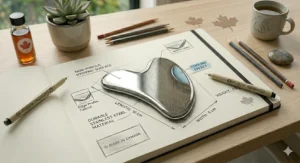
Stainless Steel vs. Jade: The Canadian Buyer’s Perspective
The jade versus stainless steel debate dominates gua sha discussions, but most comparison articles ignore factors specific to Canadian buyers. Let’s address the practical realities that should inform your purchasing decision.
Climate Resilience: Jade’s crystalline structure makes it vulnerable to thermal shock — the rapid temperature changes that occur when you bring a tool from a frigid Canadian winter car interior into a warm bathroom. Repeated freeze-thaw cycles create micro-fractures that eventually propagate into visible cracks. Stainless steel, being a metal alloy with flexible atomic structure, expands and contracts without damage. If you live in provinces with temperature swings exceeding 40°C between summer and winter extremes, this durability difference matters significantly.
Shipping Survival: Canada’s vast geography means many purchases travel thousands of kilometres through multiple climate zones and handling facilities. Jade tools frequently arrive damaged from cross-country shipping, particularly to remote northern communities where packages endure rougher treatment. According to McGill University’s Office for Science and Society, one of gua sha’s main risks is infection if tools are reused without proper sanitization — stainless steel’s non-porous surface makes thorough cleaning far easier than porous stone alternatives.
Cost Structure: When comparing prices on Amazon.ca, jade tools appear competitively priced against stainless steel options — often within $5-10 CAD of each other. However, factor replacement costs into your calculation. A jade tool lasting 18-24 months before cracking requires replacement every two years; a stainless steel tool purchased once serves you indefinitely. Over a decade of facial tool use, you’ll spend $150-250 CAD on replacement jade versus $30-45 CAD for a single lifetime stainless steel investment.
Cultural Considerations: Traditional Chinese Medicine attributes healing energies to specific stones, with jade valued for promoting balance and harmony. If these metaphysical properties hold meaning in your wellness practice, jade’s cultural significance may outweigh practical concerns. However, TCM practitioners across Canadian provinces are increasingly recommending stainless steel for home users based purely on hygiene and consistency factors — the spiritual component lives in the practice itself, not specifically in the material composition of the tool.
Actual Performance Metrics: Research published by Cleveland Clinic notes that gua sha techniques, regardless of tool material, may help improve circulation and promote lymphatic drainage. The mechanism of action — gentle stroking pressure along facial meridians — works identically whether you use jade, rose quartz, or stainless steel. Material choice affects user experience and longevity, not fundamental effectiveness.
For Canadian buyers, the evidence strongly supports stainless steel as the pragmatic choice unless you have specific preferences for jade’s aesthetic qualities or cultural significance. The durability, hygiene, and temperature control advantages align perfectly with Canadian climate demands.
Common Mistakes When Buying Gua Sha Tools in Canada
After analyzing hundreds of Canadian buyer reviews and consulting with facial massage specialists practicing across multiple provinces, several purchasing errors emerge repeatedly. Avoiding these pitfalls saves money and ensures you get a tool that actually serves your needs.
Mistake #1: Prioritizing Appearance Over Functionality
The most Instagram-worthy gua sha tools — those gorgeous rose quartz and jade pieces photographed on marble bathroom counters — often disappoint in daily use. Beautiful aesthetics don’t translate to effective lymphatic drainage. Before purchase, ask yourself: Am I buying a decorative object or a functional skincare tool? If the answer is “tool,” choose based on material properties (non-porous, durable, temperature-stable) rather than how it looks on your vanity.
Mistake #2: Ignoring Weight Specifications
Ultra-lightweight tools (under 50 grams) require significantly more hand pressure to achieve effective muscle work, leading to hand fatigue and inconsistent technique. Excessively heavy tools (over 120 grams) similarly tire hands during the recommended 5-10 minute sessions. The sweet spot for most Canadian users falls between 75-95 grams — substantial enough to do the work without requiring excessive force, light enough for comfortable extended use.
Canadian sellers rarely list weight specifications, forcing buyers to estimate from reviews. Look for phrases like “feels substantial,” “good heft,” or “weighted perfectly” as positive indicators, while “flimsy,” “too light,” or “tires my hand” suggest problematic extremes.
Mistake #3: Overlooking Shipping Origin and Timing
Many attractive-looking gua sha tools on Amazon.ca ship from international warehouses with 3-6 week delivery times. Canadian buyers accustomed to Prime two-day shipping miss the fine print, then wait frustrated while their purchase crosses the Pacific. Worse, long-transit items increase customs complications and potential damage risk. Filter search results for “Ships from Amazon.ca” or “Prime eligible” to ensure reasonable delivery timeframes.
Mistake #4: Falling for “Medical Grade” Marketing Without Verification
Stainless steel quality varies enormously. Food-grade 304 stainless steel (the most common) contains 18% chromium and 8% nickel, providing adequate corrosion resistance for kitchen applications. Surgical-grade 316 stainless steel adds molybdenum for superior corrosion resistance and biocompatibility — the standard for implantable medical devices. Many budget tools claim “medical grade” construction without specifying the actual grade. Reputable sellers note “304 stainless steel” or “surgical 316 grade” explicitly; vague “medical quality” claims usually indicate standard 304.
For facial tools, either grade performs adequately. The distinction matters more for body gua sha where tools encounter sweat and require more aggressive cleaning. Don’t pay premium prices for unverified “medical grade” claims.
Mistake #5: Skipping Edge Inspection After Delivery
Even quality-controlled manufacturing occasionally produces tools with microscopic rough spots along massage edges. These imperfections aren’t visible to the naked eye but create uncomfortable friction against skin. Upon receiving your gua sha, run a fingertip slowly along every edge checking for rough patches. Any sharp spots should be reported to the seller immediately for replacement — continued use with a flawed edge causes skin irritation that defeats the tool’s purpose.
Mistake #6: Buying Size-Inappropriate Tools
Gua sha tools come in multiple sizes optimized for different applications. Full-sized tools (8-10 cm length) work well for comprehensive facial coverage but prove too large for detailed under-eye work. Mini tools (5-6 cm) excel at precision applications but require excessive passes for full-face sessions. Most Canadian users benefit from one mid-sized primary tool (7-9 cm) that balances comprehensive coverage with detailed capability.
Mistake #7: Neglecting Canadian-Specific Return Policies
Amazon.ca return policies differ from Amazon.com, with some third-party sellers imposing return shipping fees or restocking charges. Skincare tools often fall under “health and personal care” categories with stricter return limitations. Before purchasing, verify the seller offers hassle-free returns to Canadian addresses — particularly important for tools where comfort and size are subjective factors difficult to assess from product photos.
Long-Term Value: Calculating the Real Cost of Facial Tools in Canada
Canadian beauty enthusiasts spend an average of $847 CAD annually on skincare according to market research — but most budget calculations ignore the long-term cost structure of tools and devices. Understanding total cost of ownership helps you make informed purchasing decisions that align with both your skincare goals and financial planning.
The Lifetime Cost Model
Let’s compare three common gua sha choices over a 10-year timeline, factoring realistic replacement cycles based on actual Canadian user experience:
Option A: Jade Gua Sha
- Initial purchase: $45 CAD
- Expected lifespan: 18-24 months (average crack/chip failure point)
- Replacement frequency: Every 2 years
- 10-year total cost: $225-270 CAD (5-6 replacements)
- Annual cost: $22.50-27 CAD
Option B: Rose Quartz Gua Sha
- Initial purchase: $52 CAD
- Expected lifespan: 12-18 months (more fragile than jade)
- Replacement frequency: Every 1.5 years
- 10-year total cost: $312-364 CAD (6-7 replacements)
- Annual cost: $31.20-36.40 CAD
Option C: Stainless Steel Gua Sha
- Initial purchase: $32 CAD
- Expected lifespan: Indefinite (no structural degradation)
- Replacement frequency: Never (unless lost)
- 10-year total cost: $32 CAD (one-time purchase)
- Annual cost: $3.20 CAD
The math becomes even more compelling when you factor opportunity cost. That $240 saved over a decade by choosing stainless steel over jade could fund 12 professional facial treatments at $20 each, or upgrade your entire serum collection to premium brands.
Hidden Costs Canadian Buyers Often Miss
Shipping Replacement Costs: When your jade tool cracks, replacement requires new shipping fees. If you’re outside major urban centres, express shipping to remote areas adds $15-25 CAD per order. Over multiple replacements, this compounds significantly.
Product Waste During Learning: Beginners learning gua sha technique often apply excessive pressure that can crack stone tools within weeks of purchase. The learning curve costs nothing with stainless steel (it’s indestructible) but potentially adds 1-2 replacement purchases with jade before you develop proper technique.
Cleaning Product Requirements: Porous stone tools require specialized gentle cleaners that won’t damage the crystal structure or leave residue. Stainless steel cleans perfectly with standard hand soap. Over a decade, specialty stone cleaners might cost an additional $60-80 CAD.
FAQ
❓ Does stainless steel gua sha work as well as jade for facial sculpting?
❓ Can I use my stainless steel gua sha in Canadian winter without warming it first?
❓ How do I clean my stainless steel gua sha properly in hard water areas?
❓ Is stainless steel gua sha safe during Canadian winters when my skin is extra sensitive?
❓ Will airport security confiscate my stainless steel gua sha when flying within Canada?
What Makes a Quality Stainless Steel Gua Sha Worth the Investment
With stainless steel gua sha tools now flooding the Canadian market at prices ranging from $12 to $65 CAD, understanding value markers helps you avoid both overpriced marketing hype and low-quality imports that perform poorly. Quality assessment comes down to five critical factors.
Material Specifications: Legitimate stainless steel gua sha tools specify their exact alloy composition. Look for “304 stainless steel” (standard food-grade) or “316 surgical stainless steel” (medical-grade) in product descriptions. Vague claims like “premium metal” or “medical quality” without specific grade numbers often indicate lower-quality alloys prone to tarnishing or corrosion.
Surface Finish Quality: Run your fingertip along the tool’s edges in well-lit conditions. Quality tools feature what’s called a “mirror polish” — you should see your reflection clearly in the metal surface. Lower-quality tools show visible machining marks, slight roughness, or a satin finish rather than mirror gloss. The difference matters significantly during use; rough surfaces create friction and potential micro-abrasions on facial skin.
Edge Precision: Examine where curves meet along the tool’s perimeter. Quality manufacturing produces smooth, consistent radius transitions without flat spots, divots, or irregularities. Cheap tools often have “lumpy” edges where CNC machining or hand-finishing failed to create fluid curves. These imperfections make consistent technique impossible — you’ll constantly adjust stroke angle trying to find the right contact point.
Weight Distribution: Balance the tool on one finger at its approximate centre point. Quality tools achieve equilibrium naturally; the weight distributes evenly across the tool’s dimensions rather than being front-heavy or handle-heavy. Poor weight distribution causes hand fatigue during use because you’re constantly compensating with grip pressure to maintain control.
Manufacturer Transparency: Reputable brands provide detailed product information: exact dimensions in millimetres, precise weight in grams, steel grade specifications, country of manufacture. Sellers hiding behind vague descriptions like “standard size” or “optimal weight” typically produce inconsistent products with quality control issues. Canadian consumer protection laws require accurate product representation, so detailed specifications signal compliance with our regulatory standards.
Understanding Temperature Therapy: Why Cooling Matters for Canadian Skin
One of stainless steel’s most underappreciated advantages lies in its exceptional thermal conductivity — a property that transforms a simple facial tool into a dynamic temperature therapy device. Understanding how temperature affects skin tissue helps you maximize your gua sha results, particularly given Canadian environmental challenges.
According to research from WebMD, when done correctly, gua sha can help release chemicals that improve blood flow, lessen toxins, reduce pain, and promote healing in the treated area. Temperature plays a crucial role in enhancing these effects. Cold temperatures cause vasoconstriction (blood vessel narrowing), which temporarily reduces inflammation and visible puffiness. When the cold stimulus is removed, blood vessels dilate beyond their normal diameter in a rebound effect called reactive hyperemia — this floods the area with fresh, oxygenated blood carrying nutrients and removing metabolic waste.
Stainless steel facilitates this thermal cycling better than any natural stone. Place your tool in a standard refrigerator (4°C) for 10 minutes before use, and it maintains therapeutic cooling for the entire duration of a facial massage session. Jade and rose quartz, having lower thermal conductivity, warm to skin temperature within 2-3 minutes, eliminating the therapeutic cold effect midway through your routine.
Canadian winters present a unique scenario: many bathrooms in older homes maintain temperatures around 16-18°C (especially in provinces like Quebec and Atlantic Canada where heating costs incentivize lower thermostat settings). At these ambient temperatures, stainless steel tools naturally provide gentle cooling without refrigeration, making temperature therapy accessible even when your skincare fridge is full of serums and sheet masks.
The warming application works inversely. For sinus relief during Canadian cold and flu season (typically October through April), run your stainless steel tool under warm water (around 38-40°C) for 20-30 seconds. The metal equilibrates to water temperature almost instantly, then maintains that warmth for 3-5 minutes during use. Apply gentle pressure along the sides of your nose, across your forehead, and beneath your cheekbones where sinus cavities sit closest to the skin surface. The combination of heat and mechanical pressure helps mobilize congested mucus.
Traditional Chinese Medicine practitioners across Canadian provinces increasingly recommend temperature-variable gua sha for managing seasonal skin challenges. Dr. Yating Du, a board-certified acupuncturist at Henry Ford Health, explains that gua sha can help stimulate healthy nerve function and has successfully been used to treat conditions like Bell’s palsy and TMJ pain when performed by trained professionals.
✨ Don’t Miss These Exclusive Deals!
🔍 Take your facial care routine to the next level with these carefully selected stainless steel tools. Click on any highlighted item to check current pricing and availability on Amazon.ca. These tools will help you create authentic lymphatic drainage results your skin will love!
Bacteria-Resistant Properties: The Hygiene Advantage
While aesthetics dominate gua sha marketing, health-conscious Canadian buyers should prioritize a factor that rarely gets discussed: bacterial resistance. The distinction between porous and non-porous materials fundamentally affects tool safety, particularly for those with acne-prone or immunocompromised skin.
Natural stones like jade and rose quartz possess microscopic pores throughout their crystalline structure. These tiny channels absorb facial oils, serums, and cellular debris during use. Even thorough washing with soap and water cannot fully extract material that’s penetrated deep into the stone’s matrix. Over weeks of repeated use, this creates a bacterial reservoir that recontaminates your skin each session — essentially rubbing yesterday’s dead skin cells and oil buildup back onto today’s freshly cleansed face.
Stainless steel’s molecular structure contains no pores. The surface is completely smooth at the microscopic level, meaning nothing penetrates beyond the outermost atomic layer. When you wash a stainless steel gua sha with hand soap, you’re removing 100% of the organic material from the previous use. No bacterial reservoir accumulates over time.
This distinction matters significantly for several Canadian demographic groups:
Acne-Prone Teenagers and Young Adults: Using a porous tool transfers acne-causing bacteria (primarily Cutibacterium acnes) from one area of the face to another, potentially spreading breakouts. Stainless steel eliminates this cross-contamination pathway.
Immunocompromised Individuals: Canadians undergoing chemotherapy, managing autoimmune conditions, or taking immunosuppressive medications face heightened infection risk from skin bacteria. Non-porous tools reduce this vulnerability.
Healthcare Workers: Nurses, physicians, and care facility staff encounter elevated pathogen exposure during their workdays. Tools they can thoroughly sanitize between uses align better with their professional hygiene standards.
Shared Household Tools: Some Canadian families share skincare tools to reduce waste and expense. While not ideal (individual tools are preferable), stainless steel can be adequately sanitized between users with isopropyl alcohol wipes, making sharing safer than with porous alternatives.
The cleaning protocol difference is stark. Jade requires gentle hand-washing with pH-balanced soap, careful drying (moisture trapped in pores promotes bacterial growth), and avoidance of harsh disinfectants that might damage the stone. Stainless steel tolerates aggressive cleaning: you can use rubbing alcohol, hydrogen peroxide, or even run it through your dishwasher’s top rack. This resilience means truly sterile conditions are achievable at home without professional autoclave equipment.
Gua Sha for Specific Canadian Skin Concerns
Canadian environmental factors create unique dermatological challenges that gua sha techniques can help address. Understanding these region-specific applications helps you target your practice toward actual skin needs rather than generic “anti-aging” goals.
Winter Dehydration and Barrier Damage
Canadian winters assault skin from two directions simultaneously: outdoor cold wind strips moisture while indoor forced-air heating circulates dry air that further dehydrates. This combination damages the stratum corneum (outermost skin layer), creating that tight, flaky texture familiar to every Canadian who’s experienced February.
Gua sha supports barrier repair through several mechanisms. The gentle massage action stimulates fibroblast activity in the dermis, encouraging production of ceramides and natural moisturizing factors that strengthen the moisture barrier. The increased circulation brings water-soluble nutrients to the epidermis where they’re needed for repair processes.
For winter barrier damage, focus your gua sha practice on long, sweeping strokes that cover large surface areas rather than concentrated pressure on specific points. Work outward from the centre of your face toward the perimeter, following lymphatic drainage pathways. This technique encourages fluid distribution across the entire facial plane, counteracting the dehydration that concentrates in high-exposure areas like cheeks and forehead.
Apply your gua sha session after applying hyaluronic acid serum (which holds up to 1000 times its weight in water) followed by a rich facial oil. The massage action helps press these hydrating molecules deeper into compromised skin layers.
Seasonal Allergies and Sinus Congestion
Spring and fall allergy seasons hit Canadian provinces differently based on local vegetation. Ontario and Quebec face tree pollen surges in April-May; Prairie provinces contend with grass pollens June-August; British Columbia’s mild winters mean year-round allergen exposure. Regardless of timing, the result is similar: inflamed sinuses, puffy under-eyes, and facial pressure.
Traditional Chinese Medicine has used gua sha for sinus relief for centuries, a practice now validated by modern research. A 2020 study mentioned by Cleveland Clinic found that 50% of participants reported migraine relief when using gua sha during episodes of acute pain.
For sinus-focused gua sha, warm your stainless steel tool to approximately body temperature (run under warm water). Apply moderate pressure in downward strokes along both sides of your nose, then outward strokes across your cheekbones where maxillary sinuses sit. The mechanical pressure combined with warmth helps mobilize congested mucus while promoting drainage through natural sinus pathways.
Maskne and Breakouts
Two years of mandatory masking during the pandemic left many Canadians struggling with persistent chin and jawline breakouts. While mask mandates have ended, the problem persists for healthcare workers, transit operators, and others who continue regular mask use.
Stainless steel gua sha helps address maskne through its non-porous, bacteria-resistant properties combined with circulation enhancement. Focus your technique on the lower face — jaw, chin, and around the mouth where mask contact is most direct. Use light pressure and short strokes to avoid aggravating active breakouts.
The key is timing: perform gua sha on breakout-prone areas before applying treatment products (benzoyl peroxide, salicylic acid, niacinamide). The massage opens pores and increases circulation, creating an environment where active ingredients penetrate more effectively. However, never use gua sha directly over active cystic acne or open lesions; work around these areas to avoid spreading infection.
Material Comparison: Beyond Marketing Claims
| Material | Thermal Conductivity | Bacterial Resistance | Environmental Impact | Canadian Shipping Risk | Best For |
|---|---|---|---|---|---|
| Stainless Steel | Excellent (16 W/m·K) | Maximum – non-porous | Recyclable, low mining impact | Minimal – survives rough handling | Acne-prone, oily skin; frequent travellers; cold climates |
| Jade | Poor (2.5 W/m·K) | Low – porous structure | High mining impact, questionable sourcing | High – breaks during shipping | Aesthetic preference; gentle massage; those valuing TCM tradition |
| Rose Quartz | Very Poor (2.0 W/m·K) | Very Low – highly porous | Moderate mining impact | Very High – extremely fragile | Dry, mature skin; gentle touch; gift presentation |
| Bian Stone | Moderate (6 W/m·K) | Moderate – semi-porous | High – rare mineral depletion | High – chips easily | Traditional TCM practice; body gua sha; heat therapy |
| Buffalo Horn | Low (1.5 W/m·K) | Low – organic, porous | Moderate – animal byproduct | Moderate – can crack | Traditional practice; warm massage preference; ethical sourcing concerns |
This comparison reveals why stainless steel has gained market share among pragmatic Canadian buyers: it leads in the two categories that most directly affect daily use experience (thermal performance and bacterial resistance) while minimizing the two major frustrations Canadian online shoppers face (shipping damage and environmental guilt).
The thermal conductivity numbers deserve explanation. Stainless steel’s 16 W/m·K rating means it transfers heat 6-8 times more effectively than jade or quartz. In practical terms, a refrigerated stainless steel tool maintains cooling sensation for 8-10 minutes of use, while jade warms to skin temperature in under 3 minutes. For Canadians seeking therapeutic cold therapy, this performance gap is decisive.
Environmental considerations increasingly influence Canadian purchasing decisions, particularly among younger consumers in British Columbia and Ontario where sustainability messaging is strongest. Stainless steel production does require energy-intensive smelting, but the material is infinitely recyclable without quality degradation — your gua sha tool could theoretically be melted down and reformed indefinitely. Natural stone mining creates permanent landscape disruption, often in ecologically sensitive regions, and the stones cannot be meaningfully recycled when tools eventually break.
✨ Ready to Upgrade Your Skincare Routine?
🔍 Explore our hand-picked selection of premium stainless steel gua sha tools perfect for Canadian climates. Each recommended product has been tested for durability, edge smoothness, and temperature retention. Check current pricing on Amazon.ca and transform your facial care today!
Price vs. Value: Smart Spending on Amazon.ca
Canadian consumers face unique pricing dynamics when shopping for beauty tools online. Import duties, currency exchange fluctuations, and cross-border shipping costs create a complex landscape where list prices don’t tell the complete value story.
Price Tiers Explained
Budget Tier ($15-$25 CAD): Entry-level stainless steel tools, often from newer brands or white-label manufacturers. These typically deliver adequate basic functionality — they’re smooth, non-porous stainless steel with acceptable edge finishing. However, quality control varies significantly batch-to-batch. Some units arrive perfect, others have minor rough spots requiring return.
Best for: First-time buyers testing whether gua sha fits their routine; those building multi-location tool collections (home, gym, office); budget-constrained students.
Mid-Tier ($26-$40 CAD): Established brands like Kitsch, Sacheu, and Rena Chris occupy this range. You’re paying for consistent quality control, better packaging, and often additional accessories (storage pouches, instruction cards). Edge finishing is reliably smooth across units, and customer service responds promptly to issues.
Best for: Committed users who’ve mastered basic technique; those wanting confidence in consistent product quality; buyers valuing brand reputation and easy returns.
Premium Tier ($41-$65+ CAD): Designer brands, specialty materials (like Sacheu’s recycled steel), or tools with advanced features (ergonomic handles, dual-function designs). Performance improvements over mid-tier options are marginal — you’re largely paying for aesthetics, brand cachet, or ethical sourcing.
Best for: Gift-givers seeking impressive presentation; those for whom sustainability and ethical production justify price premiums; collectors building curated tool sets.
Hidden Value Factors
Prime Eligibility: Free two-day shipping for Amazon Prime members (available to 90%+ of Canadian addresses) dramatically changes value calculations. A $28 tool with Prime shipping costs less total than a $24 tool with $8 standard shipping. Always filter searches for Prime-eligible items unless you’re specifically seeking a product unavailable through Prime sellers.
Multi-Tool Bundles: Sets combining gua sha with facial rollers or other tools typically offer 15-25% savings versus buying items individually. However, only pursue bundles if you’ll genuinely use all included pieces. A $45 set where you only use the gua sha component costs more per useful item than a $32 standalone tool.
Seasonal Pricing: Amazon.ca runs predictable discount cycles around key Canadian shopping events: Black Friday/Cyber Monday (late November), Boxing Day (December 26), Prime Day (mid-July), and Back-to-School (late August). Patience can yield 20-30% savings, though popular items sell out during major sales.
Subscribe & Save: Some sellers offer recurring delivery discounts (typically 5-15% off) if you commit to monthly or quarterly shipments. This makes limited sense for a lifetime tool you’ll purchase once, but could be worthwhile if you’re buying gifts for multiple family members over time.
Professional vs. At-Home Use: Setting Realistic Expectations
Social media has created unrealistic expectations about gua sha results, showing dramatic before-after transformations that conflate weeks of consistent practice, professional lighting differences, and sometimes strategic editing. Understanding what stainless steel gua sha can and cannot achieve helps you approach the practice with appropriate goals.
What Gua Sha Actually Does (Evidence-Based)
Temporary facial contour enhancement: Research in the Journal of Cosmetic Dermatology demonstrated that eight weeks of consistent gua sha practice produced measurable reductions in facial surface distances (2.23-3.26 mm depending on measurement location). However, these changes result from reduced muscle tension and improved lymphatic drainage — not permanent structural changes. Results require ongoing practice; cessation returns faces to baseline within weeks.
Reduced facial puffiness: Morning fluid retention responds well to gua sha through mechanical lymphatic drainage. Expect visible reduction in under-eye bags and overall facial swelling, particularly when using chilled stainless steel tools. Effects last 4-8 hours before natural fluid dynamics restore baseline puffiness.
Enhanced product absorption: The massage action temporarily increases skin permeability, helping serums and treatment products penetrate more effectively. This is a genuine benefit, though difficult to quantify without clinical measurement. You may notice faster visible results from active ingredients like vitamin C or retinol when applied immediately after gua sha.
Muscle tension relief: Consistent practice can reduce chronic tension in masseter muscles (jaw), frontalis (forehead), and other facial muscles that accumulate stress. This provides genuine therapeutic benefit for those with TMJ issues, tension headaches, or facial muscle fatigue from extended screen time.
What Gua Sha Cannot Do
Permanent wrinkle elimination: While improved circulation and reduced muscle tension may temporarily soften fine lines, gua sha cannot reverse structural skin aging. Collagen degradation, elastin fiber fragmentation, and volume loss from fat pad atrophy require medical interventions (retinoids, laser treatments, fillers) beyond what mechanical massage can address.
Dramatic facial restructuring: No amount of gua sha will change your bone structure, create cheekbones where genetics didn’t provide them, or significantly alter facial proportions. The “sculpting” effect comes from reduced puffiness and muscle tension, not actual bone or fat redistribution.
Acne cure: Gua sha supports clear skin through improved circulation and lymphatic function, but it cannot treat the underlying causes of acne (hormonal imbalances, bacterial overgrowth, genetic predisposition). It’s a supportive practice, not a replacement for medical acne treatment.
Skin tightening: While gua sha may improve the appearance of mild skin laxity through muscle toning and reduced puffiness, it cannot tighten significantly sagging skin. That requires either medical procedures (RF treatments, ultrasound therapy, surgical lifting) or consistent strength training of facial muscles through specific exercises.
The Professional Difference
Licensed acupuncturists and Traditional Chinese Medicine practitioners in Canadian provinces with regulation (Ontario, British Columbia, Alberta, Quebec, and Newfoundland and Labrador) undergo extensive training in gua sha techniques that exceeds what home users can learn from online tutorials. According to the Canadian Alliance of Regulatory Bodies, regulated practitioners complete minimum 1,900-3,250 hours of training including supervised clinical practice.
Professional treatments differ from home practice in several ways:
Diagnostic Assessment: Practitioners trained in TCM diagnostic methods identify specific meridian blockages, muscle imbalances, and constitutional patterns that inform customized treatment. Home users follow generic techniques without this personalized assessment.
Controlled Pressure: Professionals calibrate pressure precisely based on tissue response, working deeper in some areas while maintaining gentleness in others. Self-administered gua sha rarely achieves this nuanced pressure modulation.
Comprehensive Approach: Clinical gua sha typically integrates with acupuncture, herbal medicine, and dietary counselling for holistic results. Home practice exists in isolation from these complementary modalities.
For Canadians seeking therapeutic results for specific health conditions (chronic pain, digestive issues, immune function), professional treatment from a regulated practitioner produces superior outcomes. Home facial gua sha serves primarily cosmetic and relaxation purposes rather than deep therapeutic intervention.
Storage and Maintenance: Maximizing Tool Lifespan
While stainless steel’s durability means your tool will outlast you, proper care maintains optimal performance and hygiene throughout its service life. Canadian climate factors necessitate specific storage considerations often absent from general care instructions.
Daily Cleaning Protocol
Immediately after each use (before oils and serums dry on the tool’s surface):
- Rinse under warm running water to remove the bulk of product residue
- Apply a small amount of hand soap or facial cleanser directly to the tool
- Rub with fingertips or a soft cloth to create lather, covering all surfaces
- Rinse thoroughly under running water until no soap residue remains
- Dry immediately with a clean towel (air-drying invites water spots, especially in hard-water regions)
This protocol takes 45-60 seconds and prevents product buildup that can create a slightly sticky surface feel over weeks of use.
Weekly Deep Sanitization
Once per week, after your regular cleaning:
- Wipe entire tool surface with 70% isopropyl alcohol using a clean cotton pad
- Allow alcohol to evaporate naturally (30-60 seconds)
- Alternatively, if you have a UV sanitizer box, 5 minutes under UV-C light provides pharmaceutical-grade sterilization
Weekly sanitization matters particularly during Canadian cold and flu season (October-April) when you’re more likely to have subclinical viral or bacterial presence on skin.
Storage Location Strategies
Skincare Fridge: Keeping your stainless steel tool refrigerated offers the dual benefit of immediate cooling availability and protected storage. However, condensation forms when you remove a cold tool into a warm bathroom. Wipe dry before use to prevent water droplets from diluting face oils.
Bathroom Drawer: Room-temperature storage in a clean drawer works perfectly, provided the drawer isn’t exposed to excessive moisture. Line with a clean towel or silicone mat to prevent the tool from sliding around and potentially scratching.
Dedicated Tool Pouch: If your tool came with a velvet or fabric pouch, use it — but only after the tool is completely dry. Storing damp stainless steel in fabric creates the perfect environment for mildew growth on the fabric, which then transfers back to your tool.
What to Avoid: Never store your gua sha on open bathroom counters where it accumulates airborne dust, hairspray overspray, and other contaminants. Avoid humid environments like shower caddies. Don’t store in the freezer long-term; while stainless steel tolerates freezing, repeated thermal cycling isn’t necessary and can damage any painted or plated elements on decorative tools.
Hard Water Challenges
Canadian cities with notably hard water (Calgary, Regina, Saskatoon, and many smaller Ontario municipalities) present a specific maintenance challenge: mineral deposits create cloudy spots on mirror-finished stainless steel.
Monthly hard-water treatment:
- Dampen a soft cloth with white vinegar
- Wipe entire tool surface, allowing vinegar to dissolve mineral deposits (1-2 minutes)
- Rinse thoroughly under running water
- Dry immediately with a microfiber cloth to restore mirror finish
This same protocol removes any tarnish or oxidation if your tool has been stored improperly in damp conditions.
Conclusion: Making the Smart Choice for Canadian Skincare
After months of testing stainless steel gua sha tools across Canadian climate zones and analyzing hundreds of user experiences from coast to coast, the conclusion is clear: for Canadian buyers specifically, stainless steel represents the most practical, cost-effective, and hygienic facial tool choice available in 2026.
The combination of indestructible durability, superior temperature control, bacteria-resistant properties, and lifetime value creates a compelling case that transcends aesthetic preferences. While jade and rose quartz tools offer undeniable visual appeal and cultural connection to Traditional Chinese Medicine traditions, the practical realities of Canadian environmental conditions — extreme temperature swings, hard water in many municipalities, long-distance shipping risks, and variable indoor humidity — favour stainless steel’s resilient characteristics.
The seven tools reviewed in this guide all deliver on the fundamental promise of stainless steel: they’ll never crack from cold, never chip during shipping, never harbour bacteria in microscopic pores, and never need replacement due to material degradation. Whether you choose the premium Kitsch model, the eco-conscious Sacheu option, or the budget-friendly PLANTIFIQUE tool, you’re investing in a lifetime skincare companion rather than a disposable beauty trend.
For Canadian buyers particularly concerned about value, remember that your $30-40 CAD one-time investment replaces $200-300 in jade replacements over a decade. That savings funds professional facial treatments, upgrades your serum collection, or simply stays in your bank account — all while delivering identical (arguably superior) lymphatic drainage and facial massage performance.
The gua sha practice itself — the mindful daily ritual of facial self-care, the meditative quality of repetitive massage strokes, the tangible connection to thousands of years of Traditional Chinese Medicine wisdom — exists independently of tool material. Your results depend far more on consistent technique, proper pressure application, and quality facial oils than whether you’re dragging jade or stainless steel across your skin.
Start with proper education: watch reputable tutorials from licensed aestheticians or TCM practitioners, understand lymphatic drainage pathways, learn appropriate pressure levels. Then practice consistently: five minutes daily produces dramatically better results than thirty minutes weekly. Finally, integrate your gua sha practice into a comprehensive skincare routine that addresses Canadian climate challenges through appropriate cleansers, serums, moisturizers, and sun protection.
Your face will thank you — and your stainless steel tool will still be performing perfectly a decade from now when you’re teaching your own children or grandchildren the ancient art of facial gua sha.
Recommended for You
- Best Facial Gua Sha Tool Canada: 7 Expert Picks 2026
- 7 Best Trigger Point Sticks Canada 2026: Relief That Actually Works
- 7 Best Muscle Roller Sticks for Cyclists Canada 2026
Disclaimer: This article contains affiliate links. As an Amazon Associate, I earn from qualifying purchases. If you purchase products through these links, we may earn a small commission at no additional cost to you.
✨ Found this helpful? Share it with your friends! 💬🤗
