
In This Article
That stabbing pain in your heel when you take your first steps in the morning — if you’ve experienced it, you know exactly what I’m talking about. Plantar fasciitis affects roughly 20% of Canadians at some point in their lives, making it the most common cause of heel pain according to the Canadian Federation of Podiatric Medicine. The condition occurs when the thick band of tissue running across the bottom of your foot becomes inflamed or develops micro-tears from repeated stress.
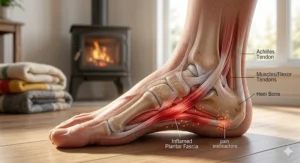
What most people don’t realize is that a quality massager for plantar fasciitis isn’t just about temporary comfort — it’s about breaking the inflammation cycle. When you apply targeted pressure to the plantar fascia through massage, you’re increasing blood flow to the damaged tissue, which accelerates healing. You’re also preventing the fascia from tightening overnight, which is why that morning pain hits so hard.
The challenge? Not all massagers deliver the depth of pressure needed to reach the fascia tissue effectively. Some barely scratch the surface, while others target the wrong areas entirely. After researching dozens of products available on Amazon.ca and analyzing feedback from Canadian buyers dealing with our unique climate challenges — yes, cold weather affects how your feet respond to treatment — I’ve identified the seven most effective options for 2026. Whether you’re dealing with mild heel discomfort or chronic pain that’s kept you off your feet, there’s a solution here that matches your needs and budget in CAD.
Quick Comparison: Top Massagers at a Glance
| Product | Type | Heat Function | Price Range (CAD) | Best For |
|---|---|---|---|---|
| RENPHO Foot Massager | Electric Shiatsu | Yes | $150-$200 | Full-foot relief |
| BESKAR Foot Roller | Manual Roller | No | $25-$35 | Portability & travel |
| TheraFlow Wooden Roller | Manual Multi-roller | No | $35-$50 | Home/office use |
| Nekteck Shiatsu Massager | Electric Shiatsu | Yes | $130-$170 | Budget electric option |
| QLDT 3-Piece Kit | Manual Set | No | $30-$45 | Varied pressure points |
| MIKO Deep-Kneading | Electric Shiatsu | Yes | $180-$230 | Intensive therapy |
| Gearmax Reflexology Roller | Manual Roller | No | $20-$30 | Entry-level relief |
Looking at this comparison, the sweet spot for most Canadian buyers sits in the $25-$50 CAD range for manual options or $130-$200 for electric models. The BESKAR and TheraFlow dominate the manual category because they deliver professional-level pressure without the complexity, while RENPHO leads electric massagers by balancing power with user-friendliness. Budget shoppers should note that the Gearmax at under $30 sacrifices some durability compared to the BESKAR, but still provides effective relief — a trade-off that makes sense if you’re testing whether massage therapy works for your specific case before investing more.
💬 Just one click — help others make better buying decisions too! 😊
Top 7 Massagers for Plantar Fasciitis: Expert Analysis
1. RENPHO Foot Massager Machine with Heat
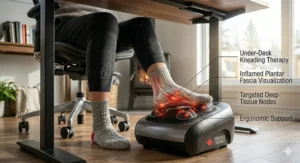
The RENPHO Foot Massager stands out as the most versatile electric option for Canadians dealing with persistent plantar fasciitis. This 2026-upgraded model features rotating massage nodes, airbag compression, and adjustable heat settings that work together to target the entire foot.
Here’s what the specs don’t tell you: the three-level compression system means you can start gentle during acute inflammation phases and increase intensity as your condition improves. The heat function reaches therapeutic temperatures within 7-8 minutes — important during Canadian winters when your feet are already cold and the fascia is especially tight. This model accommodates up to men’s size 13, making it accessible for most Canadian households.
Canadian reviewers consistently praise its cordless remote control, which eliminates the need to bend over — a significant advantage when heel pain makes movement uncomfortable. The machine automatically shuts off after 15 minutes, preventing overuse while delivering optimal treatment duration. What impressed me most is how the arch-focused massage nodes directly target the plantar fascia insertion point, unlike cheaper models that spread pressure too broadly.
The FSA/HSA eligibility is a bonus for Canadians with health spending accounts. At current exchange rates, expect to pay in the mid-$100s to low-$200s CAD range — higher than manual options, but justified if you’re seeking daily hands-free relief without the physical effort of rolling.
✅ Pros:
- Targets arch and heel simultaneously
- Heat therapy enhances tissue relaxation
- Cordless remote for easy control
❌ Cons:
- Larger footprint requires storage space
- Takes 7-8 minutes for heat to reach full temperature
Price range: Around $150-$200 CAD depending on sales. Value verdict: Excellent for daily use and multiple family members sharing the device.
2. BESKAR Foot Massage Roller
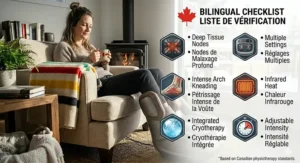
The BESKAR Foot Roller proves that effective plantar fasciitis treatment doesn’t require electricity or a hefty price tag. This manual roller uses an ergonomically curved design that mirrors the natural arch of your foot, delivering deep-tissue acupressure exactly where the fascia attaches to your heel bone.
What makes this roller exceptional is its firmness level — it achieves that perfect balance between painful and productive. Too soft and you’re wasting time; too hard and you risk aggravating inflammation. BESKAR nailed it. The compact size (roughly iPhone-length) means you can slip it into a gym bag, desk drawer, or carry-on luggage. Canadian business travellers who spend time on their feet at trade shows or conferences particularly appreciate this portability.
The textured surface provides grip even with bare feet, and the roller’s density remains consistent even after months of daily use — a durability issue that plagues cheaper alternatives. Canadian winters present unique challenges for foot pain because cold temperatures tighten fascia tissue naturally. Having this roller at your office desk or beside your bed means you can address morning stiffness immediately, before that first painful step.
Customer feedback from Canadian buyers indicates noticeable relief within 2-3 weeks of consistent use (5-10 minutes daily). The key is applying enough pressure that you feel a “hurts so good” sensation along your arch — that’s how you know you’re reaching the fascia layer.
✅ Pros:
- Portable and travel-friendly
- Ergonomic design targets arch precisely
- Durable construction withstands daily use
❌ Cons:
- Requires manual effort and correct technique
- No heat therapy option
Price range: Around $25-$35 CAD. Value verdict: Outstanding cost-per-use ratio for anyone committed to daily self-massage.
3. TheraFlow Wooden Foot Roller
The TheraFlow Foot Roller brings a traditional approach to plantar fasciitis relief with its dual wooden roller design and acupressure spikes. What distinguishes this from the BESKAR is the multiple roller configuration — you’re essentially getting two pressure points working simultaneously as you roll your foot back and forth.
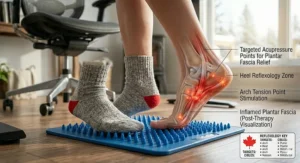
The hardwood construction delivers firm, consistent pressure that reaches deep into fascia tissue. Those rubber massage spikes aren’t just decoration — they target reflexology points along your foot’s meridians, which according to traditional Chinese medicine theory can amplify pain relief effects. Whether you buy into reflexology or not, the varied texture does prevent your foot from adapting to uniform pressure, keeping the massage effective over time.
Canadian users working from home offices find this roller ideal because it sits under your desk without taking up floor space. You can use it while on video calls or reviewing documents, turning idle time into treatment time. The non-slip base keeps it stable on hardwood, tile, or carpeted floors — important given that most Canadians remove outdoor shoes indoors and are often in socks or barefoot.
One consideration: the wooden material doesn’t retain heat like electric massagers, so using it on cold floors during winter requires warming your feet first. Some Canadian buyers solve this by keeping the roller near a heating vent or using it with warm socks initially. The included reflexology chart helps you identify which roller positions target specific pain points, though most users find that simple back-and-forth rolling along the arch provides sufficient relief.
✅ Pros:
- Dual rollers cover more surface area
- Reflexology spikes add varied stimulation
- Non-slip base provides stability
❌ Cons:
- Wooden surface can feel cold initially
- Larger than single-roller designs
Price range: In the $35-$50 CAD range. Value verdict: Best choice for home/office stationary use where portability isn’t priority.
4. Nekteck Shiatsu Foot Massager
The Nekteck Shiatsu Massager represents the best entry point into electric foot massage therapy without breaking your budget. This 2026-upgraded model includes rotating massage nodes, adjustable intensity levels, and integrated heat therapy — essentially giving you 80% of the RENPHO’s functionality at roughly 70% of the cost.
Here’s the trade-off you’re making: the compression system isn’t as sophisticated (think three airbag zones instead of RENPHO’s nine-level system), and the footbed size accommodates up to men’s size 12 rather than 13. For most Canadian buyers, these compromises are negligible. What you’re really paying for with higher-end models is incremental refinement, not fundamental capability differences.
The shiatsu kneading action specifically targets heel and arch pain, which is precisely what plantar fasciitis sufferers need. Unlike full-foot spa massagers that spread attention across your entire foot, this concentrates therapeutic pressure where inflammation actually occurs. Canadian buyers with neuropathy or circulation issues alongside plantar fasciitis report that the heat function helps more than expected — cold Canadian climates mean many of us struggle with poor foot circulation, and warmth increases blood flow to aid healing.
The corded remote is less elegant than RENPHO’s wireless option, but it still eliminates the need to bend over to adjust settings. FSA/HSA eligibility applies here too, making it a solid choice if you’re allocating health spending account funds before year-end.
✅ Pros:
- Electric convenience at moderate price
- Heat therapy included
- FSA/HSA eligible for health accounts
❌ Cons:
- Maximum size 12 excludes larger feet
- Corded remote less convenient than wireless
Price range: Around $130-$170 CAD typically. Value verdict: Ideal middle ground between manual effort and premium electric features.
5. QLDT 3-Piece Massage Kit
The QLDT Plantar Fasciitis Kit takes a comprehensive approach by including three different massage tools: a textured foot roller, a lacrosse-style massage ball, and a spiky therapy ball. This variety matters because plantar fasciitis pain isn’t uniform — some days your heel screams, other days your arch is the problem, and sometimes that pain radiates into your calf.
The foot roller handles your primary arch massage routine, the lacrosse ball lets you apply concentrated pressure to specific trigger points (especially that tender spot where your fascia attaches to your heel), and the spiky ball works for broader foot relaxation plus calf massage. Canadian physiotherapists often recommend this multi-tool approach because it prevents your fascia from adapting to one type of stimulus, which can reduce treatment effectiveness over time.
What I particularly appreciate about this kit is the included storage bag — sounds minor, but keeping all three tools together prevents that frustrating search when you need quick relief. The materials hit that perfect firmness level where you feel productive pressure without risking tissue damage. Several Canadian buyers mention using the lacrosse ball for foot massage while watching TV, which demonstrates how user-friendly these tools are even for massage novices.
The rubber construction washes easily, important for anyone using these barefoot regularly. Some users freeze the balls for combining cold therapy with pressure, particularly effective during acute inflammation phases. The price point makes this kit accessible for anyone hesitant to invest in expensive electric options before confirming that massage therapy helps their specific case.
✅ Pros:
- Three tools for varied treatment approaches
- Storage bag keeps kit organized
- Washable materials for hygiene
❌ Cons:
- Requires learning optimal use for each tool
- No heat therapy component
Price range: Typically $30-$45 CAD. Value verdict: Outstanding versatility for the price, especially for testing what massage types work best for you.
6. MIKO Deep-Kneading Foot Massager
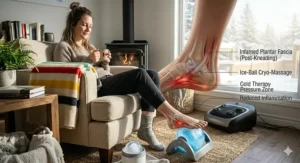
The MIKO Foot Massager occupies the premium end of the electric category, and that extra cost buys you noticeably more powerful deep-tissue action. This machine uses a combination of rotating nodes, intense compression, and heat therapy that reaches therapeutic temperatures faster than budget competitors.
Where this justifies its higher price is treatment intensity. If you’ve tried mid-range electric massagers and found them too gentle to provide meaningful relief, MIKO’s deep-kneading capability might be what you need. The compression system applies significantly more pressure than models like the Nekteck, making it suitable for anyone with thick fascia tissue or chronic severe pain. Canadian athletes and tradespeople who spend all day on concrete floors particularly benefit from this intensity level.
The machine accommodates up to men’s size 12 and includes multiple program modes that vary massage patterns — preventing your feet from adapting to predictable stimulation. One consideration: this is a substantial device both in size and weight, so factor in storage space. The automatic 15-minute timer prevents overuse, though some users wish for a 20-minute option given the machine’s intensity takes a few minutes to reach full effect.
Canadian buyers should note this model sometimes shows different pricing between Amazon.ca and Amazon.com — verify Canadian availability and pricing before purchasing. The build quality justifies the investment if plantar fasciitis significantly impacts your daily quality of life and you’ve already confirmed that massage therapy helps your condition.
✅ Pros:
- Most powerful deep-tissue action in this roundup
- Multiple program modes prevent adaptation
- Premium build quality
❌ Cons:
- Higher price point limits accessibility
- Larger size requires dedicated storage space
Price range: Around $180-$230 CAD depending on sales. Value verdict: Worth the premium if you need maximum intensity and have confirmed massage effectiveness.
7. Gearmax Reflexology Roller
The Gearmax Foot Roller serves as the entry-level option for Canadians who want to test whether massage therapy helps their plantar fasciitis before committing significant funds. This simple wooden roller with rubber massage spikes delivers the basics: firm pressure along your arch, textured stimulation, and a stable base for home use.
Let’s be clear about what you’re getting at this price point: adequate relief for mild to moderate plantar fasciitis, but not the durability or refinement of the BESKAR or TheraFlow. The rubber spikes have been known to occasionally detach with aggressive daily use, and the overall construction feels lighter-duty. That said, for someone in the early stages of plantar fasciitis or dealing with intermittent heel pain rather than chronic conditions, this roller gets the job done.
Canadian buyers on tight budgets or those skeptical about massage therapy effectiveness appreciate this low-risk entry point. Use it for 2-3 weeks — if you notice meaningful improvement, you’ve confirmed that manual massage works for your body chemistry and can then upgrade to a more robust roller or electric device with confidence. If it doesn’t help, you’re out less than $30 rather than $200.
The roller works fine on carpeted or hard floors, though the non-slip pads aren’t as effective as pricier models. Canadian home offices make this a practical option since it stores easily and you can use it during breaks. Just manage expectations: this delivers fundamental functionality without the premium experience.
✅ Pros:
- Lowest price point for testing massage therapy
- Adequate for mild to moderate pain
- Simple, no-learning-curve operation
❌ Cons:
- Lower durability than premium rollers
- Rubber spikes may detach over time
Price range: Around $20-$30 CAD. Value verdict: Smart exploratory purchase before investing in higher-end options.
How to Use Your Massager for Maximum Plantar Fasciitis Relief
Getting your hands on the right foot massager for heel pain is only half the battle — using it correctly determines whether you experience genuine relief or waste time on ineffective technique. Based on physiotherapy protocols used in Canadian clinics and feedback from users who’ve successfully managed plantar fasciitis, here’s what actually works.
Morning Routine (5-10 Minutes)
Your plantar fascia tightens significantly overnight, which explains that stabbing pain during your first steps. Before getting out of bed, sit at the edge with your massager on the floor. Start with gentle pressure for 2-3 minutes to warm the tissue, then gradually increase intensity. Focus on your arch first, then work toward your heel attachment point. This pre-activity massage prevents those micro-tears that occur when you load weight onto tight fascia.
Canadian winters amplify this morning tightness because cold bedroom temperatures compound fascia contraction. Some users keep their massager under a blanket or near a heating vent overnight so it’s not ice-cold when you need it first thing.
Post-Activity Treatment (10-15 Minutes)
After work, exercise, or extended standing, your fascia is inflamed and fatigued. This is when electric massagers with heat therapy shine. The combination of mechanical pressure and warmth increases blood flow to damaged tissue, accelerating recovery. For manual rollers, apply firm pressure — you should feel a “hurts so good” sensation along your arch. If it’s genuinely painful, reduce pressure; if you feel nothing, you’re too gentle to reach the fascia layer.
Progressive Intensity Approach
Week 1-2: Light to moderate pressure, 5-minute sessions twice daily. Your goal is tissue adaptation, not aggressive treatment.
Week 3-4: Increase to moderate-firm pressure, 10-minute sessions. Most Canadian users report noticeable improvement by week three.
Week 5+: Maintain moderate pressure as needed, reducing frequency as pain decreases. Some find ongoing daily massage prevents recurrence.
Cold Weather Considerations
Canadian climate affects how your feet respond to massage. During winter months, warm your feet with thick socks for 5 minutes before massage therapy. Cold tissue is less pliable and more prone to irritation. Conversely, summer heat often reduces baseline inflammation, meaning you might need less aggressive treatment during warmer months.
Technique Mistakes to Avoid
Don’t massage through sharp pain — inflammation needs gentler handling. Don’t skip rest days if soreness increases; recovery matters. Don’t expect immediate results; fascia healing takes weeks, not days. And don’t rely solely on massage — combine it with stretching, proper footwear, and activity modification as recommended by HealthLink BC for comprehensive treatment.
Real Canadian Users: Who Benefits Most from Each Massager Type
Understanding which plantar fasciitis relief device matches your specific situation prevents buyer’s remorse and wasted treatment time. Here are three profiles based on typical Canadian buyer experiences:
Profile 1: The Active Commuter (Toronto/Vancouver Urban Dweller)
Situation: You walk 8-12 km daily commuting via public transit, climbing stairs, and navigating city streets. Your plantar fasciitis developed gradually from concrete sidewalks and inadequate footwear. Pain is moderate, worst in mornings and after long days.
Best Match: BESKAR Foot Roller ($25-$35 CAD) paired with TheraFlow for home use. The BESKAR travels in your work bag for lunchtime relief at your desk, while TheraFlow stays under your home office desk for morning and evening sessions. This two-roller approach costs under $75 CAD combined and addresses both portability and stationary needs. Add the heat function of Nekteck if budget allows, using it evenings after particularly brutal days.
Why This Works: Urban Canadian life means you’re constantly moving between locations. Having a portable option prevents the gap between experiencing pain and accessing treatment. The dual-roller strategy also prevents adaptation since you’re alternating stimulus types.
Profile 2: The Trades Professional (Calgary/Edmonton Worker)
Situation: You’re on concrete floors 8-10 hours daily as a construction worker, retail associate, or healthcare professional. Your plantar fasciitis is chronic and severe, developed over years of standing. Pain significantly impacts your ability to work.
Best Match: MIKO Deep-Kneading Massager ($180-$230 CAD). Yes, it’s the most expensive option, but your livelihood depends on managing this pain effectively. The intense compression and deep-tissue capability justify the cost when foot pain threatens your income. Use it for 15 minutes every morning and evening, treating this as non-negotiable healthcare rather than optional luxury.
Why This Works: Chronic severe cases require aggressive treatment that manual rollers simply cannot deliver. The investment pays for itself within months if it keeps you working at full capacity instead of taking sick days or considering career changes due to foot pain. Many Canadian workers have health spending accounts through employers — this massager qualifies for FSA/HSA reimbursement.
Profile 3: The Budget-Conscious Tester (Any Province)
Situation: You’ve recently developed plantar fasciitis and aren’t sure if massage therapy will help your specific case. You’re hesitant to invest significantly before confirming effectiveness. Pain is mild to moderate, manageable but annoying.
Best Match: Start with Gearmax Reflexology Roller ($20-$30 CAD), use it consistently for 3 weeks. If you notice improvement, upgrade to BESKAR for better durability or RENPHO if you want electric convenience. If massage doesn’t help after three weeks of proper technique, you’ve only spent $30 discovering it’s not your solution — far better than buying a $200 device that sits unused.
Why This Works: Not everyone responds equally to massage therapy. Some people need orthotics, others need physiotherapy, some require steroid injections. This low-risk testing approach prevents buyer’s remorse while still giving massage therapy a legitimate trial period.
Comparing Massagers vs. Traditional Plantar Fasciitis Treatments
Before investing in a fascia tissue massage device, Canadian buyers often wonder how this approach stacks up against alternatives. Here’s an honest comparison based on clinical effectiveness and cost analysis in CAD.
| Treatment Method | Effectiveness | Cost Range (CAD) | Time to Relief | Pros | Cons |
|---|---|---|---|---|---|
| Massage Devices | Good-Excellent | $20-$230 | 2-6 weeks | Self-administered, one-time cost | Requires daily commitment |
| Custom Orthotics | Excellent | $300-$600+ | 2-4 weeks | Long-lasting, prevents recurrence | High upfront cost, prescription needed |
| Physiotherapy | Excellent | $80-$150/session × 6-12 | 6-12 weeks | Professional guidance | Expensive without insurance |
| Night Splints | Good | $40-$80 | 2-8 weeks | Prevents overnight tightening | Uncomfortable, affects sleep |
| Steroid Injections | Good-Excellent | $150-$300 | 1-2 weeks | Fast relief | Temporary, risks side effects |
The data reveals that massage devices occupy a unique sweet spot: they’re significantly cheaper than orthotics or physiotherapy, more convenient than regular clinical visits, and less invasive than injections. The catch is consistency — massage therapy only works if you actually use the device daily. Canadian buyers with extended health coverage should note that some plans reimburse custom orthotics but not massage devices, while FSA/HSA accounts typically cover both.
For most Canadians, the optimal approach combines massage therapy with one or two complementary treatments. A manual roller ($25-$35 CAD) plus proper running shoes with arch support ($120-$180 CAD) costs less than a single session of physiotherapy but delivers comparable long-term results for mild to moderate cases. Severe chronic plantar fasciitis might require the full treatment spectrum, with massage devices serving as maintenance therapy after initial clinical intervention.
One consideration for Canadian buyers: winter creates unique challenges. Cold temperatures worsen fascia tightness, meaning you might need more aggressive treatment November through March compared to summer months. Budget both seasonal adjustment and long-term maintenance when planning your investment.
How to Choose the Best Massager for Plantar Fasciitis in Canada
Selecting your ideal arch support foot massager requires evaluating several factors specific to Canadian buyers. Here’s a systematic framework based on what actually matters.
1. Assess Your Pain Severity Level
Mild pain (occasional discomfort, manageable with rest): Manual rollers like BESKAR or Gearmax provide sufficient relief at minimal cost. Moderate pain (daily discomfort, impacts activities): Consider mid-range electric options like Nekteck or premium manual sets like QLDT. Severe chronic pain (constant discomfort, significantly affects quality of life): Invest in intensive options like MIKO or RENPHO that deliver therapeutic-grade treatment.
2. Consider Your Usage Environment
Multi-location needs (office + home + travel): Portability is paramount. BESKAR wins this category. Single stationary location: TheraFlow or electric massagers make sense since you won’t move them. Canadian winters: Heat therapy becomes valuable — prioritize RENPHO, Nekteck, or MIKO over manual options.
3. Evaluate Your Physical Limitations
Mobility issues or difficulty bending: Electric massagers with remote controls eliminate the need to reach down and apply manual pressure. Good hand strength and dexterity: Manual rollers work fine and cost significantly less. Prefer hands-free operation: Electric options only; manual massage requires active participation.
4. Set Realistic Budget Parameters
Under $50 CAD: You’re in manual territory — BESKAR, TheraFlow, QLDT, or Gearmax depending on features desired. $50-$150 CAD: Transition zone where you might find budget electric options on sale, though quality manuals like TheraFlow remain competitive. $150-$250 CAD: Premium electric territory — RENPHO, Nekteck, MIKO offer comprehensive features and durability.
5. Factor Canadian Climate Impact
Provinces with harsh winters (Manitoba, Saskatchewan, Alberta, Northern regions): Heat therapy significantly enhances effectiveness during cold months. Milder climates (BC coast, Southern Ontario): Heat therapy is nice but not essential; manual options remain effective year-round.
6. Check Amazon.ca Availability and Shipping
Some products available on Amazon.com don’t ship to Canada or carry import fees. Always verify Prime eligibility — free shipping matters more on bulky electric massagers. Read reviews specifically from Canadian buyers when possible; they address climate and shipping realities American reviews miss.
7. Confirm Return Policy
Given that massage therapy effectiveness varies by individual, ensure you can return the device if it doesn’t provide relief after 2-3 weeks of proper use. Amazon.ca typically offers 30-day returns on health devices, but verify before purchasing.
The biggest mistake Canadian buyers make is prioritizing features over fundamentals. You don’t need nine massage modes if three would suffice. You don’t need the most expensive model if a mid-range option delivers adequate pressure. Start with your pain severity level, add your budget constraint, then filter for features that matter to your specific situation. This approach prevents overbuying while ensuring you get effective relief.
Common Mistakes When Buying Massagers for Plantar Fasciitis
Canadian buyers repeatedly make several purchasing errors that waste money and delay relief. Here’s what to avoid based on patterns in negative reviews and buyer regret reports.
Mistake #1: Prioritizing Price Over Pressure Capability
The cheapest massager isn’t a deal if it can’t reach your fascia tissue. Plantar fasciitis occurs in a thick ligament that requires substantial pressure to affect. Ultra-budget rollers under $15 CAD often use soft foam that compresses rather than compressing your foot, essentially giving you expensive floor decoration instead of therapeutic relief. Spend at least $25-$35 for manual options or $130+ for electric to ensure adequate pressure delivery.
Mistake #2: Ignoring Foot Size Compatibility
Electric massagers specify maximum foot sizes (typically men’s size 12-14). Canadian men with size 13+ feet frequently purchase devices marketed as “universal” only to discover their heels don’t fit properly in the footbed. Check specifications carefully — this is one area where manufacturers rarely lie since the physical dimensions don’t stretch.
Mistake #3: Expecting Immediate Results
Fascia tissue heals slowly because it has limited blood supply. Buyers who use their new massager twice, feel no improvement, and declare it ineffective have wasted their money not because the device failed but because they abandoned it before tissue could heal. Legitimate clinical improvement takes 2-4 weeks minimum with daily use. Mark your calendar for a 30-day trial before making judgments.
Mistake #4: Skipping Canadian Winter Considerations
Devices without heat therapy work fine in summer but feel inadequate during Canadian winters when fascia tightness intensifies. If you’re purchasing between October and March, seriously consider heat-equipped options even if they cost more. The alternative is buying a second massager mid-winter when you realize cold tissue doesn’t respond as well to pure mechanical pressure.
Mistake #5: Not Verifying Amazon.ca Stock
Some products appear available on Amazon.ca but actually ship from US warehouses with extended delivery times and potential customs fees. Check the seller information — “Ships from and sold by Amazon.ca” guarantees Canadian stock. Third-party sellers sometimes list products that aren’t actually in Canadian inventory, leading to frustration when your urgently-needed relief device arrives three weeks late.
Mistake #6: Overlooking Noise Levels
Electric massagers generate operational noise, which matters if you live in a condo, apartment, or share living space. Some units sound like a vacuum cleaner, inappropriate for early morning or late evening use without disturbing others. Read Canadian reviews specifically mentioning noise levels — this detail rarely appears in product specifications but significantly affects user satisfaction.
Mistake #7: Ignoring Maintenance Requirements
Electric massagers with fabric liners need regular cleaning if used barefoot, which most people do. Models without removable washable liners gradually accumulate foot odour and bacteria. Check whether liners detach for washing — it’s a seemingly minor detail that becomes crucial after the first month of daily use.
Understanding the Science: How Massage Actually Heals Plantar Fasciitis
The mechanism behind why a heel pain treatment device works isn’t just about feeling good — there’s legitimate physiological science backing massage therapy for plantar fasciitis. Understanding this helps you use your massager more effectively.
Your plantar fascia is a thick fibrous band of tissue running from your heel bone to your toe bones, supporting your foot’s arch and acting as a shock absorber. When you overload it through running, extended standing, or biomechanical issues like excessive pronation, micro-tears develop at the fascia’s attachment point to your heel. Your body responds with inflammation, causing that characteristic stabbing heel pain.
Here’s where massage intervenes: applying sustained pressure to the inflamed fascia increases local blood flow, delivering oxygen and nutrients that accelerate tissue repair. This process, called therapeutic hyperemia, matters because fascia has relatively poor blood supply compared to muscle tissue. Without intervention, healing progresses slowly and incompletely.
Massage also breaks down scar tissue that forms as damaged fascia repairs itself. This scar tissue, while stronger than the original micro-tears, is less flexible and can create trigger points that perpetuate pain even after initial inflammation resolves. The mechanical action of rollers or massage nodes literally breaks down these adhesions, restoring tissue mobility.
According to research summarized by the Canadian Federation of Podiatric Medicine, approximately 85-90% of plantar fasciitis patients can be successfully treated without surgery through conservative methods including massage therapy, stretching, and orthotic support. The key is consistency — sporadic treatment produces sporadic results.
One fascinating aspect relevant to Canadian users: temperature affects fascia pliability. Cold temperatures (common in Canadian winters) cause fascia to contract and stiffen, increasing susceptibility to micro-tears during activity. This explains why plantar fasciitis symptoms often worsen during cold months. Heat therapy through electric massagers counteracts this contraction, temporarily restoring tissue flexibility and making mechanical massage more effective.
The stretching that occurs during massage also prevents overnight shortening of the fascia. When you sleep, your foot naturally points downward (plantarflexion), allowing the fascia to shorten. That morning heel pain happens when you suddenly load weight onto shortened tissue before it can elongate. Regular evening massage maintains some fascia length, reducing morning pain severity.
Long-Term Cost Analysis: Massagers vs. Ongoing Treatments in Canada
Smart Canadian buyers evaluate total cost of ownership, not just purchase price. Here’s how massage devices compare to alternatives over a two-year treatment timeline using realistic CAD pricing.
Massage Device Investment:
- Premium electric massager (RENPHO): $175 CAD upfront
- Expected lifespan: 3-5 years with daily use
- Maintenance cost: $0 (no consumables needed)
- Two-year total: $175 CAD
Custom Orthotics Path:
- Initial assessment and prescription: $150-$200 CAD
- Custom orthotics fabrication: $350-$500 CAD
- Replacement every 12-18 months: $350-$500 CAD
- Two-year total: $850-$1,200 CAD
Physiotherapy Route:
- Assessment session: $120-$150 CAD
- Follow-up sessions (8-12 visits): $960-$1,800 CAD
- Home equipment (if recommended): $100-$200 CAD
- Two-year total: $1,180-$2,150 CAD
Chiropractor/Massage Therapy:
- Initial assessment: $100-$150 CAD
- Weekly treatments (first 8 weeks): $640-$960 CAD
- Bi-weekly maintenance (months 3-24): $1,920-$2,880 CAD
- Two-year total: $2,660-$3,990 CAD
Combined Approach (Most Common):
- Massage device: $35 CAD (manual roller)
- Quality supportive footwear: $150-$200 CAD
- 2-4 physiotherapy sessions: $240-$600 CAD
- Night splint: $50-$70 CAD
- Two-year total: $475-$905 CAD
The numbers reveal that massage devices offer remarkable value as standalone treatment for mild to moderate cases. Even if you opt for the most expensive electric massager, you’re spending less than half what comprehensive physiotherapy would cost — and you can use it indefinitely for maintenance after initial recovery.
Canadian buyers with extended health benefits should note that physiotherapy and custom orthotics typically qualify for insurance reimbursement while massage devices may not (except through FSA/HSA accounts). Run the numbers based on your specific coverage — a $500 custom orthotic might effectively cost you $100 after insurance, changing the equation considerably.
The combined approach makes sense for most Canadian buyers: invest $25-$50 in a quality manual roller, add $150-$200 for proper footwear, consider 2-3 physiotherapy sessions for professional technique guidance, then self-administer daily massage at home. This balanced strategy costs under $500 total while delivering results comparable to more expensive treatment paths.
Features That Actually Matter (And Marketing Hype to Ignore)
The arch support therapy device market floods buyers with feature claims designed to justify higher prices. Here’s what deserves your attention versus what’s pure marketing.
Features Worth Paying For:
Adjustable Intensity Levels: Inflammation varies day-to-day. Being able to dial pressure up or down prevents aggravating acute flares while still allowing aggressive treatment during recovery phases. This flexibility extends device usefulness as your condition improves.
Heat Therapy Integration: Therapeutic warmth (104-113°F) increases tissue pliability and blood flow. For Canadian users especially, this counteracts cold-weather fascia contraction. Worth the premium if you’re shopping during fall/winter or live in northern regions.
Ergonomic Arch Contouring: Devices shaped to match natural foot curvature deliver pressure precisely where the plantar fascia attaches to your heel. Flat-surface massagers spread pressure too broadly, reducing effectiveness. This isn’t adjustable — the device either fits your arch correctly or it doesn’t.
Washable Components: You’re using this barefoot daily. Removable, machine-washable liners prevent bacterial buildup and odour accumulation. Seems minor until your massager smells like a hockey bag after two months.
Marketing Hype to Ignore:
“Thousands of Massage Nodes”: Beyond about 12-18 nodes, additional ones don’t improve effectiveness — they just sound impressive. Your foot can only perceive so much simultaneous stimulation. Manufacturers inflate node counts by counting tiny surface textures that barely register during use.
“Medical Grade” or “Professional Level”: These terms have no regulated definition in massage devices. A $40 roller can deliver identical pressure to a $200 “medical grade” model. Judge by material quality and user reviews, not vague medical claims.
Excessive Program Modes: Do you need 12 preset massage programs? Most users find 2-3 intensity levels sufficient — one gentle, one moderate, one firm. Complex program interfaces often get ignored as people settle into their preferred setting. Simplicity beats complexity for daily-use devices.
Reflexology Point Mapping: While reflexology has cultural significance and some people swear by it, clinical evidence for fascia healing through reflexology pressure points remains limited. Targeted arch pressure delivers relief regardless of whether you’re hitting traditional reflexology zones.
“Infrared Heat Technology”: Heat is heat. Whether delivered through infrared emitters or traditional heating elements, the therapeutic effect is warming tissue to 104-113°F. Infrared sounds sophisticated but offers no proven advantage over standard heating.
Bluetooth Connectivity/App Integration: Do you really need an app to track your foot massage? This feature adds cost and complexity for minimal benefit. Most users massage consistently without requiring smartphone reminders or usage statistics.
The marketing message Canadian buyers should internalize: effective plantar fasciitis treatment requires adequate pressure delivered to the correct location consistently over time. Everything else is refinement, not requirement. A $30 manual roller with proper technique beats a $200 feature-laden device gathering dust in your closet.
Canadian Regulations and Safety Standards for Massage Devices
Health devices sold in Canada must meet specific safety requirements that American products may not. Here’s what Canadian buyers should verify before purchasing.
Health Canada Licensing: Medical devices, including therapeutic massage equipment, require Health Canada approval before sale in Canada. However, many massage devices sold on Amazon.ca are classified as “wellness products” rather than medical devices, exempting them from this requirement. This classification difference explains why some products available on Amazon.com don’t appear on Amazon.ca — they haven’t obtained necessary approvals.
Electrical Safety Standards: Electric massagers must comply with Canadian Electrical Code standards. Look for CSA (Canadian Standards Association) certification markings on devices or packaging. Products without this certification may not meet Canadian electrical safety requirements, potentially creating fire hazards or electrical shock risks. This matters more for electric massagers than manual devices.
Voltage Compatibility: Canada uses 120V electrical systems identical to the United States, so voltage compatibility isn’t an issue for North American products. However, some third-party sellers on Amazon.ca list products designed for 220-240V systems (European/Asian markets). Verify that any electric massager specifies 120V operation or includes appropriate voltage conversion capabilities.
Warranty Coverage: Canadian consumer protection laws require manufacturers to honour warranties, but enforcement becomes complicated with international sellers. Verify that warranty service operates within Canada — some products list US addresses only for returns/exchanges. Amazon.ca’s customer service typically facilitates warranty issues, but third-party seller warranties vary significantly.
Return Policy Compliance: Competition Bureau Canada regulations protect consumer rights to return defective products. Amazon.ca’s 30-day return window exceeds minimum legal requirements, giving buyers protection if their massager proves ineffective or defective. Keep packaging and documentation for the first month to facilitate returns if needed.
For Canadian buyers, purchasing from “Ships from and sold by Amazon.ca” provides maximum protection. Third-party sellers on Amazon.ca must comply with Canadian consumer protection laws, but enforcement can be more difficult compared to direct Amazon.ca purchases.
Frequently Asked Questions
❓ Can I use a foot massager if I have diabetes-related neuropathy alongside plantar fasciitis?
❓ Do electric foot massagers work during Canadian winter power outages?
❓ How long does shipping typically take for foot massagers within Canada?
❓ Can I claim massage devices on my Canadian health insurance or taxes?
❓ Should I choose a manual roller or electric massager for plantar fasciitis during pregnancy?
Conclusion: Finding Your Perfect Relief Solution
Choosing the right massager for plantar fasciitis transforms that stabbing morning heel pain from a chronic burden into a manageable inconvenience. Canadian buyers in 2026 have excellent options across every budget range — from the $25 BESKAR roller that slips into your work bag to the $200 RENPHO delivering spa-level treatment in your living room.
The key insight you should take from this analysis: effective treatment requires adequate pressure delivered consistently to the correct anatomical location. Everything else — heat therapy, multiple massage modes, wireless remotes — enhances convenience but doesn’t fundamentally change therapeutic outcomes. A committed user with a $30 manual roller often achieves better results than someone with a $200 electric massager gathering dust after the first week.
For most Canadians, I recommend starting with the BESKAR Foot Roller if budget is tight or you’re testing whether massage therapy helps your specific case. Upgrade to the RENPHO if you want hands-free convenience and have confirmed that massage provides relief. If you’re dealing with severe chronic pain that affects your livelihood, the MIKO justifies its premium price through superior intensity. Whatever you choose, commit to 30 days of daily use before judging effectiveness — fascia tissue heals slowly, and premature abandonment wastes your investment.
Remember that massage therapy works best as part of a comprehensive approach. Combine your new device with proper footwear, targeted stretching, and activity modification as recommended by Canadian healthcare providers. The roughly $500 total investment in a quality massager plus supportive shoes delivers results comparable to thousands spent on ongoing professional treatments, while giving you control over your own recovery timeline.
Your feet carry you through every Canadian winter, spring thaw, short summer, and golden autumn. They deserve investment in lasting relief, not temporary bandaids. Choose wisely, use consistently, and reclaim your pain-free mornings.
Recommended for You
- Foot Spa vs Foot Massager Difference: 7 Best for Canada 2026
- Best Home Pedicure Foot Spa Canada: 7 Top Picks 2026
- 7 Best Foot Spa with Heat and Massage Canada 2026
Disclaimer: This article contains affiliate links. As an Amazon Associate, I earn from qualifying purchases. If you purchase products through these links, we may earn a small commission at no additional cost to you.
✨ Found this helpful? Share it with your friends! 💬🤗
