
In This Article
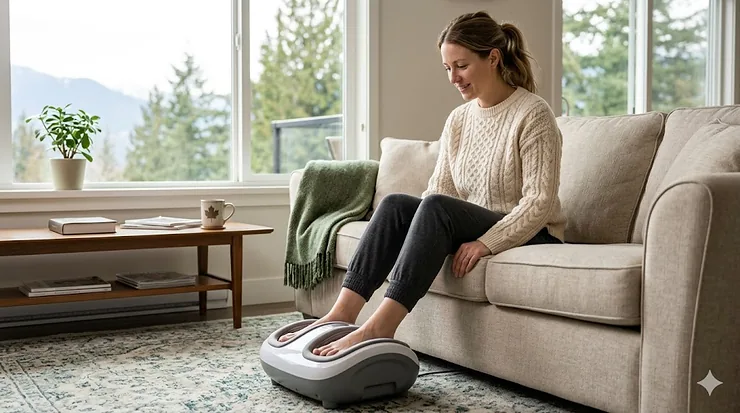
You swing your legs out of bed on a cold January morning in Edmonton or Ottawa, plant your feet on the floor, and — ouch. That sharp, stabbing pain shooting through your heel and arch is the cruel calling card of plantar fasciitis, and if you’re reading this, you know exactly what I’m talking about. The question most people eventually ask is: do foot massagers help plantar fasciitis, or are they just an expensive way to feel temporarily better?
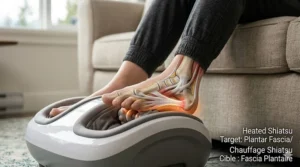
The short answer is yes — with the right technique and the right device, a foot massager can meaningfully reduce plantar fasciitis pain and support recovery. According to Veterans Affairs Canada, plantar fasciitis is characterized by pain at the plantar heel, most noticeable with the first weight-bearing steps after rest — precisely the kind of deep, dull-to-sharp pain a targeted massager can help address. Research published by the College of Family Physicians of Canada notes that plantar fasciitis affects an estimated 3.6–7% of the general population and accounts for up to 8% of all running-related injuries — making it one of the most common foot complaints in Canadian podiatry clinics.
Massage therapy, when applied consistently, improves blood flow to inflamed tissue, breaks down adhesions in the fascia, and reduces morning stiffness — which is why devices that mimic professional massage techniques have become a go-to home remedy for Canadians who can’t see a physiotherapist twice a week. The key, however, is choosing a massager that delivers the right kind of pressure to the right areas. Let’s break that down.
Quick Comparison: 7 Best Foot Massagers for Plantar Fasciitis on Amazon.ca
| Product | Type | Heat | Best For | Price Range (CAD) | Amazon.ca Available |
|---|---|---|---|---|---|
| RENPHO Foot Massager (2026 Upgraded) | Shiatsu Electric | ✅ Yes | All-round daily relief | $90–$130 | ✅ Prime Eligible |
| MIKO Shiatsu Foot Massager | Shiatsu Electric | ✅ Yes | Large feet, neuropathy | $80–$120 | ✅ Prime Eligible |
| Cloud Massage Shiatsu Massager | Shiatsu Electric | ✅ Yes | Premium calf + foot | $150–$200 | ✅ Prime Eligible |
| Nekteck Shiatsu Foot Massager (2026) | Shiatsu Electric | ✅ Yes | Budget electric option | $60–$90 | ✅ Prime Eligible |
| TheraFlow Wooden Foot Roller | Manual Roller | ❌ No | Office/desk use, travel | $25–$40 | ✅ Ships to Canada |
| BESKAR Foot Massage Roller | Manual Roller | ❌ No | Targeted arch + heel | $20–$35 | ✅ Ships to Canada |
| GreenLife Foot Roller Massager Set | Manual Set (3-piece) | ❌ No | Combo deep tissue kit | $30–$50 | ✅ Ships to Canada |
Analysis: The table above shows a clear split between electric shiatsu massagers (best for passive, heat-assisted relief) and manual rollers (best for targeted, active-pressure therapy). For morning plantar fasciitis pain — that “first step” agony — electric massagers with heat win, since warmth relaxes the fascia before you bear weight. Manual rollers, on the other hand, are your portable best friends at the office desk or after a long shift on your feet. Budget under $50 CAD? A roller set delivers surprisingly good results. Investing $100+ CAD? The RENPHO or MIKO will change your morning routine.
💬 Just one click — help others make better buying decisions too! 😊
Top 7 Grooming Perches for Birds: Expert Analysis (Amazon.ca, 2026)
1. Sweet Feet and Beak Safety Pumice Perch (Medium — 1¼” x 12″)
The Sweet Feet and Beak Safety Pumice Perch is the benchmark that most other pedicure perches get compared against, and for good reason — its patented design is genuinely clever. The smooth plastic top is where your bird actually stands, protecting tender toe pads from constant abrasion, while the real pumice stone coats the sides, where nails brush naturally as the bird grips and shifts weight.
What this means in practice: your bird gets passive nail filing simply by going about its day — eating, playing, roosting — without ever standing on a harsh surface. For Canadian owners dealing with cold-season indoor confinement (when birds spend more time in the cage and less time foraging on play stands), that passive daily wear is genuinely valuable. The perch comes in five sizes from X-Small (finches, canaries) to Large (African Greys, Amazons), and is available on Amazon.ca with Prime shipping.
Customer reviews on Amazon.ca are consistently positive, with owners noting visible nail improvement within 3–4 weeks. One caveat: a handful of reviews mention that the pumice coating can wear unevenly with heavy chewers.
✅ Smooth top protects foot pads
✅ Real pumice sides — not sandpaper
✅ Lightweight, easy to install
❌ Pumice can wear faster with aggressive chewers
❌ Not ideal as the sole perch for heavy-bodied birds like large macaws
Price range: Around $15–$25 CAD depending on size. Solid value for a perch that genuinely does what it claims.

2. Living World Pedi-Perch Cement Bird Perch (Small, Medium, Large)
Living World is a Montreal-based brand with strong Canadian distribution, which means you’ll find this perch widely available on Amazon.ca with reliable shipping — even to less accessible areas of Ontario, Alberta, and BC. The Pedi-Perch is a full concrete-composite perch with a wavy, multi-grip corrugated surface designed to promote foot circulation and prevent the kind of joint stiffness that develops in sedentary captive birds.
The wave pattern is smarter than it looks: different contact points along the ridges mean your bird’s feet aren’t pressing in the exact same spot every time, which is one of the key risk factors for bumblefoot (pododermatitis). For medium to large parrots — cockatiels, conures, Amazons — this perch can meaningfully reduce nail trimming frequency. That said, because the entire surface is abrasive, it should always be paired with at least two softer perches. Canadian reviewers appreciate the durability: this perch will outlast the bird’s teenage destructo phase without crumbling.
✅ Canadian brand, excellent Amazon.ca availability
✅ Wave surface reduces pressure-point accumulation
✅ Non-toxic cement, easy to wipe clean
❌ Full abrasive surface — not suitable as a sole perch
❌ Heavier than pumice equivalents; can stress cage mounting hardware
Price range: $10–$20 CAD. Outstanding durability-to-price ratio in the Canadian market.
3. Penn Plax Cement Perch (10-Inch)
The Penn Plax Cement Perch is a no-frills, straight cylindrical concrete perch at 25 cm (10 inches) long, and it’s been a staple on Amazon.ca for years. It attaches easily to most standard cage bars, has a safe non-toxic colouring, and offers a consistently rough surface that’s good for moderate nail wear maintenance.
Where this perch shines is in multi-perch cage setups. Position it at mid-cage height — not at the primary roosting level — so your bird uses it frequently but doesn’t spend all night on it. I’d particularly recommend this for budgie and cockatiel owners in Canada who find their birds’ nails getting dangerously sharp between annual vet visits. It’s simple, cheap, and effective. The one thing to watch: some Amazon.ca reviews mention the surface texture can feel excessively rough, particularly for lighter, soft-footed species like doves or lovebirds. Stick to it for tougher species.
✅ Budget-friendly entry point
✅ Simple installation, works with most cages
✅ Proven durability over years of use
❌ Surface can be too rough for small, soft-footed species
❌ Uniform cylindrical diameter offers less foot exercise variety
Price range: Around $8–$15 CAD. Best for budget-conscious Canadian buyers with cockatiels or medium parrots.
4. RYPET Parrot Perch Rough-Surfaced Quartz Sand Perch (U-Shape, Large)
The RYPET U-Shape Perch fills an interesting niche: it’s not traditional concrete, nor pure pumice — instead, it uses a quartz sand coating over a high-quality PVC core. That combination makes it lighter than concrete while delivering a rougher, more assertive texture than pumice. The U-shape design is also genuinely useful: it gives medium to large birds (macaws, cockatoos, African Greys) multiple grip positions at once, encouraging varied foot use.
What the spec sheet doesn’t tell you is that the PVC core makes this perch much easier to clean than solid concrete — a meaningful advantage in Canadian climates where windows are closed most of the year and airborne bacteria in a warm, enclosed bird room can become a hygiene concern faster than you’d expect. Reviewers testing it with macaws and African Greys report good foot exercise engagement and no flaking, which addresses a common concern with cheaper sand-coated perches. Available on Amazon.ca with Prime delivery.
✅ Lighter than concrete despite assertive texture
✅ U-shape encourages varied grip positions
✅ PVC core makes it easier to clean than solid cement
❌ Quartz texture is more aggressive — monitor feet during first weeks
❌ Not ideal for small birds under 100 g
Price range: $15–$22 CAD. Worth the price step up if you own a larger parrot and want more than basic concrete.
5. All Living Things Safety Pumice Bird Perch (Small)
The All Living Things Safety Pumice Perch is a reliable mid-range option ideal for small to medium birds — cockatiels, conures, lovebirds — and it earns its place on this list partly because of its availability across multiple formats on Amazon.ca. The irregular-shaped textured plastic base doubles as a mild foot massage surface, while real pumice on the sides handles the nail conditioning.
For Canadian multi-bird households — which are surprisingly common in provinces like Ontario and BC — the lower price point means you can equip several cages without breaking the bank in CAD. The perch is nontoxic and maintains room temperature well, which is more relevant than you might think: cold perches in a 17°C Canadian winter home can cause discomfort and discourage a bird from using a perch it might otherwise prefer. Multiple colour options also make it easy to keep track of which perch belongs to which cage in a busy aviary setup.
✅ Budget-friendly for multi-bird households
✅ Textured plastic base doubles as foot massage
✅ Nontoxic, room-temperature stable
❌ Pumice coating may wear faster than premium alternatives
❌ Smaller size range — less suitable for large parrots
Price range: Around $10–$18 CAD. An excellent choice for budget-savvy Canadian owners with small-to-medium birds.

6. Bird Beak Grinding Stone Perches — Ice Cream Shape Pumice Ledge (4-Pack)
This 4-pack of colourful pumice ledges targets a slightly different use case than the horizontal perches above: these mount flat against the cage wall and function more as a grooming station than a traditional perch. Birds can stand on them briefly, rub beaks across the surface, or use them as a nail-filing anchor point. The ice cream shape is wide enough for small to medium birds and the bright colours tend to attract curious parrots toward them naturally.
The real value here for Canadian buyers is the 4-pack format. At a per-unit cost that’s competitive in CAD, this is a practical solution for owners who want to add texture variety throughout a large cage without committing to a full perch replacement. They’re also useful for travel cages or temporary setups — a consideration for Canadians who move birds between summer and winter housing or bring them to a cottage. Non-toxic and available on Amazon.ca, these ship quickly with Prime.
✅ 4-pack format delivers excellent per-unit value in CAD
✅ Ledge format suits wall-mounting for beak and nail conditioning
✅ Bright colours encourage bird curiosity and use
❌ Not a full perch replacement — supplementary role only
❌ Small surface area limits use for larger birds
Price range: $12–$20 CAD for the 4-pack. Ideal as a supplement to the primary perches reviewed above.
7. Sweet Feet and Beak Comfort Grip Safety Perch (Concrete Blend, XL)
The Sweet Feet and Beak Comfort Grip Safety Perch takes the brand’s signature approach — smooth surface on top, abrasive material on sides — but swaps the pumice for a concrete blend, making it more durable and more suitable for larger, heavier birds. At XL (34 cm / 13.5 inches), this is designed for macaws, large cockatoos, and other birds whose nail growth rate outpaces what standard pumice can handle.
The universal bolt mounts deserve a special mention: they work with both horizontal and vertical cage bars, which matters for Canadian owners who often have older-style cage designs that don’t accommodate the standard screw-through mounting of cheaper perches. Made in the USA and available on Amazon.ca, this perch sits at the premium end of the price range — but for large parrot owners, the combination of comfort-top design and concrete-level durability genuinely justifies the investment in CAD. Think of it as the middle ground that solves the core pumice perch vs concrete perch debate in a single product.
✅ Concrete blend durability with comfort-top design
✅ Universal mounts — compatible with most cage types
✅ XL size suits large macaws and cockatoos
❌ Premium price point — highest on this list
❌ Concrete blend is heavier; not ideal for lightweight travel cages
Price range: $22–$35 CAD. The best single investment for large parrot owners who want comfort and conditioning in one perch.
Top 7 Grooming Perches: Specs at a Glance (Amazon.ca)
| Product | Material | Best For | Size Range | Price (CAD) |
|---|---|---|---|---|
| Sweet Feet & Beak Safety Pumice | Pumice + Plastic | Small–Large parrots | XS–L | $15–$25 |
| Living World Pedi-Perch | Cement | Cockatiels–Amazons | S–XL | $10–$20 |
| Penn Plax Cement Perch | Cement | Budgies–Conures | 25 cm | $8–$15 |
| RYPET Quartz Sand Perch | Quartz + PVC | Medium–Large | U-Shape L | $15–$22 |
| All Living Things Pumice | Pumice + Plastic | Cockatiels–Conures | Small | $10–$18 |
| Ice Cream Pumice Ledge 4-Pack | Pumice Stone | Small–Medium (ledge) | Wall-mount | $12–$20 |
| SF&B Comfort Grip Concrete | Concrete Blend | Large parrots | XL 34 cm | $22–$35 |
Looking at this table, budget buyers can start strong with the Penn Plax or Living World options under $20 CAD — both are proven performers. Mid-range buyers will find the Sweet Feet and Beak pumice perch offers the best balance of comfort and nail conditioning per dollar. For large parrot owners, the SF&B Comfort Grip Concrete is the clear standout despite its higher price; no other product on this list handles macaw-grade nail wear while protecting foot pads simultaneously.
✨ Don’t Miss These Exclusive Deals!
🔍 Take your bird’s nail care to the next level with these carefully selected perches. Click on any highlighted product to check current pricing and availability on Amazon.ca. Your feathered friend will thank you!
How to Choose the Right Grooming Perch for Your Bird in Canada: A Step-by-Step Guide
Choosing between a pumice perch vs concrete perch doesn’t have to be complicated. Here’s a practical decision framework built for Canadian bird owners:
Step 1: Identify your bird’s species and foot sensitivity. Small birds (finches, canaries, budgies under 40 g) have delicate feet — pumice is the safer default. Medium birds (cockatiels, lovebirds, conures) can handle either, but start with pumice. Large parrots (African Greys, Amazons, cockatoos, macaws) generate nail growth rates that pumice alone may not keep up with — consider concrete blend or quartz options.
Step 2: Assess your bird’s current nail condition. If nails are already long and hooking on cage bars, a concrete perch will provide faster results. If nails are manageable but growing quickly, pumice is ideal for gradual maintenance. If your bird has existing foot redness or early bumblefoot symptoms, consult an avian vet before adding any abrasive perch.
Step 3: Plan your perch variety. Both VCA Canada and avian behaviour specialists recommend a minimum of three perch types per cage: one natural wood (varied diameter), one softer rope or flexible perch, and one grooming perch. Never make a concrete or pumice perch the only option — foot health depends on variety.
Step 4: Consider your Canadian climate context. During Canadian winters, birds spend significantly more time caged and less time foraging on play gyms or outdoor perches. This reduced activity means nail wear from environmental stimuli drops — making a quality grooming perch more important, not less, between November and March.
Step 5: Position the perch strategically. Avian experts recommend placing the grooming perch at mid-height or near the food bowl — not at the highest roosting spot, where birds sleep. You want frequent daytime use, not all-night pressure on abrasive material.
Step 6: Monitor and adjust. Check your bird’s feet weekly for the first month. If you see redness, swelling, or the bird actively avoiding the perch, switch textures. Replace worn perches every 6–12 months depending on use.
Step 7: Pair with regular vet check-ins. No grooming perch — pumice or concrete — replaces professional nail trims entirely. According to VCA Canada Animal Hospitals, cement perches should always complement a veterinary-supervised foot care plan, not substitute for it.
Real Canadian Bird Owners: Which Perch Fits Your Situation?
Profile 1 — Sarah in Toronto: Cockatiel in a Condo Sarah’s cockatiel, Mango, lives in a 60 cm × 60 cm cage in a downtown Toronto condo. The heating runs constantly from October through April, making the indoor air dry — which can cause slight foot sensitivity. A pumice perch like the Sweet Feet and Beak Safety Pumice Perch (Small) makes perfect sense here: the smooth top protects Mango’s feet during those long heated-indoor months, while the side pumice handles gradual nail maintenance. Sarah doesn’t need to worry about over-aggressive abrasion.
Profile 2 — Marcus in Calgary: African Grey in a Spacious Aviary Marcus’s African Grey, Einstein, has strong, fast-growing nails that need trimming every 5–6 weeks without intervention. Einstein is active and confident. The SF&B Comfort Grip Concrete Perch (XL) suits this setup: it provides concrete-level nail conditioning while the comfort top protects foot pads during the long Calgary winters when Einstein is mostly indoors. Marcus keeps two natural wood perches and a rope perch in the same aviary for variety.
Profile 3 — The Nguyen Family in Vancouver: Multi-Bird Setup The Nguyens have three birds — two lovebirds and a conure — across two cages. Budget matters. Equipping both cages with the Ice Cream Shape Pumice Ledge 4-Pack alongside basic natural wood perches gives excellent texture variety at a strong CAD value. The ledges function as supplementary nail stations, and the lovebirds have taken to them quickly. For the conure, Marcus added a Penn Plax Cement Perch for more assertive nail wear.
Each profile highlights the same underlying truth: the right choice depends on your bird’s size, temperament, and your Canadian home environment — not on which product has the most five-star reviews.

Common Mistakes Canadian Bird Owners Make When Choosing Grooming Perches
Mistake 1: Using a concrete perch as the only perch. This is the single most common error I see in Canadian bird forums. Full abrasive surfaces — used exclusively — are directly linked to bumblefoot (pododermatitis), a painful bacterial infection of the foot pad. The VCA Canada position is clear: cement perches are a supplement, not a replacement. Pair them with natural wood and rope options.
Mistake 2: Buying the wrong size. A perch that’s too thin for your bird’s foot forces the toes to overlap, creating pressure points. Too thick, and the bird can’t grip properly, leading to balance issues. The general rule: your bird’s front toes should wrap about two-thirds of the way around the perch diameter.
Mistake 3: Ignoring temperature in Canadian winters. Concrete perches get cold. In an unheated bird room or near a drafty window in a Canadian January, a concrete perch can drop to uncomfortably cool temperatures — enough to discourage a bird from using it at all. Pumice perches with plastic cores maintain room temperature better, making them more reliably used during cold-season months. This is a Canada-specific consideration most product listings don’t mention.
Mistake 4: Assuming “pumice” equals “safe for all birds.” Pumice is gentler than concrete, but it’s still an abrasive. Small soft-footed species — finches, canaries, doves — may find even mild pumice texture irritating over extended periods. If you’re unsure, consult a Canadian avian vet before introducing any grooming perch. The Canadian Food Inspection Agency provides guidance on responsible bird care at inspection.canada.ca.
Mistake 5: Buying based on price alone. Cheap no-brand concrete perches on Amazon.ca sometimes use aggregate coatings that flake or contain binders that are potentially toxic if ingested — a real concern for parrots, who chew everything. Stick to established brands with verified non-toxic materials.
What to Expect: Real-World Performance in Canadian Conditions
Let me be direct about what the spec sheets won’t tell you.
A pumice perch will NOT eliminate the need for nail trims. It will reduce frequency — most owners with medium parrots report moving from every 4 weeks to every 8–10 weeks with consistent pumice perch use. That’s meaningful progress, but it requires the bird to actively use the perch, which isn’t guaranteed. Some birds ignore them for weeks before warming up.
A concrete perch works faster — particularly for heavy-nailed species like large macaws or outdoor aviary birds — but the faster nail wear comes with a trade-off in foot comfort. Birds kept exclusively on hard abrasive surfaces show higher rates of foot soreness and, in worst-case scenarios, early-stage bumblefoot. As noted in the avian health literature, bumblefoot lesions at grades 4–5 can require surgical intervention — a cost and stress scenario no Canadian bird owner wants.
The Canadian seasonal factor is real: during long winters (November through March across most of Canada), birds that would normally supplement their nail wear through outdoor perching, foraging on textured play stands, or climbing rough-barked trees simply don’t get that exposure. Your indoor grooming perch carries a heavier maintenance load during these months. I recommend checking nail length monthly during winter — more frequently than the standard 6–8 week interval suggested in many guides written for warmer climates.
A good grooming perch — pumice or concrete — is like a good pair of running shoes for your bird’s feet: it doesn’t replace exercise and regular care, but it makes everything work better. Choose for your bird’s size, pair it properly with softer perch options, monitor feet weekly, and you’ll get the results you’re after.
Long-Term Cost and Maintenance: What Canadian Owners Need to Know
Perch cost is surprisingly relevant over a bird’s lifetime. A cockatiel can live 15–20 years; a macaw, 50+. Here’s the math in CAD:
- Pumice perch (mid-range, ~$20 CAD): Needs replacement every 6–12 months with normal use. Annual cost: $20–$40 CAD per cage.
- Concrete perch (mid-range, ~$15 CAD): Dramatically longer lifespan — some Living World Pedi-Perch owners report 5+ years of use without significant degradation. Annual cost: $3–$10 CAD per cage.
- Avoided vet trim costs: Avian vet visits in Canada typically run $60–$120 CAD for a routine nail trim appointment. Even reducing trim frequency from every 4 weeks to every 8 weeks saves $120–$180 CAD per year — making a well-chosen $20 perch a return on investment measurable in weeks.
Maintenance is minimal for both types: wipe weekly with a damp cloth and mild avian-safe disinfectant. Avoid soaking concrete perches, which can weaken the structure over time. Replace pumice perches when the surface becomes smooth (the abrasive granules have worn off) or begins to crumble — ingesting loose pumice particles isn’t ideal for any bird. Both types should be inspected monthly.
One Canada-specific note: if you’re ordering replacements via Amazon.ca and you’re in a remote or northern community, check shipping timelines in advance. Stock up before winter shipping slows — Prime delivery reaches most major Canadian cities within 2 days, but more remote postal codes in northern Ontario, Manitoba, Saskatchewan, or BC can see 7–14 day delays during peak winter months.
FAQ: Pumice Perch vs Concrete Perch — Your Questions Answered
❓ Is a pumice perch or a concrete perch safer for my bird's feet?
❓ Do grooming perches actually work for trimming bird nails in Canada?
❓ Can I leave a concrete perch in the cage all the time?
❓ Are pumice perches available on Amazon.ca with free shipping to all Canadian provinces?
❓ How do Canadian winters affect how often I should check my bird's nails?
Conclusion: Making the Right Call for Your Canadian Bird
The pumice perch vs concrete perch debate doesn’t have a single universal winner — it has a right answer for your specific bird, your Canadian home environment, and your maintenance routine. For most indoor bird owners across Canada, a quality pumice perch like the Sweet Feet and Beak Safety Pumice Perch is the safest, most comfortable daily-use grooming solution. For large parrot owners who need more assertive nail conditioning, a concrete option like the Living World Pedi-Perch or SF&B Comfort Grip Concrete delivers the durability and nail-filing power needed — provided it’s paired with softer perches.
The golden rule, backed by both Canadian avian vets and common sense: diversity of perch types is what truly supports healthy bird feet. No single perch solves everything. A natural wood perch, a rope perch, and a grooming perch of the right texture for your bird’s size — that trio covers all the bases.
Check all options currently in stock on Amazon.ca to find your best price in CAD.
✨ Don’t Miss These Exclusive Deals!
🔍 Explore the full range of bird perches on Amazon.ca and check current pricing before stocks change. One right perch can save you dozens of vet trips — and keep those little talons from turning your arm into a scratching post. Click any highlighted product to browse current availability! 🦜
Recommended for You
- 7 Best Massagers for Plantar Fasciitis Canada 2026
- Foot Spa vs Foot Massager Difference: 7 Best for Canada 2026
- Best Home Pedicure Foot Spa Canada: 7 Top Picks 2026
Disclaimer: This article contains affiliate links. As an Amazon Associate, I earn from qualifying purchases. If you purchase products through these links, we may earn a small commission at no additional cost to you.
✨ Found this helpful? Share it with your friends! 💬🤗
