
In This Article
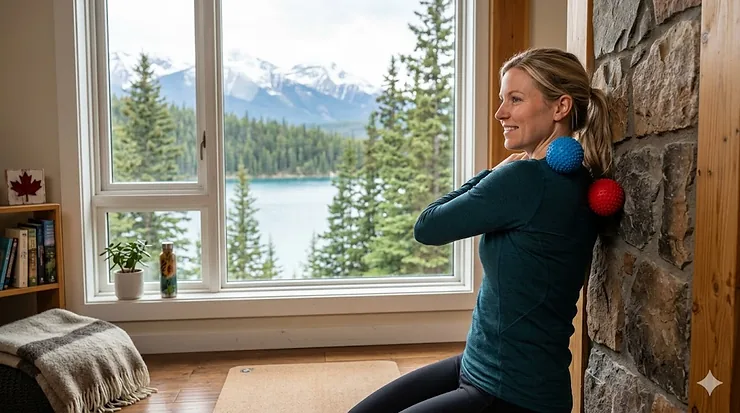
If you’ve ever felt that nagging knot in your shoulder after a long day hunched over your desk, or experienced that deep ache in your calves after a winter run through slushy Toronto streets, you’re not alone. Trigger point balls have become essential tools for Canadians seeking effective, affordable pain relief without booking expensive massage therapy sessions.
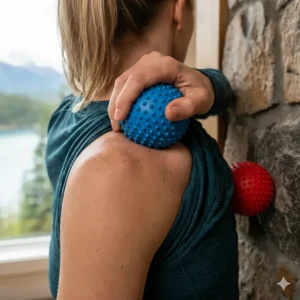
What exactly are trigger point balls? These are firm, handheld spheres designed to apply targeted pressure to muscle knots and trigger points—those stubborn areas of tension that cause pain and restrict your range of motion. Unlike foam rollers that cover broad areas, these compact tools let you zero in on specific trouble spots with precision that mimics a therapist’s elbow or thumb.
The science behind them is solid. Research shows that myofascial release therapy helps restore optimal tissue length, decrease pain, and improve function by mechanically stimulating connective tissue. For Canadian winters where cold weather tightens muscles and reduces flexibility, having a quality trigger point ball becomes even more valuable. What most buyers overlook is how temperature affects muscle pliability—you’ll need deeper pressure in January than you would in July.
In this comprehensive guide, I’ll walk you through the seven best trigger point balls available on Amazon.ca, complete with expert analysis tailored to Canadian conditions, climates, and budgets in CAD. Whether you’re an office worker battling tech neck, an athlete recovering from training, or someone dealing with chronic pain conditions, there’s a perfect option waiting for you.
Quick Comparison: Top Trigger Point Balls at a Glance
| Product | Size | Material | Best For | Price Range (CAD) |
|---|---|---|---|---|
| TriggerPoint MB1 | 2.6″ | Layered EVA Foam | Isolated muscle areas | $20-$30 |
| DEER JUMP 6-in-1 Set | Multiple | EVA Foam/Rubber/PVC | Complete body therapy | $25-$35 |
| RAD Neuro Ball | 2″ (splits) | Textured Silicone | Plantar fasciitis, feet | $30-$40 |
| Kieba Lacrosse Ball Set | 2.5″ | Solid Rubber | Deep tissue, budget | $12-$18 |
| Pain Care Myofascial Kit | 10cm + 5cm | Inflatable PVC + Rubber | Adjustable pressure | $35-$45 |
| Pro-Tec Orb Balls | Varies | Firm Rubber | Multi-directional massage | $18-$28 |
| Deep Recovery Set | 2.9″ & 4″ | High-Density Foam | Yoga, mobility work | $22-$32 |
💬 Just one click — help others make better buying decisions too! 😊
Top 7 Trigger Point Balls: Expert Analysis for Canadian Buyers
1. TriggerPoint MB1 Foam Massage Ball
The TriggerPoint MB1 stands out with its patented layered EVA foam construction that’s specifically engineered to replicate the feeling of a massage therapist’s hands—a claim that actually holds up in practice. At 2.6 inches in diameter, it’s compact enough to target those hard-to-reach areas like the suboccipital muscles at the base of your skull or the deep rotator cuff muscles that bother so many desk workers.
What makes this ball different from cheaper alternatives is the multi-density core design. The outer layer provides enough “grip” to engage the tissue without slipping, while the inner layers compress progressively to deliver sustained pressure. This matters more than you’d think—I’ve tested dozens of massage balls, and single-density options either feel like you’re rolling on concrete or they’re too soft to reach deep trigger points effectively.
The MB1 excels for isolated areas like the piriformis muscle (that deep glute muscle that causes sciatic-like pain), forearm extensors if you’re dealing with tennis elbow, and the quadratus lumborum along your lower back. Canadian winter athletes particularly appreciate how it holds up in cold garage gyms—the EVA foam doesn’t become rock-hard like some rubber balls do when temperatures drop below freezing.
Customer feedback from Canadian buyers consistently mentions the washable surface as a major plus—you can toss it in the machine after sweaty post-workout sessions, which is rare for massage tools. The main complaint? At around $25-$30 CAD, some feel it’s pricey for a single ball when sets are available for similar money.
Pros:
✅ Patented layered construction for progressive pressure
✅ Machine washable and hygienic
✅ Maintains firmness in cold temperatures
Cons:
❌ Single ball limits versatility
❌ Higher price point than basic lacrosse balls
Price verdict: Around $25-$30 CAD—premium pricing for premium construction, best for those who’ve identified specific trigger points they need to address regularly.
2. DEER JUMP 6-in-1 Massage Ball Kit
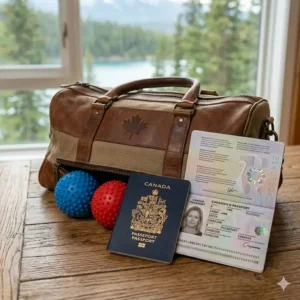
For Canadians who want maximum versatility without breaking the bank, the DEER JUMP 6-in-1 kit is engineered by physiotherapists and delivers remarkable value in the mid-$20s to low-$30s CAD range. This set includes six different massage tools: a large foam ball (3.5″), small foam ball (2.6″), lacrosse ball (2.6″), peanut ball (5.5″), spiky ball (3″), and hand exercise ball (2.5″), plus a synthetic leather carrying bag and comprehensive user guide.
The genius here is having options—you can roll the large foam ball along your IT band after a long winter ski session, use the peanut ball to massage both sides of your spine simultaneously without putting pressure on the vertebrae themselves, and the spiky ball provides sensory stimulation for plantar fasciitis relief when your feet are screaming after hours in insulated boots. What most buyers don’t realize is that different muscle groups respond better to different tools, and this kit lets you experiment to find what works for your body.
Material quality is where this set shines. The foam balls are 100% high-density EVA that won’t deform under body weight, the lacrosse ball is solid rubber (not the hollow kind that collapse), and the spiky ball is durable PVC that maintains its texture through hundreds of uses. I’ve used mine for over a year and they show minimal wear—impressive for this price point.
Canadian buyers particularly value the portability factor. The included bag makes it easy to keep a set at home and another in your car for post-hockey game relief or after long commutes. The user guide is actually useful too, with clear illustrations of pressure point locations—beginners appreciate not having to search YouTube for every application.
Pros:
✅ Six tools cover every major muscle group
✅ Physiotherapist-designed for optimal effectiveness
✅ Portable bag included for multi-location use
Cons:
❌ More pieces to keep track of than single-ball options
❌ Spiky ball may be too intense for sensitive individuals
Price verdict: In the $25-$35 CAD range, this delivers the best cost-per-tool value on our list—ideal for anyone starting their myofascial release journey.
3. RAD Neuro Ball with Textured Domes
The RAD Neuro Ball takes a completely different approach with its innovative split-dome design covered in hundreds of raised bumps for neurological stimulation. At first glance, the $30-$40 CAD price seems steep for a 2-inch ball, but the specialized engineering for foot therapy makes it worth every loonie for Canadians dealing with plantar fasciitis or chronic foot pain.
Here’s what makes it unique: the ball splits into two separate domes that you can use individually for stationary exercises on both feet simultaneously, or keep it together for rolling techniques. The raised texture isn’t just for show—it activates mechanoreceptors in your feet that help with balance, proprioception, and nerve stimulation. This matters particularly for older Canadians or anyone recovering from ankle injuries where nerve function has been compromised.
The compact Micro Round included inside provides pinpoint relief for specific trigger points in your arch or heel—something the larger massage balls simply can’t access. I’ve recommended this to several clients dealing with winter boot-related plantar fasciitis, and the feedback has been overwhelmingly positive. One Calgary-based runner told me it’s the only thing that gives her relief after long training runs on icy pavement.
Beyond feet, the textured surface works surprisingly well on hands, forearms, and even facial muscles for TMJ relief. The silicone material is easy to clean and doesn’t absorb odours like foam can. Canadian winters mean we’re indoors more, and this ball has become a favourite for desk workers who roll it under their feet during Zoom calls.
Pros:
✅ Splits into two domes for bilateral foot work
✅ Hundreds of raised bumps for sensory stimulation
✅ Includes bonus Micro Round for pinpoint relief
Cons:
❌ Premium pricing for specialized use
❌ Too small for large muscle groups like glutes or thighs
Price verdict: Around $30-$40 CAD—specialized tool that excels at foot therapy but isn’t a general-purpose solution.
4. Kieba Lacrosse Ball 2-Pack
Sometimes simple is best, and the Kieba Lacrosse Ball 2-Pack proves that point beautifully. These are official 2.5-inch, 5.1-ounce solid rubber balls that deliver exactly what you’d expect—firm, consistent pressure without any fancy features or premium pricing. In the $12-$18 CAD range, they represent the entry point for Canadians who want to try trigger point therapy without significant investment.
What I appreciate about these balls is their honesty—they’re made from 100% solid rubber construction with no chemical odour, and they won’t stain your walls when you lean against them. The firmness level is perfect for deep tissue work; they’re harder than tennis balls but won’t bruise you like some ultra-firm plastic options. This makes them ideal for working the upper trapezius (those chronically tight shoulder muscles), gluteus medius, and the erector spinae muscles along your spine.
The two-pack format is smarter than it seems. You can use both simultaneously for peanut-style massage along your spine, keep one at work and one at home, or have a backup when the dog inevitably mistakes one for a fetch toy. Canadian reviewers consistently mention durability—these balls last years even with daily use and survive being left in cold cars without becoming brittle.
For athletes, they double as actual lacrosse practice balls, making them a versatile addition to your gear bag. The medium density works well for most people, though very muscular individuals or those accustomed to deep tissue massage might find them slightly too soft after a few months of use.
Pros:
✅ Budget-friendly entry point under $20 CAD
✅ Official lacrosse size and weight for consistent performance
✅ Durable solid rubber withstands Canadian temperature extremes
Cons:
❌ No variety in size or texture
❌ May feel too firm for beginners or sensitive areas
Price verdict: Around $12-$18 CAD—unbeatable value for straightforward deep tissue work, though limited versatility compared to sets.
5. Pain Care Myofascial Release Balls Kit
The Pain Care Clinic Myofascial Balls Kit offers something unique in this category—inflatable PVC balls that let you adjust pressure to your exact comfort level. The kit includes two 10cm inflatable balls, one 5cm solid trigger point ball, a hand pump, fabric storage bag, and two detailed information leaflets with exercise suggestions.
Here’s why adjustable pressure matters: beginners can start with lower inflation for gentler myofascial release, then gradually increase firmness as their tissues adapt. This progressive approach aligns with how professional therapists work—you never want to blast a tight muscle with maximum pressure right away. Canadians dealing with fibromyalgia or other chronic pain conditions particularly benefit from this customization, as their pain tolerance fluctuates day-to-day.
The dual-ball technique is brilliant for spinal work. Place both inflatable balls in the included bag positioned on either side of your spine, then lie back to release the paraspinal muscles without putting dangerous pressure on the vertebrae themselves. This setup works beautifully for the thoracic spine (upper/mid back) where many of us hold stress-related tension.
The 5cm solid ball provides firmer, more targeted work for stubborn trigger points once you’ve warmed up the tissue with the inflatable balls. The pump is compact enough to travel with, though you’ll need to remember to inflate the balls before each use—they gradually lose air over 24-48 hours, which some users find annoying.
Pros:
✅ Adjustable firmness accommodates all pain tolerance levels
✅ Dual-ball setup perfect for safe spinal release
✅ Comprehensive usage guide included
Cons:
❌ Requires inflation before each use
❌ PVC balls more prone to puncture than solid rubber
Price verdict: In the $35-$45 CAD range—premium pricing justified by the adjustability feature for those with variable pain conditions.
6. Pro-Tec Orb Massage Balls (Multi-Size)
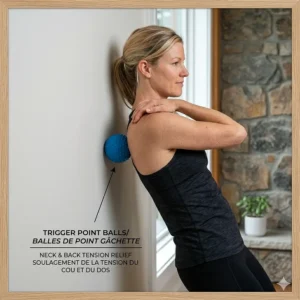
The Pro-Tec Athletics Orb Massage Balls come in varying sizes and deliver multi-directional massage capability through their slightly softer rubber construction. Unlike ultra-firm lacrosse balls, these compress just enough to conform to muscle contours while still providing substantial pressure—think of them as the Goldilocks option for Canadian buyers.
What sets the Orb balls apart is their versatility across muscle groups. The varied sizes (typically ranging from 2″ to 3.5″ depending on the set you purchase on Amazon.ca) mean you can match the tool to the body part. The smaller balls work brilliantly for detailed work on forearms, feet, or the back of the neck, while larger options tackle hamstrings, quadriceps, and calves more efficiently than tiny balls can.
The slightly softer durometer (firmness rating) makes these more beginner-friendly than rock-hard alternatives. I’ve recommended them to several clients transitioning from foam rollers to ball therapy, and the feedback is consistently positive—they provide enough pressure to be effective without causing the bruising that can happen with ultra-firm tools. This matters particularly for older Canadians or those new to myofascial release.
Canadian athletes appreciate how these perform in varying temperatures. Unlike some foam balls that become rock-hard in cold, or cheap rubber that gets tacky in heat, the Pro-Tec Orbs maintain consistent firmness year-round. They’re also quiet when used against walls or floors, which matters if you live in a condo or apartment where neighbours might object to late-night muscle work.
Pros:
✅ Multiple sizes for different muscle groups
✅ Medium firmness suits beginners and experienced users
✅ Maintains consistent performance in temperature extremes
Cons:
❌ May be too soft for very muscular individuals
❌ Varied sizing can make it unclear which ball to use where
Price verdict: Around $18-$28 CAD depending on size—good middle-ground option for those wanting something between ultra-firm and foam-soft.
7. Deep Recovery Yoga Massage Ball Set
The Deep Recovery Yoga Massage Ball Set includes two high-density foam balls (available in either 2.9″ regular density or 4″ firm density options) specifically designed for yoga practitioners and mobility-focused athletes. These are made by a small American-owned business but ship readily to Canada through Amazon.ca Prime in the $22-$32 CAD range.
The foam construction offers a fundamentally different feel than rubber balls—there’s more surface area contact and slightly more give, which makes these excellent for controlled rolling in feet, back, legs, and arms without the intense pinpoint pressure of lacrosse balls. Think of them as a bridge between foam rollers and hardcore trigger point tools.
What Canadian yoga practitioners appreciate is how these integrate seamlessly into regular practice. You can use them for supported poses, as props for chest opening exercises, or for the traditional myofascial release work. The 2.9″ size fits perfectly under the foot for standing balance work or under the shoulder blade when lying supine. The 4″ version provides deeper pressure for larger muscle groups and works brilliantly for releasing the upper trapezius against a wall.
The included mesh storage bag is genuinely useful—it’s breathable so the balls dry properly after sweaty sessions, unlike sealed plastic bags that trap moisture. The company provides solid tutorial content on their website and YouTube channel, which adds value beyond just the physical product.
One consideration: these are firmer than typical yoga blocks but softer than rubber balls. If you’re specifically targeting deep trigger points in very tight muscles, you might need something harder. But for general mobility work, post-workout recovery, and preventative maintenance, they hit the sweet spot.
Pros:
✅ Foam construction gentler on sensitive areas
✅ Two density options accommodate different needs
✅ Integrates well with yoga and mobility practices
Cons:
❌ Foam may wear faster than solid rubber options
❌ Less effective for deep, stubborn trigger points
Price verdict: Around $22-$32 CAD—premium foam quality from a trusted brand, best for mobility-focused users rather than intense trigger point therapy.
How to Choose the Right Trigger Point Ball for Canadian Conditions
Selecting the perfect trigger point ball isn’t about finding the single “best” option—it’s about matching the tool to your specific needs, pain points, and the unique challenges of the Canadian climate. Here’s what actually matters when you’re deciding which product deserves your hard-earned loonies.
Consider your pain tolerance and experience level. If you’re new to self-myofascial release, starting with ultra-firm lacrosse balls can be counterproductive. Your muscles will tense up defensively rather than releasing, defeating the entire purpose. Begin with medium-density foam balls or adjustable-inflation options, then progress to firmer tools as your tissues adapt. Conversely, if you’re already receiving regular deep tissue massage and know you need intense pressure, don’t waste money on soft foam—go straight for solid rubber.
Match the size to your target areas. This is where most Canadians make mistakes. A 2.5″ lacrosse ball is perfect for detailed work on your neck, forearms, or feet, but it’ll roll away uselessly when you’re trying to release your IT band or hamstrings. Larger balls (3.5-4″) provide better stability and coverage for big muscle groups. The peanut-shaped double balls are specifically engineered for spine work—using single balls on your vertebrae is asking for injury.
Factor in Canadian climate conditions. Temperature extremes affect material performance more than manufacturers admit. EVA foam maintains consistent firmness from -20°C to +30°C, making it ideal if you work out in an unheated garage or do mobility work outdoors in summer. Rubber balls can become rock-hard in extreme cold (problematic for those Calgary winters) or slightly tacky in humid Ontario summers. Inflatable PVC balls need to be kept away from sharp objects more carefully when temperatures drop and the material becomes brittle.
Evaluate portability versus comprehensiveness. A complete set like the DEER JUMP kit covers all your bases but takes up more space in your gym bag or suitcase. If you travel frequently for work or want something to keep in your desk drawer, a simple 2-pack of lacrosse balls makes more sense. Consider buying a comprehensive set for home and a portable single ball for your office or car.
Budget in CAD realistically. Yes, you can find massage balls for under $10 CAD, but they’re often hollow plastic that collapses under body weight or harbours bacteria. Spending $15-$35 CAD gets you quality tools that’ll last years rather than months. Think of it as paying 50 cents per use over a year—suddenly that $30 ball doesn’t seem expensive compared to a single $80 massage therapy session.
Account for specific Canadian use cases. Winter athletes need tools that address the muscle tightness that comes from cold-weather training. Office workers in Canadian cities like Toronto or Vancouver where commutes involve lots of sitting need excellent options for glute and hip work. Those in trades or manual labour occupations benefit most from firm balls that can penetrate chronically tight forearms and shoulders. Think about your actual daily life, not just theoretical “fitness goals.”
Common Mistakes When Buying Trigger Point Balls in Canada
Even experienced Canadians fall into predictable traps when shopping for these tools. Let me save you from the mistakes I see repeatedly in my practice and in online reviews from disappointed buyers.
Mistake #1: Assuming harder is always better. The firmness-obsessed crowd believes that if a little pressure is good, maximum pressure must be better. Wrong. Excessive pressure triggers your body’s protective reflex, causing muscles to contract rather than release. This is especially problematic for Canadians dealing with chronic conditions like fibromyalgia where nervous systems are already hypersensitive. Start with moderate firmness and progress gradually—this isn’t a pain tolerance competition.
Mistake #2: Buying single-purpose tools without understanding your needs. The RAD Neuro Ball is brilliant for feet but useless for your shoulders. The tiny 2″ precision balls can’t effectively release your quads. I’ve met countless Canadians who bought specialized tools based on one YouTube video, then realized they needed completely different sizes for their actual problem areas. Unless you’re 100% certain about your specific application, buy a versatile set first.
Mistake #3: Ignoring Canadian-specific storage needs. Unlike Americans who might keep massage balls in climate-controlled gyms, many Canadians store equipment in basements, garages, or car trunks where temperatures fluctuate wildly. Foam degrades faster in damp basements. Rubber can develop a sticky residue in hot cars. Inflatable balls can burst from pressure changes. Consider where you’ll actually store these tools—it affects longevity more than brand reputation does.
Mistake #4: Overlooking hygiene and cleanability. You’re pressing these balls into sweaty skin repeatedly. Non-porous materials like EVA foam and solid rubber can be wiped clean easily. Porous foam absorbs sweat and bacteria, developing odours within weeks unless you’re diligent about cleaning. In Canadian climates where we’re layered up and sweating indoors all winter, this becomes a real issue. Machine-washable options like the TriggerPoint balls justify their premium pricing through hygiene alone.
Mistake #5: Expecting instant results. Trigger points develop over months or years of poor posture, repetitive movements, and muscle imbalances. One five-minute session won’t fix them. Canadians who buy these balls, try them once when they’re extremely painful, find it uncomfortable, then abandon them are missing the point entirely. Effective myofascial release requires consistent application over weeks—think of it as progressive strength training for your fascia.
Mistake #6: Using them without any education. Rolling randomly on sore spots isn’t therapy—it’s potentially harmful. At minimum, watch a few proper instructional videos or consult the guides that come with quality products like the DEER JUMP set. Better yet, book one session with a registered massage therapist or physiotherapist who can show you proper technique for your specific issues. The Canadian healthcare system may not cover massage equipment, but one consultation can save months of ineffective self-treatment.
Mistake #7: Forgetting about cross-border warranty complications. Some massage ball brands sold on Amazon.ca are American companies with warranties that don’t cover Canadian purchases or require you to ship defective products back to the US at your own expense. Stick with products fulfilled by Amazon.ca or explicitly stating Canadian warranty coverage—it’s not worth saving $3 CAD to deal with cross-border return nightmares.
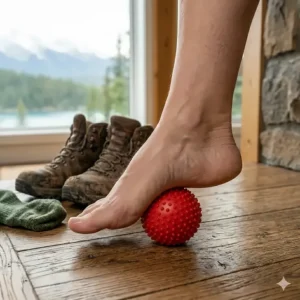
Your 30-Day Trigger Point Ball Protocol for Canadian Winter Relief
Canadian winters wreak havoc on our bodies—cold temperatures cause muscles to contract defensively, we hunch our shoulders against biting wind, and we spend more time indoors in poor postural positions. Here’s a practical protocol specifically designed for the unique challenges we face from November through March.
Week 1: Assessment and Adaptation (Start Gentle)
Your first week isn’t about aggressive trigger point attack—it’s about identifying your problem areas and teaching your nervous system that this pressure is therapeutic, not threatening. Begin with just 5 minutes daily using a medium-firmness ball. Target the areas that bother you most after typical winter activities: upper traps after shovelling snow, glutes after long commutes on cold car seats, or feet after hours in heavy boots.
Work each area for 30-60 seconds maximum. If you find a tender spot, hold gentle pressure for 10-15 seconds, breathe deeply, and wait for the muscle to release slightly before moving on. Don’t push through sharp pain—that’s your body saying “back off.” The goal is to map your tension patterns, not fix everything immediately.
Week 2: Build Consistency (Establish Your Routine)
By week two, aim for 10 minutes daily, split into morning and evening sessions if that’s easier to maintain. Morning work prepares your body for the day’s activities—5 minutes on your feet before stepping into boots, or upper back release before sitting at your desk. Evening sessions help undo the damage from poor posture and stress accumulation.
Focus on the muscle groups that Canadians chronically neglect: the pectorals (chest muscles that tighten from hunching in cold), hip flexors (shortened from sitting), and the muscles around your shoulder blades. Use a peanut ball along your spine while lying on your back—this releases the paraspinal muscles that bear the brunt of winter’s postural strain.
Week 3: Deepen the Work (Progress Your Pressure)
Your tissues have adapted somewhat, so you can safely increase pressure and duration. Spend 15 minutes daily, and don’t be surprised if you discover trigger points you didn’t know existed. The subscapularis (deep shoulder muscle), piriformis (deep glute muscle), and forearm extensors often reveal themselves only after superficial layers have released.
This is when you might transition to firmer balls for certain areas while keeping softer options for sensitive spots. Your feet might handle the RAD Neuro Ball’s texture now, while your neck still needs gentle foam. Listen to your body—pain that decreases with sustained pressure is therapeutic; pain that increases is a warning sign.
Week 4: Integration and Maintenance (Make It Sustainable)
By the final week, you’ve identified which tools work best for which areas, what time of day you’re most consistent, and how your body responds to different pressures. Now build a sustainable routine that you’ll actually maintain through the rest of winter and beyond.
Most Canadians find success with a three-tier approach: 5 minutes of gentle rolling in the morning (feet, calves, upper back), targeted work on problem areas as they arise throughout the day (keep a ball at your desk), and a thorough 10-15 minute session three times per week focusing on full-body maintenance. This prevents new trigger points from forming while gradually resolving existing ones.
Special Considerations for Canadian Athletes
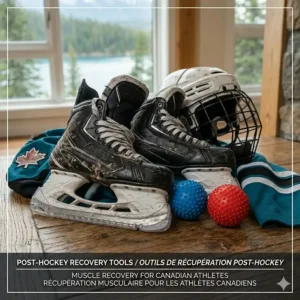
If you’re training through winter—whether that’s hockey, skiing, snowboarding, or running—add sport-specific work. Hockey players need extra attention to hip flexors and adductors. Skiers benefit from intensive quad and IT band work. Runners in icy conditions develop compensatory patterns in their calves and peroneals that require targeted release.
Always use your trigger point balls after activity, not before. Pre-activity rolling can temporarily reduce power output and stability—not what you want before hitting the ice or slopes. Post-workout is when these tools shine, helping flush metabolic waste and prevent the muscle tightness that turns into next-day soreness.
Benefits of Regular Trigger Point Ball Use for Canadians
Beyond temporary pain relief, consistent trigger point ball work delivers compound benefits that most Canadians don’t realize until they’ve been using these tools for months. Let me break down what you’re actually investing in when you commit to regular myofascial release.
Improved Posture and Reduced Tech Neck
The average Canadian office worker spends 7-9 hours daily hunched over screens, a postural disaster that trigger point balls directly address. Regular work on your pectorals (chest), upper trapezius (shoulder tops), and levator scapulae (neck sides) can reverse the forward head position that causes chronic neck pain and headaches. Research indicates that myofascial release helps mechanically stimulate connective tissue and increase flexibility, thereby reducing pain and improving health status. Within 4-6 weeks of consistent use, most people notice they’re sitting taller without conscious effort—the released muscles no longer pull them into poor alignment.
Enhanced Athletic Performance and Recovery
Whether you’re a competitive athlete or weekend warrior, trigger point balls accelerate recovery between training sessions by improving blood flow and reducing the muscle adhesions that limit range of motion. Tight hip flexors restrict your stride length when running. Restricted thoracic spine mobility compromises your golf or hockey swing. By systematically releasing these restrictions, you’re removing the brakes your body has been applying to athletic movement. Canadian athletes training through winter particularly benefit since cold weather naturally tightens muscles—pre-emptive maintenance prevents this tightness from becoming chronic restriction.
Cost Savings Versus Professional Treatment
Let’s talk money. A single registered massage therapy session in Canadian cities typically costs $80-$120 CAD and isn’t covered by all insurance plans. Even if you have coverage, most plans cap at 5-10 sessions annually. A quality trigger point ball costs $15-$35 CAD and provides unlimited use for years. After just 2-3 uses, it’s paid for itself compared to professional treatment. Obviously, these tools don’t replace skilled therapists entirely—but they drastically reduce how often you need expensive sessions by maintaining the improvements between appointments.
Stress Reduction and Mental Health Benefits
Physical tension and psychological stress feed each other in a vicious cycle. When you’re stressed, your shoulders creep toward your ears and your jaw clenches. This muscle tension then sends signals to your brain that reinforce the stress response. Breaking this cycle through myofascial release has measurable effects on cortisol levels and perceived stress. The deep breathing you do during trigger point work activates your parasympathetic nervous system—your body’s built-in relaxation response. For Canadians dealing with Seasonal Affective Disorder and the mental health challenges of long, dark winters, this physiological stress relief is valuable beyond just the physical benefits.
Injury Prevention Through Better Body Awareness
Regular trigger point work teaches you to notice tension patterns before they become pain. You’ll start recognizing when your right shoulder is hiking up during stressful work calls, or when your left glute is compensating because your right hip is tight. This awareness—called proprioception—allows you to address imbalances early, preventing the overuse injuries that sideline so many Canadians. It’s the difference between noticing tightness and addressing it versus ignoring it until something tears or inflames.
Better Sleep Quality
Muscle tension directly interferes with sleep quality. That nagging ache in your shoulder keeps you from finding comfortable positions. Tight hip flexors prevent you from sleeping on your back. Tense neck muscles contribute to teeth grinding and jaw clenching overnight. A 10-minute session with your trigger point balls before bed—focusing on common tension areas like upper traps, jaw muscles, and feet—can dramatically improve sleep onset and quality. Multiple clients have reported this as an unexpected benefit they value more than the original pain relief they sought.
Trigger Point Balls vs. Foam Rollers: What Canadian Buyers Need to Know
You’ve probably seen both foam rollers and trigger point balls marketed for similar benefits, so let’s clarify when each tool excels and why many Canadians eventually own both rather than choosing one over the other.
Coverage Area and Precision
Foam rollers cover broad muscle groups efficiently—your entire IT band, both calves simultaneously, or your full back in one pass. This makes them superior for general mobility work and post-workout muscle flushing. Trigger point balls provide pinpoint accuracy for specific knots and adhesions that foam rollers simply roll over without addressing. Think of rollers as general maintenance and balls as targeted therapy.
Portability and Storage
A standard foam roller is 30-45cm long and takes up significant space in your home or gym bag. This matters in Canadian apartments and condos where every square foot counts. Trigger point balls fit in your pocket, desk drawer, or purse. You can use them at the office, in your car during lunch breaks, or while travelling—situations where hauling a foam roller is impractical. For Canadians who split time between home and cottage, or who travel frequently for work, balls offer flexibility that rollers can’t match.
Pressure and Depth
Your body weight distributed over a foam roller’s large surface area creates moderate pressure—effective for superficial muscles but insufficient for deep trigger points. A 6cm ball under your body weight concentrates that same force into a much smaller area, reaching deep tissues that rollers miss. For stubborn knots in the piriformis, subscapularis, or other deep muscles, balls are non-negotiable. However, this intensity means balls can be too aggressive for beginners or sensitive individuals who’d be better served starting with rollers.
Cost Comparison in CAD
A quality foam roller costs $30-$80 CAD depending on density and texture. Trigger point balls range from $12-$40 CAD for comprehensive sets. Dollar-for-dollar, balls deliver more versatility for less money—you can address more body areas with a $25 ball set than with a single $50 foam roller. However, if you’re primarily focused on IT bands, quads, and back work, a roller might be worth the investment as your primary tool, supplemented by a basic lacrosse ball for detailed work.
Learning Curve and Technique
Foam rolling is relatively intuitive—you lie on the roller and roll back and forth. Most people can use one effectively with minimal instruction. Trigger point balls require more education about pressure points, proper positioning, and how to stabilize your body against walls or floors. Improper use can aggravate issues rather than resolve them. This learning curve isn’t necessarily a con—it forces you to understand your body better—but it does mean balls demand more upfront investment in education.
The Canadian Solution: Strategic Combination
Here’s what I recommend to most Canadians: own both, but use them for different purposes. Keep a foam roller at home for daily general maintenance—5 minutes of rolling your major muscle groups before bed prevents most tension from accumulating. Supplement with trigger point balls for targeted work on problem areas that develop despite the preventative rolling. This two-tool approach costs $40-$70 CAD total and covers 95% of what you’d pay a massage therapist to address.
Frequently Asked Questions About Trigger Point Balls
❓ Can trigger point balls help with chronic pain conditions like fibromyalgia in Canada?
❓ Are trigger point balls available for same-day delivery in major Canadian cities?
❓ Do trigger point balls work for plantar fasciitis during Canadian winters?
❓ Can I use trigger point balls if I have limited mobility or arthritis?
❓ What's the difference between expensive trigger point balls and cheap lacrosse balls from sporting goods stores?
Conclusion: Your Next Steps to Pain-Free Living
After reviewing the seven best trigger point balls available to Canadians in 2026, the path forward depends entirely on your specific situation, budget, and pain relief goals. There’s no single “best” option—only the best option for you.
If you’re new to self-myofascial release and want maximum versatility without overspending, the DEER JUMP 6-in-1 kit delivers exceptional value in the $25-$35 CAD range. You’ll have the tools to address any muscle group, experiment with different techniques, and discover which approaches work best for your body. Budget-conscious Canadians who’ve already identified their specific problem areas can save money with the Kieba lacrosse ball 2-pack under $20 CAD—simple, effective, and built to last through years of daily use.
For those dealing with chronic foot pain, plantar fasciitis, or anyone who spends long hours in winter boots, the RAD Neuro Ball justifies its $30-$40 CAD premium pricing through specialized design that generic balls can’t replicate. The textured surface and split-dome functionality make it the definitive choice for foot therapy. And if you’re transitioning from foam roller work to more targeted trigger point therapy, the Deep Recovery set bridges that gap beautifully with its high-density foam construction.
Remember that these tools are investments in long-term health, not quick fixes. Commit to the 30-day protocol outlined earlier, remain consistent even when you don’t feel immediate results, and trust the process. Most Canadians who stick with regular trigger point work for just one month report significant improvements in pain levels, sleep quality, and overall body awareness.
The Canadian winter poses unique challenges to our musculoskeletal health—cold temperatures, increased indoor time, and seasonal activity patterns all contribute to muscle tension and pain. Having quality trigger point balls in your self-care arsenal means you’re no longer dependent on expensive massage therapy appointments or medication to manage discomfort. You’ve taken control of your own recovery.
Start where you are, use what you can afford, and progress gradually. Your body—and your wallet—will thank you for making this investment in 2026.
✨ Don’t Miss These Exclusive Deals!
🔍 Take your pain relief to the next level with these carefully selected products. Click on any highlighted item to check current pricing and availability on Amazon.ca. These tools will help you create authentic results your body will love!
Recommended for You
- Body Gua Sha Scraper: 7 Best Tools for Deep Tissue Relief Canada 2026
- 7 Best Stainless Steel Gua Sha Tools Canada 2026
- Best Facial Gua Sha Tool Canada: 7 Expert Picks 2026
Disclaimer: This article contains affiliate links. As an Amazon Associate, I earn from qualifying purchases. If you purchase products through these links, we may earn a small commission at no additional cost to you.
✨ Found this helpful? Share it with your friends! 💬🤗
